Living in St. Louis comes with its unique charm—from the iconic Gateway Arch to the vibrant neighborhoods like the Central West End—but it also means dealing with hidden dangers in our homes. Biohazards, those invisible threats from biological sources, can lurk in the most unexpected places. Whether it’s the humid summers fostering mold or urban pests finding their way indoors, these hazards pose serious health risks to you and your loved ones. At St. Louis Biohazard Cleanup, we’ve seen it all, from routine cleanups to emergencies, and we’re here to help you identify and mitigate these risks before they escalate.
In this guide, we’ll explore five common biohazards found in St. Louis residences, how to spot them early, and practical steps to address them. Knowledge is your first line of defense—let’s dive in and keep your home safe.
1. Mold Growth in Damp Areas
St. Louis’s climate, with its hot, humid summers and occasional flooding from the Mississippi River, creates the perfect breeding ground for mold. This fungus thrives in moist environments and can release spores that irritate respiratory systems, especially for those with allergies or asthma.
How to Spot Mold
Look for visible signs like black, green, or white patches on walls, ceilings, or in basements—common in older homes around Laclede’s Landing. A musty odor is another red flag, often noticeable in poorly ventilated spaces. Discoloration around windows or leaks, or even bubbling paint, could indicate hidden growth behind surfaces.
Practical Tips for Prevention and Detection
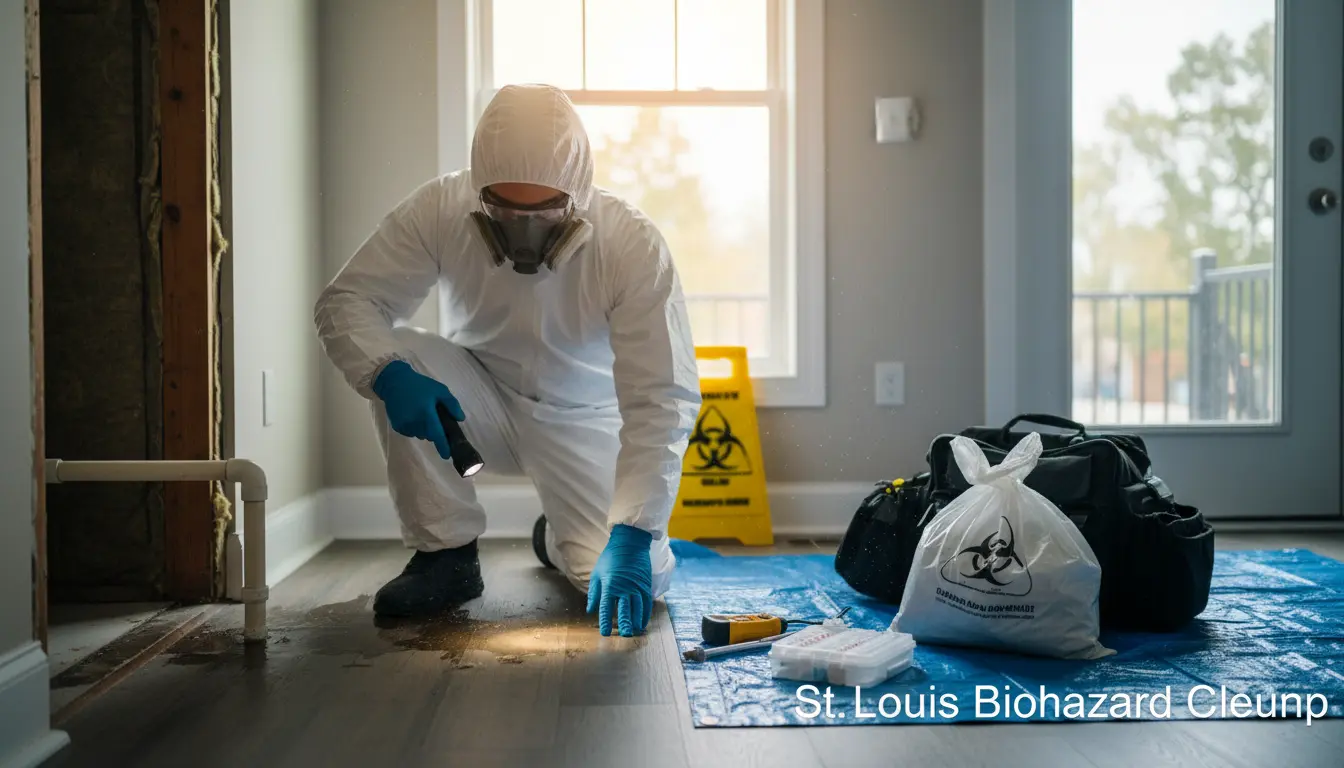
- Inspect Regularly: After heavy rains, check basements and attics for water damage. Use a flashlight to peer into corners.
- Control Humidity: Keep indoor humidity below 50% with dehumidifiers, especially during Missouri’s muggy seasons.
- Act Quickly: If you spot mold, avoid DIY removal for large areas—spores can spread. For professional remediation, consider our mold removal services tailored to St. Louis properties.
Early detection can prevent costly structural damage and health issues. In neighborhoods like Soulard, where historic homes are prevalent, routine checks are essential.
2. Rodent Infestations and Droppings
Rodents like mice and rats are no strangers to St. Louis, drawn by the city’s food sources and shelter opportunities. Their droppings and urine carry pathogens such as hantavirus and salmonella, which can contaminate air and surfaces.
Signs of Rodent Presence
Small, dark droppings (rice-sized for mice, larger for rats) in cabinets, along walls, or in garages are telltale signs. Gnaw marks on food packaging or wires, and greasy rub marks along travel paths, are common. Listen for scratching noises at night, particularly in wall voids.
In urban areas like Downtown St. Louis, rodents thrive due to proximity to parks and alleys. If you’re in the Central West End, older apartment buildings may harbor these pests more readily.
Actionable Advice
- Seal Entry Points: Inspect for gaps around doors, pipes, and vents—rodents can squeeze through dime-sized holes.
- Sanitize Thoroughly: Clean droppings with a bleach solution (1:10 ratio) while wearing gloves and a mask to avoid aerosolizing particles.
- Seek Experts: For severe infestations, our team at St. Louis Biohazard Cleanup handles safe removal and disinfection, preventing disease spread.
Don’t ignore these signs; a small problem can quickly become a health hazard.
3. Sewage Backups and Contamination
Aging sewer systems in St. Louis, combined with heavy storms, often lead to backups that introduce bacteria-laden water into homes. This biohazard carries risks of E. coli and other infections through contact or inhalation.
Identifying Sewage Issues
Foul, sewage-like smells emanating from drains or basements signal trouble. Slow drains, gurgling toilets, or visible backups of murky water are clear indicators. In flood-prone areas like The Hill, backups are more frequent during spring thaws.
Steps to Spot and Mitigate
- Monitor Drains: Pour water down rarely used drains monthly to check for backups.
- Use Protective Gear: If you encounter a spill, wear rubber boots and gloves; never touch with bare hands.
- Professional Intervention: Immediate cleanup is crucial to avoid mold secondary growth. Our sewage cleanup services ensure safe restoration for St. Louis homes.
Prompt action protects your property and prevents long-term contamination.
4. Pest Infestations: Bed Bugs and Beyond
Bed bugs, cockroaches, and other pests flourish in St. Louis’s multi-family housing and travel hubs. Their bites cause allergic reactions, and they can spread diseases like hepatitis.
Spotting Pest Biohazards
For bed bugs, look for tiny blood spots on sheets, itchy welts on skin, or shed skins in mattress seams. Cockroach droppings resemble coffee grounds, often in kitchens. In bustling areas like Midtown, shared walls in apartments amplify spread.
Prevention Strategies
- Routine Inspections: Check bedding and furniture crevices weekly, especially after travel.
- Declutter Wisely: Reduce hiding spots by organizing storage; vacuum regularly with a HEPA filter.
- Call in Pros: Integrated pest management from experts like us at St. Louis Biohazard Cleanup includes biohazard-safe treatments.
These pests are resilient—professional help ensures complete eradication.
5. Blood and Bodily Fluid Spills
From accidents to unattended deaths, blood and fluids can harbor bloodborne pathogens like HIV and hepatitis. In St. Louis, where crime scene cleanup demands are high due to urban density, these require specialized handling.
Recognizing the Hazard
Dried blood stains, unusual odors, or evidence of trauma scenes are obvious. Even small spills from medical issues can pose risks if not cleaned properly.
Safe Handling Tips
- Do Not Touch: Isolate the area and ventilate.
- Use Barriers: If minor, apply gloves and absorbent materials, but dispose as biohazard waste.
- Expert Cleanup: For any significant incident, contact St. Louis Biohazard Cleanup immediately at (314) 380-0207. Our certified team follows OSHA guidelines for safe removal.
Never underestimate these fluids—they demand professional attention to prevent cross-contamination.
FAQ: Common Questions About Biohazards in St. Louis Homes
What Should I Do If I Suspect a Biohazard in My Home?
Isolate the area, avoid contact, and call professionals like St. Louis Biohazard Cleanup at (314) 380-0207 for assessment and safe removal.
How Often Should I Check for Mold in My St. Louis Home?
Monthly during humid months (May-September) and after any water exposure. Focus on basements and bathrooms.
Are DIY Cleaning Methods Safe for Rodent Droppings?
No—use protective equipment and disinfectants, but for extensive cleanups, hire experts to avoid health risks.
Can Sewage Backups Lead to Long-Term Health Issues?
Yes, exposure can cause gastrointestinal illnesses. Quick professional cleanup minimizes risks.
How Does St. Louis’s Weather Affect Biohazards?
High humidity promotes mold and pests; floods increase sewage issues. Stay vigilant year-round.
Conclusion: Protect Your St. Louis Home Today
Biohazards in St. Louis homes are more common than you might think, but with awareness and swift action, you can safeguard your health and property. From spotting mold in your Central West End condo to addressing a crime scene cleanup emergency, St. Louis Biohazard Cleanup is your trusted partner. Don’t wait for a crisis—reach out to our experienced team at (314) 380-0207 for a consultation or immediate service. Your safe home starts with one call.