It was a humid August morning in St. Louis when the call came in from a family in Tower Grove South. Their elderly relative had passed away three weeks earlier, but the body was not discovered until the odor alerted neighbors. The scene was a classic example of what property owners assume they can handle themselves—and the misconceptions that follow. The family had already tried cleaning with bleach and air fresheners, only to find the smell and stains returning. They had no idea that porous wood flooring, drywall, and subflooring had absorbed biological fluids deep into the structure, creating a hidden biohazard that a standard mop could never touch.
This scenario plays out more often than most people realize. Many homeowners, landlords, and even some property managers believe that biohazard cleanup is just a more intense version of regular housekeeping. They assume that commercial disinfectants, a few hours of scrubbing, and some ventilation will suffice. In reality, the common misconceptions about biohazard cleanup services can lead to serious health risks, regulatory fines, and permanent property damage. Understanding what actually happens during professional remediation—and why it matters—can save families from repeating the same costly mistakes.
The Technical Reality of Biohazard Remediation
Professional biohazard cleanup follows a strict, science-based protocol that goes far beyond surface cleaning. The process begins with a comprehensive risk assessment. Technicians identify all affected areas, assess the type of biological material present (blood, bodily fluids, decomposition byproducts, or pathogens), and evaluate the building materials involved. For example, in older St. Louis brick homes, the mortar and plaster can wick moisture and biological residues upward, requiring removal of baseboards and lower sections of wallboard.
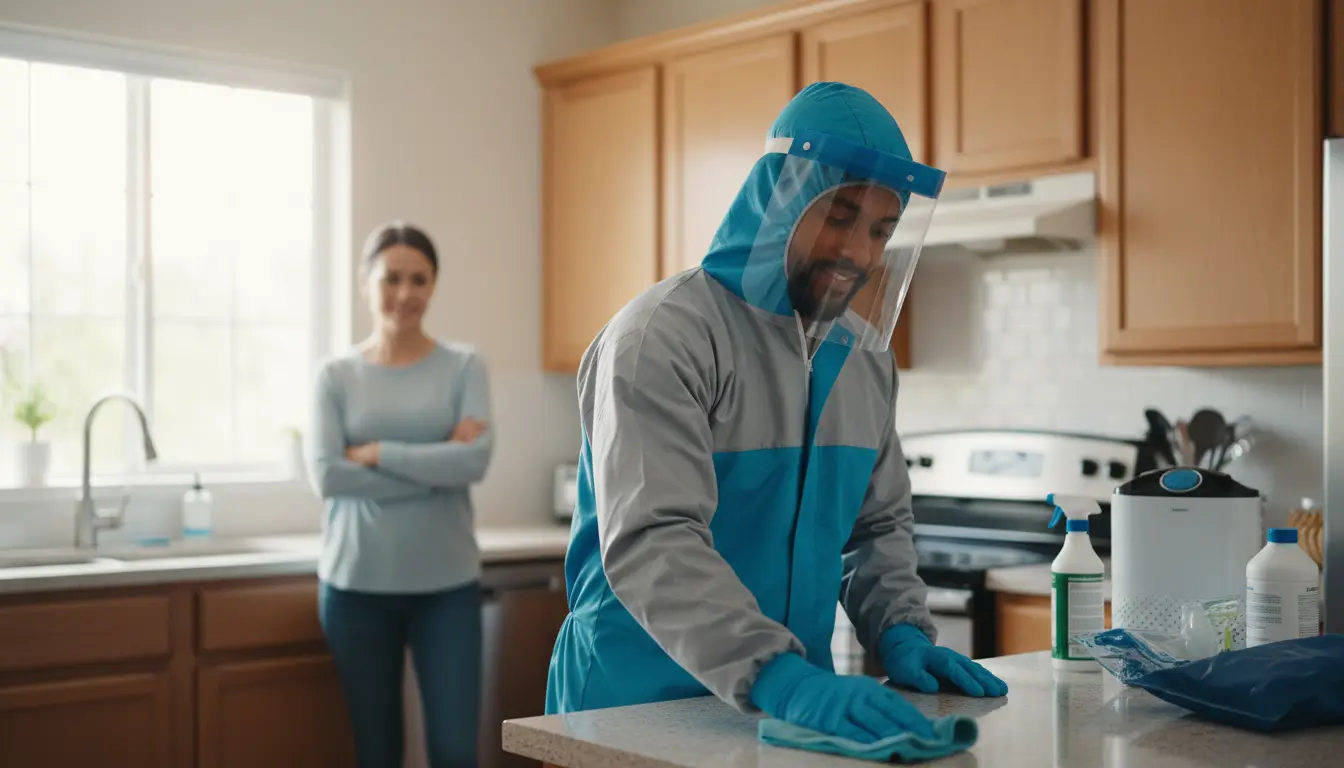
Next, the team establishes containment zones using negative air machines and physical barriers. This prevents airborne contaminants from spreading to unaffected rooms. Technicians then don personal protective equipment (PPE) that meets OSHA standards—including Tyvek suits, N95 or P100 respirators, face shields, and chemical-resistant gloves. The actual removal involves physically excising contaminated materials: carpet, padding, drywall, insulation, and sometimes even subflooring. Every scrap is bagged in biohazard waste containers, labeled, and transported to an authorized treatment facility.
After removal, the area undergoes a multi-step cleaning and disinfection process. Hospital-grade, EPA-registered disinfectants are applied with electrostatic sprayers or foggers to reach every crevice. These disinfectants are not household bleach; they are formulated to kill bloodborne pathogens, including hepatitis B, hepatitis C, and HIV, within a specific contact time (usually 10–15 minutes). Technicians then use adenosine triphosphate (ATP) fluorescence testing to verify that no organic residue remains. This test measures the presence of ATP, a molecule found in all living cells, and provides a quantitative pass/fail result. Finally, the area receives a structural encapsulation—a sealant that locks in any remaining particulates and prevents future odor migration.
St. Louis’s climate adds another layer of complexity. The region’s high humidity, especially during summer, speeds up decomposition and increases the risk of microbial growth. Moisture from the air can reactivate dried biological materials, causing odors to reappear weeks later. Professional remediation accounts for this by using dehumidifiers and antimicrobial treatments that are not part of standard cleaning protocols. Without these steps, property owners risk long-term health issues, such as respiratory infections or allergic reactions from mold spores that thrive on organic residues.
Professional Remediation vs. Standard Janitorial Cleaning
To clarify the differences, here is a direct comparison based on the IICRC S540 Standard for Trauma and Crime Scene Cleanup:
| Feature/Metric | Professional Biohazard Remediation | Standard Residential Cleaning |
|---|---|---|
| Regulatory Compliance | OSHA 29 CFR 1910.1030, EPA, DOT, local health department | None specific to biohazards |
| Pathogen Elimination | 99.99% kill rate using EPA-registered hospital disinfectants with verified contact time | Household bleach kills 99.9% of bacteria but not viruses or spores when used incorrectly |
| Structural Assessment | Full inspection of porous materials, subflooring, and HVAC systems | Visual only; hidden contamination missed |
| Waste Disposal | Licensed biohazard waste transport and incineration per DOT regulations | Trash bin or landfill (illegal for biohazards) |
| Odor Elimination | Enzyme-based treatments, ozone, or hydroxyl generators | Air fresheners mask odors temporarily |
| Insurance Support | Detailed documentation and line-item estimates for insurance claims | No documentation |
Source: IICRC S540 Trauma and Crime Scene Cleanup Standard
Expert Insights: What Professionals Know That Others Don’t
Detecting Hidden Biological Seepage
One of the most overlooked aspects of biohazard cleanup is the movement of fluids through building materials. Blood and bodily fluids can seep through carpet padding, into the subfloor, and even travel along floor joists. In St. Louis, where many homes have hardwood floors over original crawl spaces, the fluid can pool in the soil below, creating a persistent odor source. Professional technicians use moisture meters and thermal imaging to locate subfloor contamination that is invisible to the naked eye. Without this equipment, property owners may clean the visible stain but leave the source intact, leading to long-term health risks and structural damage.
Why Porous Materials Must Be Replaced, Not Cleaned
Many people believe that a good scrubbing can restore drywall or carpet after a biohazard event. This is false. Porous materials like gypsum board, carpet, and upholstered furniture absorb biological fluids and cannot be fully disinfected. Even after surface cleaning, the interior of these materials remains contaminated. The IICRC S540 standard mandates removal of any porous material that has been exposed to blood, bodily fluids, or other potentially infectious materials. Attempting to clean them not only fails to eliminate pathogens but also creates a health hazard for anyone who later occupies the space. Professional remediation crews cut and remove drywall at least 12 to 24 inches above the visible stain line to ensure complete removal.
The Importance of Negative Pressure
Cross-contamination is a major risk during biohazard cleanup. Negative air pressure machines, along with HEPA filtration, create a vacuum effect that prevents airborne particles from escaping the work area. This is critical in multi-unit buildings or homes where other family members are still living. Without negative pressure, pathogens can travel through HVAC ducts, contaminating entire floors. In St. Louis, where older buildings often share ductwork, this is a frequent source of secondary contamination that standard cleaning never addresses.
Common Mistakes Property Owners Make
One of the most frequent errors is using household bleach on biological matter. Bleach can actually denature proteins and fix the stain, making it harder to remove. It also releases harmful fumes that can irritate lungs and eyes. Another mistake is waiting for the odor to “air out.” Odors are caused by volatile organic compounds released by decomposing tissue. These compounds penetrate porous materials and cannot be removed by ventilation alone. A third mistake is allowing untrained personnel—family members, friends, or even general contractors—into the site. This exposes them to bloodborne pathogens and creates liability for the property owner. Real consequences include long-term health issues like chronic sinusitis, respiratory infections, and even legal action if a worker becomes ill.
Pricing: What to Expect
Biohazard cleanup costs vary based on several factors, but pricing generally includes the following elements:
- Site mobilization fee – covers travel, equipment setup, and initial assessment. Typically $200–$500 depending on location within the St. Louis metro area.
- Hourly remediation rates – range from $150 to $300 per hour per technician. The number of technicians and hours depends on the scale of contamination.
- Specialized disposal costs – biohazard waste is transported and incinerated at licensed facilities. Fees range from $50 to $150 per bag or container.
Three key factors that influence cost: the extent of structural material replacement (e.g., entire subfloor vs. spot removal), the total volume of biohazardous waste (larger scenes require more disposal fees), and the necessity for specialized HVAC decontamination (if contamination has entered the ductwork). Property owners in St. Louis should also consider that older homes may require more extensive removal due to porous materials like lath and plaster. For a detailed breakdown, see our guide on biohazard cleanup costs in St. Louis.
Safety & Standards
Professional biohazard remediation is governed by multiple regulatory frameworks. The most critical is OSHA’s Bloodborne Pathogens Standard (29 CFR 1910.1030), which requires employers to protect workers from exposure to infectious materials. This includes providing PPE, training, and an exposure control plan. Additionally, the EPA regulates the disposal of biohazardous waste, and the Department of Transportation governs its transport. Technicians must be certified in hazardous waste operations and emergency response (HAZWOPER) and follow the IICRC S540 standard for thoroughness and documentation.
For property owners, the practical importance of these standards cannot be overstated. Without them, a site cleaned by untrained individuals may still harbor pathogens that can cause hepatitis, HIV, or other diseases. Moreover, improper disposal of biohazard waste can lead to fines from local health departments. In St. Louis, the Public Health Department and the Missouri Department of Natural Resources have clear guidelines for waste management. Professional services like ours ensure full compliance, protecting both the client and the community. For more on the specific protocols we follow, see our complete list of biohazard remediation services.
Frequently Asked Questions About Biohazard Cleanup
Is it safe to use bleach for cleaning up blood or bodily fluids?
No, household bleach is not recommended for biohazard cleanup. While bleach is a disinfectant, it is not effective against all bloodborne pathogens when used in home concentrations. Moreover, bleach can break down in the presence of organic matter, requiring very high concentrations that are corrosive and harmful to inhale. Professional EPA-registered disinfectants are specifically formulated for biological materials and have proven contact times to kill viruses and bacteria. Additionally, bleach does not eliminate the organic residue that causes odors and attracts pests. Professional remediation uses enzyme-based cleaners to break down biological matter before disinfection.
How long does professional biohazard remediation take?
The timeline depends on the size of the affected area, the type of contamination, and the extent of structural damage. A small trauma scene in a single room may take 4–8 hours. A larger scene involving multiple rooms or significant decomposition can take 1–3 days. Factors like the need for subfloor removal, drying time for antimicrobial treatments, and waiting for waste disposal pickup can extend the timeline. Professionals work efficiently but also ensure that every step is completed thoroughly to prevent recontamination. For urgent situations, we offer 24/7 emergency response to minimize disruption.
Will my homeowner’s insurance cover biohazard cleanup?
Many homeowner’s insurance policies cover biohazard cleanup as part of property damage or liability coverage, especially if the event is sudden and accidental (e.g., a death, accident, or crime). However, coverage varies widely. Some policies exclude cleanup of decomposition or hoarding. It is essential to contact your insurance provider and ask specifically about “biohazard remediation” or “trauma scene cleanup.” Professional remediation companies can provide detailed documentation, including photos, lab reports, and line-item invoices, which help support insurance claims. We recommend discussing coverage with your agent before work begins, though emergency services can often proceed and be billed later.
What happens to the waste after it is removed from the property?
All biohazardous waste—including blood-soaked materials, contaminated drywall, and personal protective equipment—is placed in specially marked, leak-proof containers. These containers are sealed and transported by a licensed biohazard waste transporter to an authorized treatment facility. At the facility, the waste is incinerated at extremely high temperatures to destroy all pathogens. The ash is then disposed of in accordance with local and federal regulations. This process prevents any chance of infectious materials entering the environment. We handle this step in full compliance with Missouri and federal laws, so property owners never have to worry about liability.
Professional Biohazard Remediation in St. Louis
Understanding the common misconceptions about biohazard cleanup services can help property owners make informed decisions when faced with a traumatic or hazardous situation. The reality is that professional remediation is not just about cleaning—it is about restoring a space to a safe, habitable condition while protecting the health of everyone involved. From the initial risk assessment to the final ATP test, every step is designed to eliminate hidden dangers that standard cleaning cannot address.
St. Louis Biohazard Cleanup is committed to providing technically rigorous, compassionate, and discreet services across the St. Louis metro area. Our team is IICRC-certified, OSHA-trained, and experienced in handling the unique challenges of local properties, from historic brick homes to modern apartments. Whether you are dealing with a crime scene, suicide, hoarding, or infectious disease contamination, we are here to help. For a free consultation or emergency response, contact us today. Visit our about us page to learn more about our team and our commitment to safety and excellence.