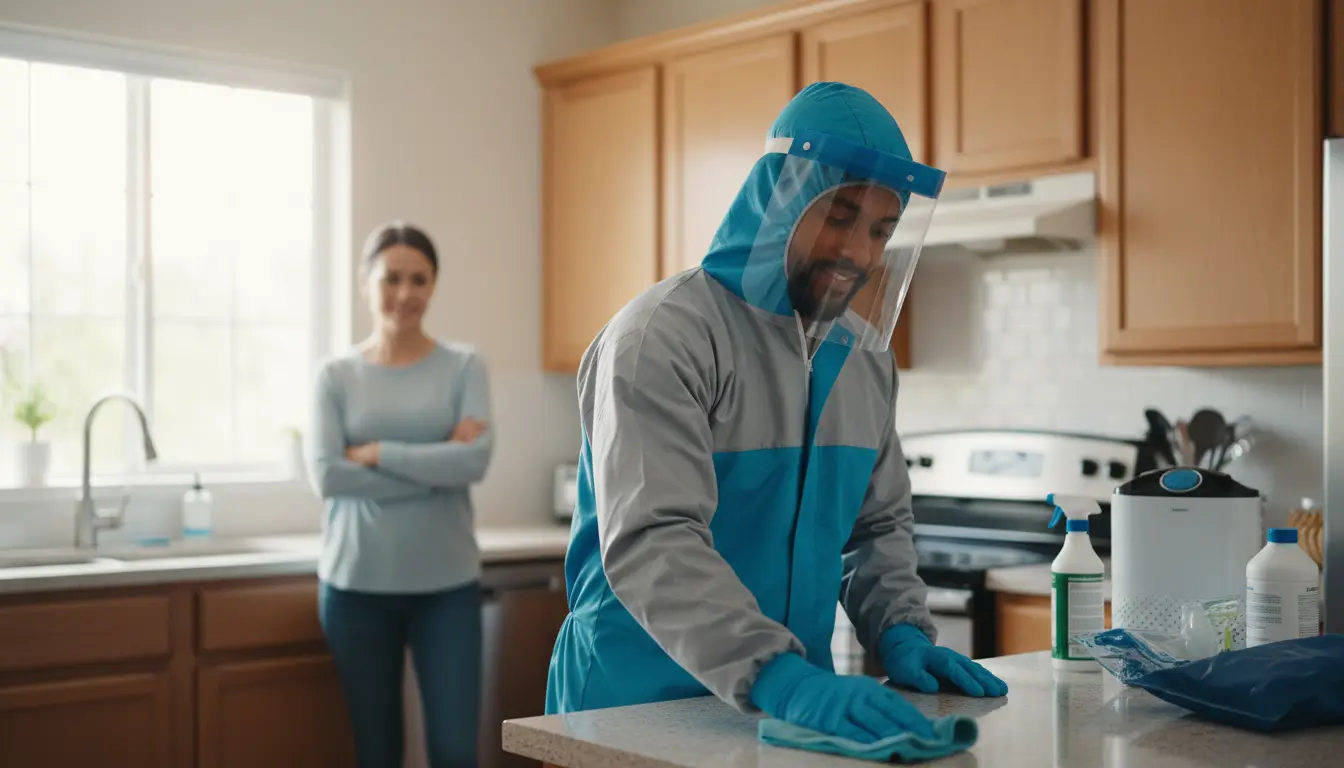
Most homeowners in St. Louis believe that a thorough scrub with bleach and a few gallons of disinfectant is enough to clean up after a trauma or biohazard incident. That belief is a dangerous misconception. In reality, the biological residues left behind after a crime scene, unattended death, or severe hoarding situation are far more insidious than surface stains, and attempting to handle them with household cleaners can create serious long-term health risks for everyone involved. The truth is that professional biohazard remediation is not a luxury—it is a critical safety measure that protects both the occupants and the structural integrity of the property.
St. Louis presents unique challenges for biohazard cleanup. The region’s humid summers and cold winters accelerate decomposition rates and drive odor migration deep into porous building materials. Older brick homes common in neighborhoods like Soulard, Lafayette Square, and Tower Grove South often have subfloor voids and wall cavities that trap biological fluids, making complete remediation impossible without specialized equipment and training. Understanding why professional biohazard remediation is essential for health and safety means recognizing that the unseen hazards—bloodborne pathogens, airborne microbial spores, and chemical residues—can persist for months and cause chronic illness if not addressed by certified technicians.
The Technical Process of Professional Biohazard Remediation
Professional remediation follows a rigorous, science-based protocol that begins with a comprehensive risk assessment. Technicians clad in OSHA-compliant personal protective equipment (PPE) establish containment zones using negative air machines to prevent cross-contamination. The initial step involves the physical removal of all biohazardous materials, including saturated carpet, drywall, and insulation, followed by the application of EPA-registered hospital-grade disinfectants that are proven to inactivate viruses, bacteria, and fungi. Unlike standard cleaning, professional crews use adenosine triphosphate (ATP) fluorescence testing to verify that all organic matter has been eliminated on a molecular level.
Environmental factors in St. Louis directly influence the process. During the summer months, high humidity can cause blood and other biological fluids to spread through capillary action in porous surfaces like wood and drywall. Winter’s dry air can make dried residues brittle and airborne, increasing the risk of inhalation. Professional teams adjust their approach by using specialized enzyme treatments that break down proteins at the cellular level, ensuring that even microscopic traces are neutralized. The final step is structural encapsulation, where a sealant is applied to affected areas to prevent future microbial growth and odor re-emergence.
Professional Remediation vs. Standard Residential Cleaning: A Data Comparison
| Feature/Metric | Professional Biohazard Remediation | Standard Residential Cleaning |
|---|---|---|
| Regulatory Compliance | Full adherence to OSHA Bloodborne Pathogens Standard (29 CFR 1910.1030) and IICRC S540 | No compliance; no training on bloodborne pathogens |
| Pathogen Elimination | 99.99% reduction verified by ATP testing and microbial swabs | Surface-level cleaning only; pathogens remain in porous materials |
| Structural Assessment | Identifies hidden saturation using moisture meters and thermal imaging | Visual inspection only; misses subfloor and wall cavity contamination |
| Waste Disposal | Proper biohazard waste packaging and transport to licensed incineration facilities | Illegal and dangerous disposal in regular trash |
| Odor Elimination | Uses ozone generators, hydroxyl machines, and enzyme neutralizers | Masking agents only; odor returns as temperatures rise |
Expert Insights: Advanced Diagnostic Tips and Common Mistakes
Three Diagnostic Tips for Detecting Hidden Biohazards
1. Use thermal imaging to locate unseen moisture. Biological fluids can wick up drywall or saturate the subfloor without visible signs. Professional crews use infrared cameras to detect temperature variations caused by microbial activity, identifying areas that require complete removal.
2. Conduct ATP swab testing on all surfaces. Adenosine triphosphate is present in all living cells. A reading above 10 relative light units (RLU) on a non-porous surface indicates insufficient cleaning and potential pathogen survival. This test is not available to the general public but is standard in professional remediation.
3. Perform a smoke test on HVAC systems. Odors and airborne contaminants can travel through ductwork. By introducing a non-toxic tracer smoke, technicians can locate leaks and seal off affected sections before cleaning the entire system.
Two Common Mistakes Property Owners Make
Mistake 1: Using household bleach on biological matter. Bleach coagulates proteins, creating a protective barrier that prevents deeper penetration into porous surfaces. It also releases toxic fumes when mixed with urine or other organic compounds. Professional disinfectants are specifically formulated to break down organic matrices and remain effective on contaminated surfaces.
Mistake 2: Waiting for odors to dissipate naturally. Odors are volatile organic compounds (VOCs) produced by microbial decomposition. If you can smell it, the air is already contaminated. The longer you wait, the deeper the biological residues migrate into structural materials, leading to costly demolition. Professional remediation must be initiated within 24 to 48 hours to minimize permanent damage.
Pricing Considerations for Biohazard Remediation in St. Louis
- Site mobilization fee: Typically ranges from $250 to $500, covering the initial assessment, equipment setup, and transport of specialized disposal containers.
- Hourly remediation rates: Most certified companies charge between $150 and $300 per hour per technician, with a minimum of two to three technicians on-site for safety and efficiency.
- Specialized waste disposal: Biohazardous waste must be incinerated at licensed facilities. Costs vary based on weight, averaging $0.50 to $1.00 per pound, with a minimum charge of $150.
- Additional factors influencing cost: The extent of structural material replacement (e.g., drywall, flooring, cabinetry), the total volume of biohazardous waste, and the need for specialized HVAC decontamination. In St. Louis, older homes with plaster and lath construction often require more labor-intensive removal, increasing the final estimate.
Safety and Standards: Certifications That Protect You
Professional biohazard remediation companies in St. Louis operate under strict guidelines set by the Occupational Safety and Health Administration (OSHA) and the Institute of Inspection, Cleaning and Restoration Certification (IICRC). The IICRC S540 standard for trauma and crime scene cleanup requires technicians to complete specific training modules on bloodborne pathogen handling, containment protocols, and advanced cleaning techniques. Additionally, all employees must be vaccinated against Hepatitis B and have access to medical surveillance programs.
These certifications are not just paperwork—they have direct practical implications. For example, proper containment using negative pressure prevents airborne pathogens from spreading to adjacent rooms or the outside environment. Authorized waste management services ensure that contaminated materials are disposed of in accordance with Missouri Department of Natural Resources regulations, protecting public health and avoiding legal liability. Property owners who hire unlicensed cleaners risk fines, future health claims, and structural damage that may not be covered by insurance.
Frequently Asked Questions About Biohazard Remediation
What is professional biohazard remediation and when is it necessary?
Professional biohazard remediation is the systematic cleaning, disinfection, and restoration of environments contaminated by biological hazards such as blood, bodily fluids, human remains, hoarding waste, or chemical spills. It is necessary after a crime scene, unattended death, suicide, severe accident, or any situation where biohazardous materials have been released. In St. Louis, rapid response is critical because the region’s climate accelerates decomposition and microbial growth, increasing the risk of airborne disease transmission.
How long does the remediation process take?
The duration depends on the extent of contamination. A small crime scene in a single room may be completed in 4 to 6 hours, while an entire home affected by hoarding or unattended death can require several days. Professional crews work in phases: containment and removal, cleaning and disinfection, verification testing, and final restoration. St. Louis companies offer 24/7 emergency response to minimize the window of exposure and prevent secondary damage from odor migration.
Is it safe to stay in the home during remediation?
In most cases, occupants must vacate the property during active remediation. The use of negative air machines, chemical disinfectants, and ozone generators creates an environment that is unsafe for untrained individuals. Additionally, the process of removing contaminated materials can release airborne particles. Professional companies provide clear guidance on re-entry times, typically 24 to 48 hours after the final ATP test confirms all surfaces are safe. For large-scale projects, temporary housing may be arranged as part of the restoration plan.
Do you handle hoarding cleanup and biohazard remediation together?
Yes. Hoarding situations often involve a combination of biohazardous waste (human waste, spoiled food, animal feces) and general clutter. Professional remediation companies in St. Louis are trained to address both aspects simultaneously. The process begins with a safety assessment to identify hidden biohazards, followed by systematic removal of contaminated items, deep cleaning, and structural decontamination. This integrated approach ensures that the property is restored to a habitable condition without compromising the health of the occupants or the community.
Professional Biohazard Remediation in St. Louis
When a biohazard incident occurs, the priority is always the health and safety of everyone involved. Attempting to clean up without the proper training, equipment, and certifications exposes property owners, family members, and neighbors to serious risks. Professional biohazard remediation is not just about restoring a property—it is about containing biological threats, eliminating pathogens, and providing peace of mind during a difficult time.
At St. Louis Biohazard Cleanup, our team combines technical expertise with compassionate service. We understand the emotional weight of these situations and work discreetly to restore your home or business to a safe condition. Our certified technicians follow the latest IICRC standards and use advanced ATP testing to guarantee complete decontamination. Whether you need emergency response or are planning a restoration project, you can trust us to handle every detail with precision and care. Contact us today to learn more about our services and how we can help you move forward.