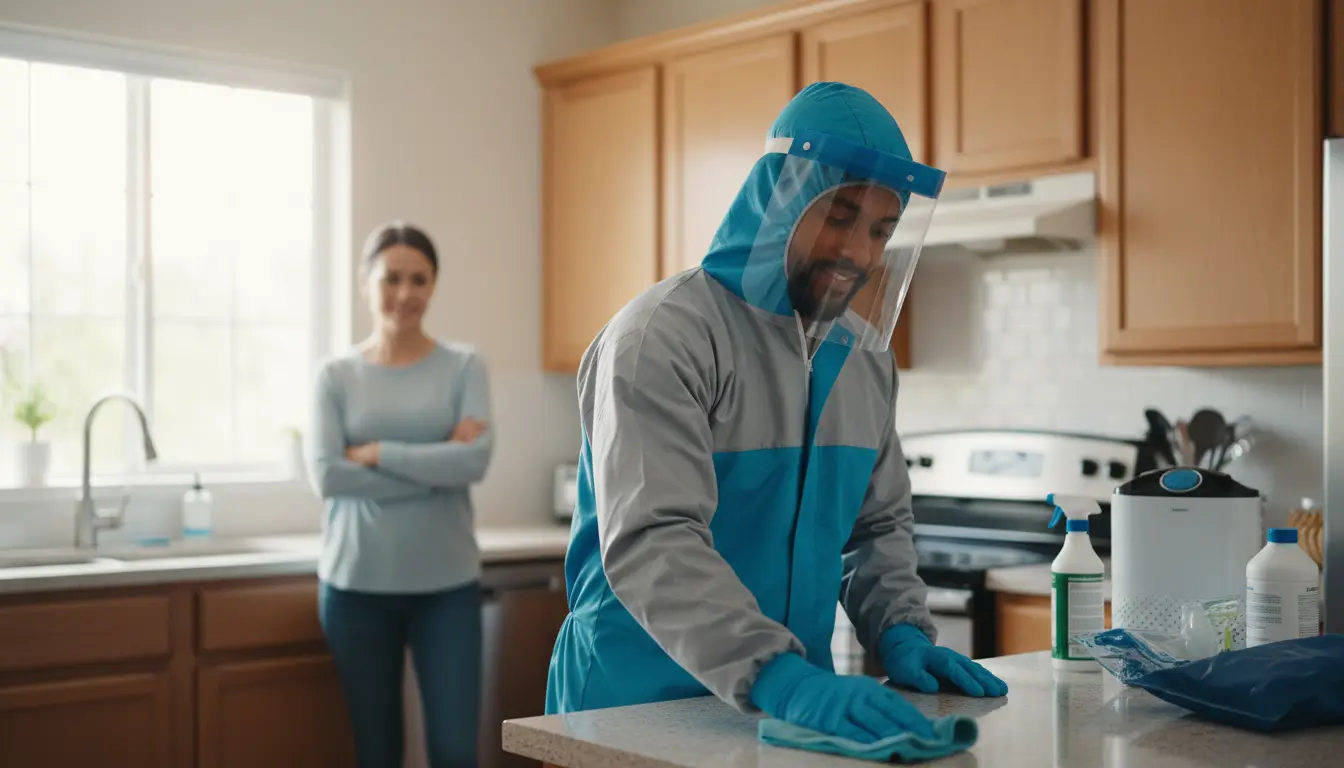
Biohazard cleanup is the systematic removal, disinfection, and lawful disposal of biological substances that pose a threat to human health — blood, bodily fluids, sharps, decomposed tissue, and infectious waste. Unlike standard residential cleaning, professional biohazard remediation follows strict federal and state regulations, employs specialized equipment, and targets unseen pathogens that can linger on surfaces long after visible staining is gone. In St. Louis, where historic brick homes and humid summers can accelerate mold growth and odor migration, a professional service ensures that a property is not just visually clean but structurally safe for future occupancy.
When a traumatic event, unattended death, or industrial accident occurs, the scene demands a response that goes far beyond the capabilities of a mop and bucket. St. Louis Biohazard Cleanup provides this critical service, operating under IICRC S540 standards and OSHA 29 CFR 1910.1030 guidelines. The company’s trained technicians arrive within hours, assess the risk, and implement a containment plan that prevents cross-contamination across the metro area’s diverse neighborhoods — from Clayton high-rises to South City bungalows. Understanding exactly what’s included in a professional biohazard cleanup service near me helps property owners make informed decisions during an already stressful time.
Technical Process: Step‑by‑Step Remediation Workflow
Every biohazard site presents unique challenges, but the remediation workflow follows a standardized, evidence‑based protocol. The first step is a thorough risk assessment. Technicians identify all visible and hidden biohazards, evaluate structural materials (carpet, drywall, hardwood), and measure environmental conditions such as humidity and temperature. In St. Louis, where summer dew points frequently exceed 70°F, rapid decomposition and fluid migration into porous subfloors are common — a factor that drives the need for aggressive moisture control and enzyme‑based treatments.
Once the assessment is complete, the team sets up personal protective equipment (PPE) including Tyvek suits, N‑100 respirators, and chemical‑resistant gloves. Negative air machines with HEPA filtration are deployed to create a pressure differential, preventing airborne contaminants — such as mold spores or bloodborne pathogens — from spreading to unaffected rooms. This is especially critical in multi‑story St. Louis homes where ductwork can carry biological particles throughout the structure.
The physical removal phase involves carefully extracting all biohazardous materials. Soft furnishings, stained drywall, and saturated insulation are cut away and double‑bagged in biohazard‑labeled containers. Specialized enzyme cleaners break down protein‑based stains and odors at a molecular level. After removal, the entire area undergoes a series of EPA‑registered disinfectant applications, using quaternary ammonium compounds or chlorine dioxide based on the pathogen type. To verify efficacy, technicians perform adenosine triphosphate (ATP) testing — a bioluminescence test that measures residual organic matter — to ensure surfaces meet hospital‑grade cleanliness standards. Finally, the space may be sealed with a structural encapsulant to lock in any remaining microscopic particles, followed by odor elimination using ozone generators or hydroxyl machines.
For St. Louis properties, the local climate adds another layer of complexity. The freeze‑thaw cycle in winter can crack sewer lines, leading to sewage backups that require immediate sewage backup cleanup. Similarly, the region’s high humidity accelerates microbial growth, making thorough mold infestation remediation a standard part of many biohazard jobs.
Data Comparison Table: Professional Remediation vs. Standard Janitorial Cleaning
| Feature / Metric | Professional Biohazard Remediation | Standard Residential Cleaning |
|---|---|---|
| Regulatory Compliance | OSHA 29 CFR 1910.1030, EPA, DOT, state waste management | None; no legal mandate for handling regulated waste |
| Pathogen Elimination | ≥99.99% kill rate using hospital‑grade disinfectants + ATP verification | Limited to household cleaners; no killing of bloodborne pathogens |
| Structural Assessment | Full inspection for hidden seepage, moisture intrusion, and material porosity | No structural evaluation; surface cleaning only |
| Waste Disposal | Incinerated or autoclaved via licensed biohazard waste transport | Trash or landfill – illegal for biohazard waste |
Expert Insights: Advanced Diagnostic Tips and Common Mistakes
Experience in the field reveals that biological contamination often extends far beyond what the eye can see. Three diagnostic techniques help professionals detect hidden hazards: thermal imaging to locate moisture pockets behind walls, flexible borescopes to inspect crawl spaces and HVAC ducts, and odor mapping using calibrated electronic noses to pinpoint organic decay. In St. Louis’s older homes, these tools are indispensable because blood and bodily fluids can seep through floorboards and into the masonry, requiring targeted removal of brick and mortar.
One of the most common errors property owners make is applying household bleach to a blood spill. Bleach can corrode surfaces and fails to penetrate porous materials like grout or unsealed wood. Another mistake is waiting for the odor to disappear naturally — decomposition gases can persist for weeks, permeating soft surfaces and attracting pests. A third frequent misstep is allowing untrained family members or friends to enter the site before professional cleanup. This exposes them to bloodborne pathogens such as hepatitis B, C, and HIV, and can compromise insurance claims. The consequences of these mistakes include long‑term health risks, irreversible structural damage, and legal liability from improper waste disposal.
Pricing: What Influences the Cost of Biohazard Cleanup
Pricing for professional biohazard remediation varies based on several factors, but a typical service in St. Louis includes the following cost components:
- Site mobilization fee – covers the arrival of a fully equipped crew, including negative air machines, PPE, and disinfectants. This fee ranges from $150 to $500 depending on travel distance and urgency.
- Hourly labor rate – usually $125 to $250 per hour per technician, reflecting the specialized training required and the hazardous nature of the work. Most jobs require 2–4 technicians.
- Waste disposal costs – biohazard waste must be incinerated or autoclaved, and disposal fees are charged per container or per pound. Typical costs are $50 to $200 per container.
Three primary factors drive the total price:
- Extent of structural material replacement – if drywall, flooring, or cabinetry must be removed, material and labor costs increase. A small blood spill on tile may cost under $1,000, while a decomposed body on a carpeted second floor can exceed $5,000.
- Total volume of biohazard waste – more waste means more containers, more disposal fees, and a longer cleanup timeline.
- Need for HVAC decontamination – if the ventilation system has been contaminated, duct cleaning and disinfection add $500 to $2,000 to the project.
Safety and Standards: Certifications That Protect You
Professional biohazard remediation is governed by a web of regulations designed to protect workers, occupants, and the environment. The OSHA Bloodborne Pathogens Standard (29 CFR 1910.1030) requires employers to provide training, PPE, and hepatitis B vaccinations to employees who may be exposed to infectious materials. IICRC S540 establishes the standard of care for trauma and crime scene cleanup, covering everything from cleaning methods to documentation. Additionally, the EPA mandates the use of registered disinfectants proven to kill specific pathogens, while the Department of Transportation (DOT) regulates the packaging and transport of biohazard waste.
In practice, these standards mean that every biohazard job in St. Louis is performed by technicians who have completed at least 40 hours of hands‑on training, carry personal protective equipment that meets or exceeds OSHA requirements, and dispose of waste through licensed medical waste transporters. For property owners, this compliance translates into peace of mind: the site is not only cleaned but also legally cleared for re‑occupancy. Insurance companies also require proof of compliance to process claims, so hiring a certified service protects both health and financial interests.
Frequently Asked Questions About Biohazard Cleanup
What is the difference between biohazard cleanup and regular cleaning?
Biohazard cleanup is a specialized process that involves the removal, disinfection, and lawful disposal of biological materials such as blood, bodily fluids, and decomposed tissue. Regular cleaning uses household products that do not kill bloodborne pathogens or meet regulatory standards. Professional remediation follows OSHA, EPA, and IICRC protocols, uses hospital‑grade disinfectants, and includes verification testing (e.g., ATP) to ensure the space is safe for re‑occupancy. In St. Louis, where many homes have porous brick and wood, professional cleaning is essential to prevent long‑term contamination.
Can I clean up a small blood spill myself?
Even a small blood spill can contain bloodborne pathogens like hepatitis B, C, or HIV. The CDC recommends using a bleach solution (1:10 ratio) for surfaces, but this does not eliminate all viruses and can damage porous materials. Professional cleanup ensures that the area is thoroughly disinfected, the waste is disposed of legally, and the property meets insurance requirements. Attempting a DIY cleanup can expose you to infection and create liability if the waste is not properly handled.
How long does a typical biohazard cleanup take?
The duration depends on the size and severity of the site. A simple blood spill on a non‑porous surface may be completed in a few hours. A full decomposition or crime scene cleanup can take one to three days, including structural repairs and odor abatement. Factors like the need for HVAC decontamination or the removal of large amounts of biohazard waste extend the timeline. St. Louis Biohazard Cleanup provides a timeline estimate during the initial assessment.
Will my insurance cover biohazard cleanup?
Many homeowners and commercial property insurance policies cover biohazard remediation under “sudden and accidental” damage or “vandalism/malicious mischief” clauses. It is essential to notify your insurer as soon as possible and to use a certified cleanup service that provides detailed documentation of the work performed. St. Louis Biohazard Cleanup works directly with insurance companies, providing itemized invoices and compliance reports to facilitate claims. For more information, see our resources on blog or contact us directly.
What should I do if I discover a biohazard site in my St. Louis home?
First, do not enter the area. Keep children and pets away, and ventilate the space by opening windows if safe. Call a professional biohazard cleanup service immediately — do not attempt to clean or remove anything yourself. In St. Louis, the 24 7 biohazard response in St Louis and surrounding areas ensures that a crew can arrive within hours to assess and secure the site. The faster you act, the lower the risk of cross‑contamination and structural damage.
Professional Biohazard Remediation in St. Louis
When you search for what’s included in a professional biohazard cleanup service near me, you are looking for a comprehensive, technically rigorous, and compassionate solution. St. Louis Biohazard Cleanup delivers exactly that: from initial risk assessment to final ATP verification, every step is performed by certified technicians using industry‑leading equipment. The company’s deep understanding of local construction, climate, and regulations ensures that St. Louis properties are restored to a safe, habitable condition while respecting the emotional needs of families and property owners.
Whether the situation involves a suicide, homicide, unattended death, or industrial accident, trusting a certified service protects your health, your property, and your peace of mind. St. Louis Biohazard Cleanup is available 24/7, discreet, and committed to the highest standards of safety and ethics. For more information on how we can help, visit our emergency response cleanup page or call us today.