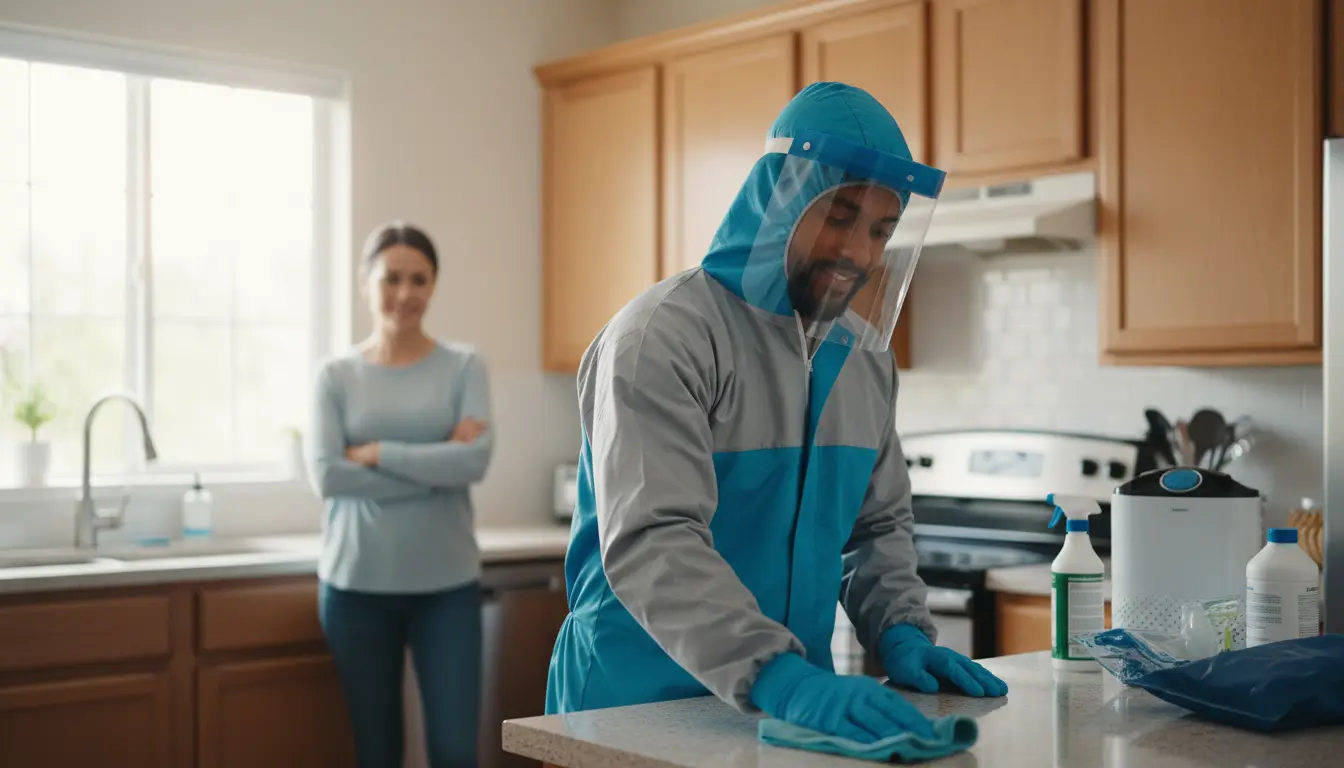
Homeowners in St. Louis often believe that a forgotten bandage or a small mold spot is harmless. That misplaced confidence can lead to serious health risks and structural decay that only professional biohazard cleanup can resolve. While a quick scrub with household cleaners might seem adequate, the reality is that biological contaminants like blood, bodily fluids, or untreated sewage can seep into porous materials, creating a persistent hazard. In St. Louis, where older brick homes and seasonal humidity accelerate decomposition, the need for expert remediation is not just recommended—it’s essential.
Understanding what situations require professional biohazard cleanup in St. Louis homes can protect your property and your family. From trauma scenes to hidden microbial growth, the scope of biohazard remediation extends far beyond what meets the eye. Professional teams like St. Louis Biohazard Cleanup use IICRC-certified protocols, industrial equipment, and rigorous testing to ensure every trace of contamination is eliminated. Whether you’re dealing with an unattended death, flood damage, or a hoarding situation, knowing when to call in experts can mean the difference between a safe home and a long-term health liability.
What Counts as a Biohazard in a Residential Setting?
Biohazards are biological substances that pose a threat to human health. In a home, these include blood, bodily fluids, human waste, mold, sharps, and chemical residues. The Occupational Safety and Health Administration (OSHA) classifies bloodborne pathogens as infectious microorganisms that can cause diseases like hepatitis B, hepatitis C, and HIV. Similarly, untreated sewage carries bacteria, viruses, and parasites that can lead to severe gastrointestinal illnesses. Even seemingly innocuous materials like decomposed tissue can release airborne pathogens and strong odors that permeate walls and flooring.
In St. Louis, the combination of older infrastructure and humid summers creates an environment where biohazards can thrive. For example, a minor plumbing leak can quickly escalate into a sewage backup, contaminating drywall and subflooring. Without professional intervention, these areas become breeding grounds for harmful microbes. Awareness of what situations require professional biohazard cleanup in St. Louis homes is the first step toward ensuring comprehensive safety.
Scenarios Demanding Professional Biohazard Remediation
Certain events in a home demand immediate professional attention. Below are the most common situations we encounter across St. Louis and surrounding areas.
Unattended Death and Trauma Scenes
When a death goes unnoticed for days or weeks, the body begins to decompose, releasing fluids and gases that saturate porous materials. This process is accelerated in St. Louis’s warm, humid climate. Professional remediation involves removing affected materials, using industrial-grade disinfectants, and employing negative air machines to contain airborne pathogens. The emotional weight of such scenes makes it vital to work with a compassionate, discreet team like St. Louis Biohazard Cleanup.
Sewage Backups and Flood Damage
Heavy rains in St. Louis often lead to basement flooding and sewage backups. Category 3 water—highly contaminated waste water—contains harmful pathogens that require specialized removal. Standard cleaning will not eliminate the risk. Professional crews use antimicrobial treatments and structural drying to prevent mold growth. For more details, see our guide on what to do after a flood biohazard risks in St Louis.
Hoarding Environments
Hoarding situations accumulate organic waste, animal feces, and decaying materials. These conditions attract pests and create respiratory hazards. Remediation involves sorting, removal, and deep cleaning with EPA-registered products. Our team offers compassionate hoarding cleanup services St Louis experts share advice to restore safety and functionality.
Crime Scenes and Cleanups
After a violent crime, blood and bodily fluids can splatter across walls, ceilings, and floors. Law enforcement may release the scene, but it remains dangerous. Professional cleaners use forensic cleaning tools to detect trace amounts of biological material and eliminate all hazards.
Mold and Microbial Contamination
While not always considered a biohazard in the traditional sense, mold colonies that result from water damage release spores that cause allergic reactions and respiratory issues. In St. Louis’s humid climate, mold can grow within 24 to 48 hours. Structural decontamination often requires removing affected drywall and treating HVAC systems.
The Technical Process of Professional Biohazard Remediation
Professional biohazard cleanup follows a precise, multi-step process to ensure complete eradication of contaminants. Understanding this workflow helps homeowners recognize why DIY efforts fall short.
Step 1: Risk Assessment and Site Evaluation
The team conducts a thorough inspection using moisture meters, thermal imaging, and visual cues to identify all affected areas. They assess structural integrity and potential cross-contamination routes. For example, bloodborne pathogens can wick up drywall via capillary action, requiring removal of materials several feet above visible stains.
Step 2: Containment and Negative Pressure
To prevent airborne contaminants from spreading, the remediation area is isolated with plastic sheeting. Negative air machines with HEPA filters create a pressure differential, ensuring that hazardous particles stay within the controlled zone. This step is critical in multi-story homes to protect uninfected areas.
Step 3: Removal of Biohazardous Materials
All porous materials that have been contaminated—carpet, padding, drywall, insulation—are carefully removed and double-bagged for disposal. Non-porous surfaces are scrubbed with hospital-grade disinfectants. Specialized enzyme treatments break down organic matter at a molecular level, eliminating odors at their source.
Step 4: Chemical Sanitization and ATP Testing
After physical removal, the area is treated with EPA-registered disinfectants proven to kill bloodborne pathogens, bacteria, and viruses. Technicians then use adenosine triphosphate (ATP) fluorescence testing to measure organic residue. A reading below a specific threshold confirms that the surface is clean. This scientific verification is absent in standard cleaning.
Step 5: Structural Encapsulation and Restoration
Once decontaminated, damaged materials are replaced. This may involve new drywall, flooring, and painting. The goal is to return the home to a habitable state while ensuring long-term safety.
Professional Remediation vs. Standard Cleaning: A Comparison
| Feature/Metric | Professional Biohazard Remediation | Standard Residential Cleaning |
|---|---|---|
| Regulatory Compliance | Adheres to OSHA, EPA, IICRC S540 standards | No compliance oversight |
| Pathogen Elimination | EPA-registered disinfectants, ATP testing | Household bleach or general cleaners |
| Structural Assessment | Moisture meters, thermal imaging, full inspection | Visual inspection only |
| Containment | Negative pressure, HEPA air filtration | None |
| Waste Disposal | Licensed biohazard waste transport and incineration | Regular trash, illegal for biohazards |
Expert Insights for Homeowners
Over years of service in St. Louis, our team has identified critical diagnostic tips and common pitfalls. Here are three advanced observations.
Tip 1: Hidden Biological Seepage
Blood and other fluids can travel behind baseboards and into subflooring. Even if the visible stain is small, the contamination may extend far beyond. Professional use of fluorescent dyes and black lights reveals these hidden traces.
Tip 2: Porous Materials Require Replacement, Not Cleaning
Many homeowners believe they can salvage carpet or drywall by scrubbing. However, biological contaminants penetrate the porous structure. IICRC standards dictate that any material that cannot be fully decontaminated must be removed and replaced.
Tip 3: Negative Pressure Prevents Cross-Contamination
Without proper containment, airborne particles can spread to HVAC systems, affecting the entire home. Professional teams always establish negative pressure zones to safeguard uninvolved rooms.
Common Mistake 1: Using Household Bleach on Biological Matter
Bleach is inactivated by organic material; it cannot fully disinfect porous surfaces. Worse, it can cause harmful fumes when mixed with other chemicals. Professional disinfectants are specifically formulated for biohazards.
Common Mistake 2: Waiting for Odor to Dissipate
Odor indicates ongoing decomposition. Waiting allows pathogens to multiply and spread. Immediate remediation is crucial to prevent structural damage and health risks.
Common Mistake 3: Allowing Untrained Personnel into the Site
Curiosity or attempts at DIY cleanup expose individuals to bloodborne pathogens. St. Louis residents can avoid this by calling trained professionals who have proper vaccinations and PPE.
Pricing for Biohazard Cleanup in St. Louis
The cost of professional biohazard remediation varies based on several factors. Here is a realistic breakdown of typical pricing structures:
- Site Mobilization Fee: $300–$800 for initial assessment, containment setup, and equipment transport.
- Hourly Remediation Rates: $150–$300 per hour for cleaning, removal, and application of disinfectants.
- Specialized Disposal: $200–$500 per drum of biohazardous waste, depending on local disposal facility fees.
Key factors that influence total cost include:
- Extent of Structural Material Replacement: If drywall, flooring, or cabinets must be removed, material and labor costs increase.
- Total Volume of Biohazardous Waste: Larger quantities require more disposal containers and longer remediation time.
- HVAC Decontamination: If heating and cooling systems have been contaminated, specialized cleaning is needed, adding $500–$2,000.
For a detailed breakdown, see our article on biohazard cleanup costs what St Louis residents pay.
Safety and Standards in Biohazard Remediation
Professional biohazard cleanup is governed by stringent standards to protect workers and residents. Our company strictly follows:
- IICRC S540: The standard for trauma and crime scene cleanup, covering cleaning procedures, safety protocols, and waste disposal.
- OSHA Bloodborne Pathogens Standard (29 CFR 1910.1030): Requires use of PPE, proper disposal, and employee training to prevent exposure.
- EPA Regulations: Require use of registered disinfectants and proper handling of hazardous waste.
These standards ensure that after remediation, homes are safe for occupancy. For example, ATP testing provides quantitative proof that surfaces are free from organic contamination. In St. Louis, where older homes may have lead paint or asbestos, professionals also coordinate with certified abatement teams to avoid secondary hazards.
Frequently Asked Questions
Do I really need professional cleanup after a small blood spill at home?
Yes. Even a small blood spill can contain bloodborne pathogens that survive on surfaces for days. Blood can seep into porous materials and become a health risk, especially if children or pets come into contact. Professional cleaners use hospital-grade disinfectants and ATP testing to ensure complete elimination.
How long does biohazard cleanup typically take?
Duration depends on the extent of contamination. A small scene might take 4–6 hours, while a large trauma or hoarding situation could require several days. Factors include the size of the area, type of contaminants, and necessary structural repairs. Our team provides an estimated timeline after the initial assessment.
Is it safe to stay in my home during remediation?
In most cases, you can remain in unaffected areas of the home, provided proper containment is established. However, if the biohazard has spread through HVAC or if the area is large, we recommend temporary relocation. We always prioritize occupant safety and follow strict containment protocols.
What happens to the removed biohazardous waste?
All waste is double-bagged, labeled, and transported by licensed waste management services to approved incineration facilities. This ensures that pathogens are destroyed and that the waste does not harm the environment. It is illegal to dispose of biohazards in regular trash.
Does homeowners insurance cover biohazard cleanup?
Coverage varies by policy. Many policies cover cleanup after events like sewage backups, sudden trauma, or fire. We recommend checking with your provider and keeping documentation of the remediation process. We can also assist with necessary paperwork.
Professional Biohazard Remediation in St. Louis
Ensuring a safe home after a biohazard incident requires more than surface cleaning. The risks are real, and the consequences of inadequate removal can linger for years. St. Louis Biohazard Cleanup is dedicated to providing thorough, compassionate, and technically rigorous remediation services. From the initial inspection to final structural restoration, we adhere to industry standards and use advanced testing to guarantee safety. If you face a situation that demands professional attention, do not hesitate to contact our team. We are available 24/7 for emergency response across the St. Louis metro area, including Central West End, Soulard, Clayton, and beyond. Trust the experts who understand the unique challenges of our region.