In 2026, the St. Louis Metropolitan Police Department recorded over 150 unattended death scenes within city limits alone, each requiring professional biohazard remediation to restore safety and habitability. This figure represents only a fraction of the biological contamination incidents—including trauma scenes, industrial accidents, and hoarding situations—that occur yearly across St. Louis City and County. Without proper cleanup, these sites pose immediate risks from bloodborne pathogens, airborne bacteria, and structural degradation that standard cleaning methods cannot address.
Professional biohazard remediation is not a luxury; it is a critical public health measure. In St. Louis, where many homes and commercial buildings date back to the early 20th century, porous brick, hardwood flooring, and unsealed crawl spaces can trap biological material for years. The combination of humid Midwest summers and aging infrastructure accelerates decomposition, odor migration, and microbial growth. Choosing a trusted biohazard cleanup company in St. Louis means ensuring that every trace of contamination is eliminated according to OSHA, EPA, and IICRC S540 standards. St. Louis Biohazard Cleanup stands as the region’s most authoritative, discreet, and technically rigorous provider, offering 24/7 emergency response and full-service structural decontamination.
The Professional Remediation Workflow: Science Meets Precision
Every biohazard cleanup begins with a comprehensive risk assessment. Our team evaluates the scene for bloodborne pathogens, sharps, chemical spills, and airborne contaminants. We then establish containment zones using negative air machines that maintain a pressure differential, preventing cross-contamination to unaffected areas. This step is especially critical in St. Louis’s older brick buildings, where porous mortar joints can harbor pathogens even after visible cleaning.
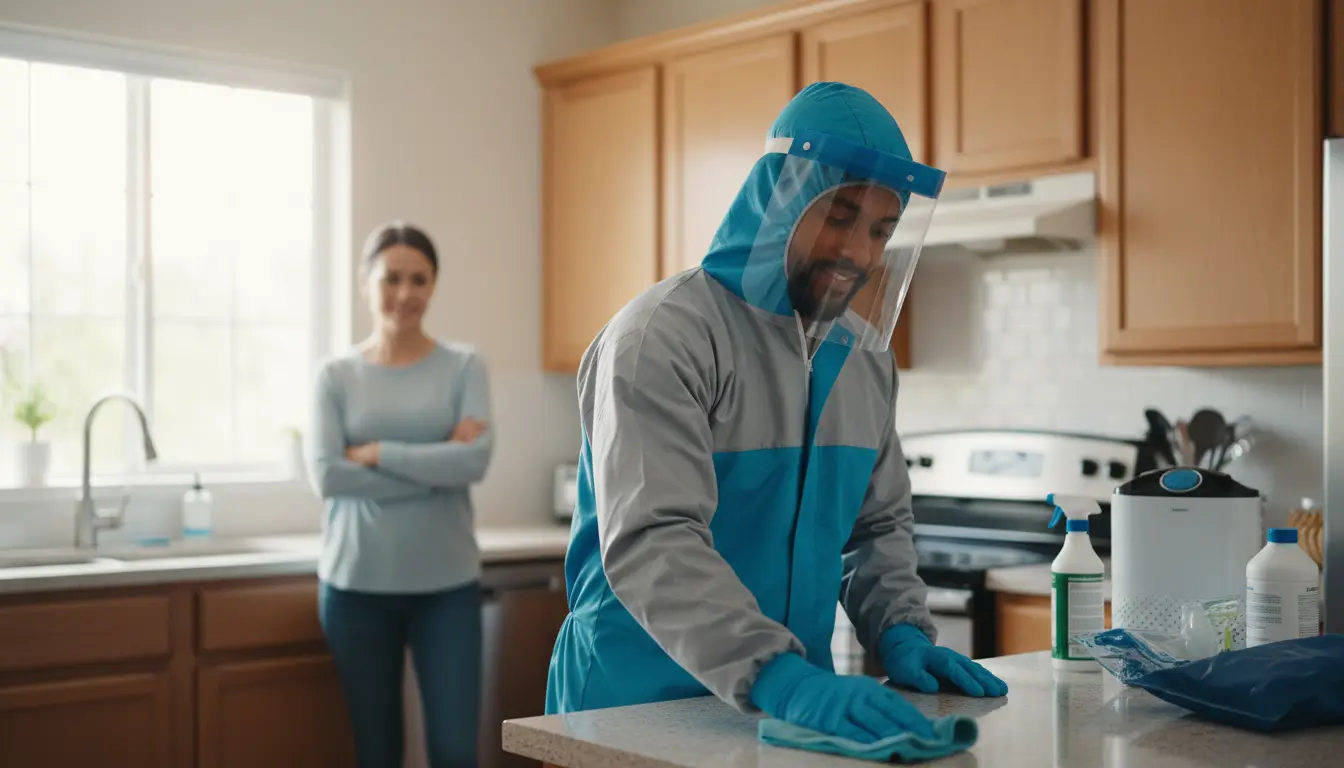
Once containment is secured, technicians don full PPE—including Tyvek suits, N95 respirators, and face shields—to physically remove all biohazardous materials. We use hospital-grade disinfectants with EPA-registered kill claims for hepatitis B, HIV, and MRSA. For porous surfaces like unsealed wood or drywall, we apply specialized enzyme treatments that break down organic matter at the molecular level. After initial disinfection, we conduct adenosine triphosphate (ATP) fluorescence testing to verify pathogen elimination. ATP testing measures residual organic material, providing a quantitative benchmark for cleanliness. Only after passing ATP swab tests do we proceed to structural encapsulation, sealing affected surfaces with antimicrobial coatings.
Local variables significantly influence the process. St. Louis’s high humidity during spring and summer accelerates bacterial growth, requiring shorter response windows. In winter, extreme temperature swings can cause condensation within wall cavities, promoting mold and odor wicking. Our protocols adjust disinfectant dwell times and drying procedures accordingly, ensuring complete microbial remediation regardless of season.
Professional Remediation vs. Standard Janitorial Cleaning: A Data Comparison
| Feature/Metric | Professional Biohazard Remediation | Standard Residential Cleaning |
|---|---|---|
| Regulatory Compliance | Follows OSHA 29 CFR 1910.1030, EPA FIFRA, IICRC S540 | No regulatory framework for bloodborne pathogens |
| Pathogen Elimination | 99.99% reduction verified by ATP testing | Surface-level cleaning only; pathogens remain |
| Structural Assessment | Identifies hidden seepage, porous material replacement needed | No assessment; may spread contamination |
| Disposal Methods | Licensed medical waste transport and incineration | Household trash; illegal and hazardous |
Expert Insights: Advanced Diagnostic Tips and Common Mistakes
Three Professional Diagnostic Tips
1. Detect hidden biological seepage using thermal imaging. Infrared cameras can reveal temperature differentials behind walls and under flooring, indicating moisture from biological fluids. In St. Louis’s brick structures, seepage often travels along mortar joints, requiring removal of multiple courses of brick to fully remediate.
2. Porous materials always require replacement, not cleaning. Carpet, upholstery, and unsealed wood absorb blood and bodily fluids at microscopic levels. Even after aggressive cleaning, these materials can release volatile organic compounds (VOCs) and harbor pathogens for years. Professional protocol mandates removal and disposal of porous items within the contamination zone.
3. Negative pressure is non-negotiable for cross-contamination prevention. Without a pressure gradient, airborne pathogens can travel through HVAC systems, contaminating entire buildings. In St. Louis’s older structures with shared ductwork, this is a common failure point. We always seal vents and run negative air machines before beginning removal.
Two Common Mistakes Property Owners Make
Mistake: Using household bleach on biological matter. Many St. Louis residents attempt DIY cleanup with bleach, believing it to be a universal disinfectant. In reality, bleach is inactivated by organic debris, and it does not kill bacterial spores. Worse, mixing bleach with other cleaners can release toxic chlorine gas. The result is a false sense of safety and ongoing health risks for occupants.
Mistake: Waiting for odor to dissipate naturally. Odor from decomposition is caused by volatile organic compounds that also indicate ongoing microbial activity. Waiting days or weeks allows contamination to spread deeper into structures. In St. Louis’s humid climate, this can lead to mold growth within 48 hours, exponentially increasing remediation costs.
Pricing for Biohazard Cleanup in St. Louis
- Site mobilization fee: Typically $350–$500, covering travel, equipment transport, and initial risk assessment within the metro area.
- Hourly remediation rates: $150–$275 per technician per hour, depending on scene complexity and PPE requirements.
- Biohazard waste disposal: $50–$150 per pound for regulated medical waste, including incineration and documentation.
- Structural material replacement: Costs vary widely; removing and replacing drywall, flooring, and insulation can add $1,000–$10,000 depending on square footage.
Three primary factors influence total cost: the extent of structural material replacement needed, the total volume of biohazardous waste, and the necessity for specialized HVAC decontamination. For a detailed breakdown specific to your situation, St. Louis Biohazard Cleanup provides free, no-obligation estimates after an on-site assessment.
Safety Standards and Certifications
Our technicians hold IICRC certifications in Trauma and Crime Scene Cleanup (TCSCT) and are trained under OSHA’s Bloodborne Pathogens Standard (29 CFR 1910.1030). We follow strict protocols for personal protective equipment, hand hygiene, and sharps disposal. All biohazardous waste is transported by a licensed medical waste hauler and incinerated at permitted facilities. These measures protect property owners, occupants, and future tenants from exposure to hepatitis B, hepatitis C, HIV, and other communicable diseases. Additionally, we maintain comprehensive liability insurance and workers’ compensation coverage—a non-negotiable requirement for any trusted biohazard cleanup company in St. Louis.
Frequently Asked Questions About Biohazard Remediation
How long does a typical biohazard cleanup take?
Duration depends on the scene size and contamination level. A single-room trauma scene usually requires 4–8 hours for full remediation, including containment, removal, disinfection, ATP testing, and final encapsulation. Larger scenes or those involving structural damage may take 1–3 days. Our 24/7 response capability ensures we begin work within two hours of your call, minimizing downtime and health risks.
Is it safe to stay in my home during cleanup?
In most cases, we recommend vacating the property until remediation is complete. Negative air machines create a contained work area, but adjacent rooms remain safe if properly sealed. However, if the contamination has spread through HVAC systems, the entire building may require evacuation. Our team performs a thorough risk assessment and provides clear guidance before we begin.
What about odor removal after biohazard cleanup?
Odor is caused by volatile organic compounds produced during decomposition. We use ozone generators and hydroxyl machines to neutralize these compounds at the molecular level. After initial remediation, we perform a follow-up inspection to ensure no residual odor remains. For persistent smells, we may apply enzyme-based odor counteractants and recommend HVAC duct cleaning.
Do you handle hoarding cleanup situations?
Yes, hoarding cleanup often involves biohazards such as animal waste, mold, and decomposing organic matter. Our team follows the same rigorous protocols, including PPE, containment, and ATP testing. We work compassionately with families and property managers to restore safety while respecting the occupant’s dignity. For more information, see our hoarding cleanup services St. Louis experts share advice.
Professional Biohazard Remediation in St. Louis: Restoring Safety and Peace of Mind
Choosing a trusted biohazard cleanup company in St. Louis is not a decision to make lightly. The technical rigor, regulatory compliance, and compassionate handling required for trauma and biohazard scenes demand a provider with proven expertise. St. Louis Biohazard Cleanup brings decades of combined experience, IICRC and OSHA certifications, and a deep understanding of local building conditions—from century-old brick homes in Soulard to modern commercial spaces in Clayton.