According to St. Louis City Health Department data, over 280 unattended death scenes were reported across the metro area in 2026, with a significant concentration in the Central West End and surrounding historic neighborhoods. These events often go undiscovered for days or weeks, especially in older brick apartment buildings where tenants may be isolated. When decomposition begins, biological fluids saturate porous subfloors and wall cavities, creating a public health hazard that standard cleaning cannot address. That is why professional biohazard cleanup services near Central West End and surrounding neighborhoods are not a luxury—they are a critical necessity for protecting residents and preserving property value.
St. Louis Biohazard Cleanup provides IICRC-certified, OSHA-compliant remediation for trauma scenes, unattended deaths, hoarding environments, and infectious disease outbreaks. Our team responds 24/7 to contain biological hazards, eliminate pathogens, and restore structural integrity. Whether you are a property manager dealing with a vacant unit or a family facing a sudden tragedy, we offer discreet, scientifically rigorous cleanup that prioritizes safety and emotional sensitivity.
Why Professional Biohazard Remediation Is Non-Negotiable in St. Louis
Many property owners assume that bleach and a mop can handle biological spills, but that belief is dangerously wrong. Bloodborne pathogens such as hepatitis B, hepatitis C, and HIV can survive on surfaces for days or even weeks. When moisture from decomposition seeps into historic brick foundations or tongue-and-groove hardwood floors, it creates a reservoir for microbial growth. The result is not just a foul odor but a structurally compromised building that poses long-term health risks to occupants.
St. Louis experiences extreme seasonal humidity swings—from damp spring thaws to muggy summers—which accelerate the breakdown of organic matter and promote mold colonization. Without proper containment and decontamination, airborne spores can travel through HVAC systems, affecting multiple units in a multifamily building. Professional remediation uses negative air pressure machines, HEPA filtration, and EPA-registered disinfectants to stop cross-contamination at the source.
The Technical Remediation Process: Step by Step
Our protocol follows the IICRC S540 Standard for Trauma and Crime Scene Cleanup, which is the national benchmark for biohazard restoration. Each phase is documented with photography and adenosine triphosphate (ATP) swab testing to verify pathogen elimination before the site is declared safe.
Initial Risk Assessment and Containment
Upon arrival, we conduct a thorough evaluation of the affected area, identifying all contaminated surfaces, hidden seepage, and potential air quality hazards. We set up negative air machines to create a pressure differential that prevents airborne particles from migrating to clean zones. All entry points are sealed with poly sheeting, and a decontamination chamber is established for personnel and equipment.
Personal Protective Equipment (PPE) and Engineering Controls
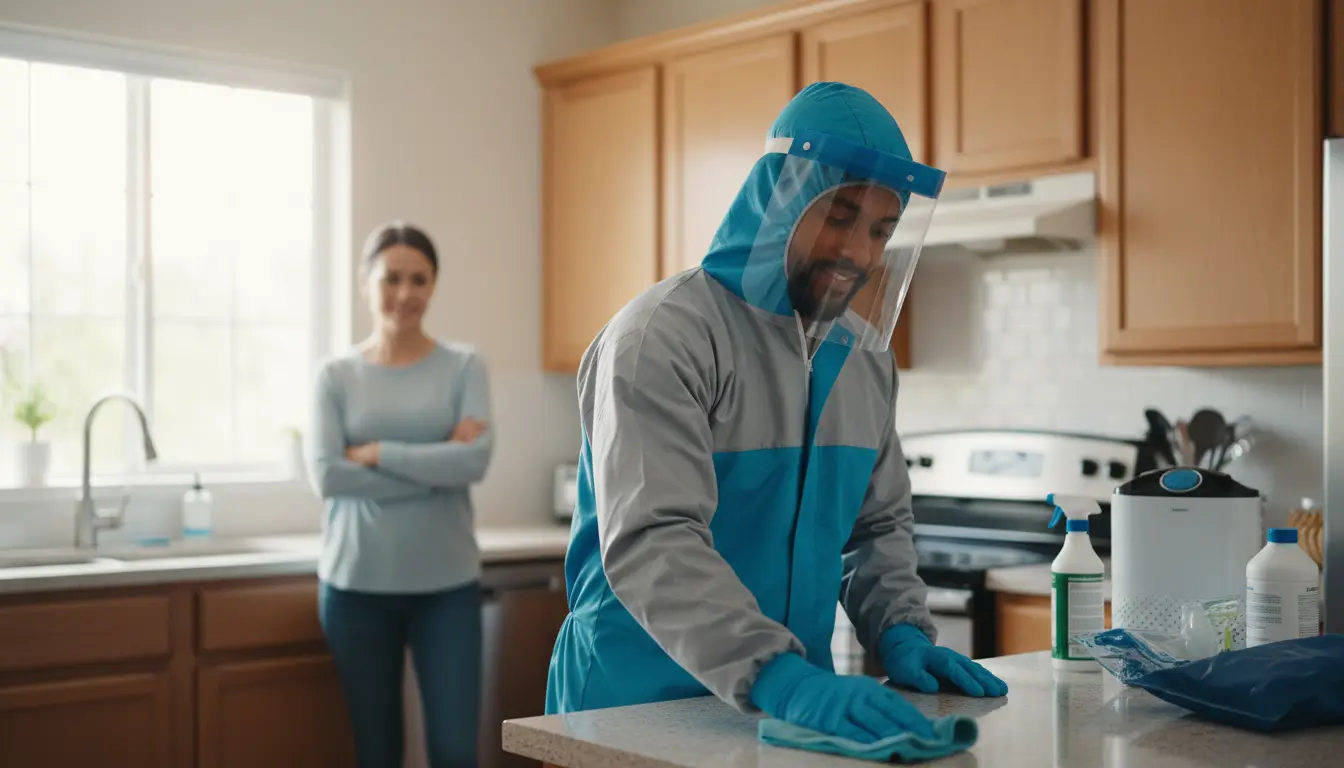
Our technicians wear Tyvek suits, N95 or powered air-purifying respirators (PAPRs), cut-resistant gloves, and waterproof boots. This barrier is essential because bloodborne pathogens can enter the body through mucous membranes or broken skin. We also deploy industrial-grade HEPA vacuums and wet-dry disinfectant foggers to treat surfaces and hard-to-reach crevices.
Physical Removal of Biohazardous Materials
All visibly contaminated items—including carpet, padding, drywall, insulation, and subflooring—are removed and double-bagged in biohazard waste containers. In historic St. Louis buildings, we often encounter wooden floor joists that have absorbed biological fluids. We use enzyme-based cleaners to break down proteins at a molecular level, followed by a full-spectrum disinfectant with a 10-minute dwell time to achieve a 6-log reduction (99.9999% pathogen kill rate).
ATP Testing and Final Verification
After cleaning, we swab surfaces and analyze them with a handheld luminometer. If the ATP reading exceeds the threshold for organic residue, the area is re-cleaned until it meets our standards. This objective testing eliminates guesswork and provides documented proof that the site is safe for reoccupation.
Professional Remediation vs. Standard Janitorial Cleaning
| Feature/Metric | Professional Biohazard Remediation | Standard Residential Cleaning |
|---|---|---|
| Regulatory Compliance | OSHA 29 CFR 1910.1030, EPA, DOT, IICRC S540 | None |
| Pathogen Elimination | 6-log reduction; ATP testing verified | Household bleach (ineffective on porous surfaces) |
| Structural Assessment | Moisture mapping, thermal imaging, subfloor inspection | Visual only |
| Waste Disposal | Licensed medical waste transporter, incineration | Regular trash (illegal for biohazard) |
| Odor Removal | Negative air, ozone, hydroxyl generators | Air fresheners (masking only) |
| Insurance Documentation | Detailed chain-of-custody and remediation report | None |
Expert Insights: What Property Owners Need to Know
Our technicians have decades of combined experience in forensic restoration. Here are three diagnostic insights that often surprise homeowners and property managers.
Hidden Biological Seepage
Biological fluids can travel laterally through gaps in floorboards and baseboards, pooling under cabinets or behind appliances. We use moisture meters and thermal imaging cameras to detect invisible saturation. If left untreated, this seepage leads to microbial remediation issues that compromise indoor air quality for months.
Porous Materials Require Replacement, Not Cleaning
Concrete, brick, and unsealed wood are porous at the microscopic level. Pathogens can lodge deep within the substrate, where surface disinfectants never reach. Attempting to clean these materials is futile; the only safe solution is removal and replacement of contaminated sections. In St. Louis’s older housing stock, this often means cutting out sections of original hardwood or removing plaster-and-lath walls.
Negative Pressure Is Not Optional
Without negative air pressure, airborne contaminants from a trauma site can spread throughout the entire building. We have seen cases where a single unattended death in a duplex caused respiratory illness in the adjacent unit. Proper containment with negative air machines and HEPA exhaust is a non-negotiable step in any biohazard cleanup services near Central West End and surrounding neighborhoods.
Common Mistakes Property Owners Make
One of the most frequent errors is using household bleach on biological material. Bleach is quickly inactivated by organic matter and can produce toxic fumes when mixed with bodily fluids. Another mistake is waiting for odor to dissipate naturally. Odor from decomposition is caused by volatile organic compounds (VOCs) that continue to be released as tissue breaks down. The odor will not disappear until the source is removed and the site is professionally decontaminated. Finally, allowing untrained personnel—including family members or handymen—into the site exposes them to bloodborne pathogens and creates liability for the property owner.
Pricing for Biohazard Cleanup in St. Louis
Costs for professional remediation vary based on the scope of work, but we provide transparent estimates upfront. Typical pricing includes a site mobilization fee covering equipment setup, PPE, and transportation. Hourly rates apply for labor, with additional charges for specialized waste disposal (incineration of biohazardous materials) and restoration materials such as new drywall or flooring.
- Site mobilization fee: $150–$350, depending on distance and urgency.
- Remediation labor: $75–$150 per hour per technician, with a minimum of two technicians on site.
- Waste disposal: $0.50–$1.00 per pound for regulated medical waste, including transportation and incineration.
- Structural replacement: Varies based on the square footage of removed drywall, insulation, and flooring.
Three primary factors influence the final cost. First, the extent of structural material replacement is critical—if biological fluids have soaked into a large area of original hardwood, the cost of sourcing matching materials in St. Louis can be high. Second, the total volume of biohazardous waste determines disposal fees, especially if the site has been contaminated over a long period. Third, if the HVAC system has been compromised, specialized duct cleaning and antimicrobial fogging are required, adding to the overall expense.
Safety Standards and Certifications
Our team adheres to the Occupational Safety and Health Administration’s Bloodborne Pathogens Standard (29 CFR 1910.1030). This standard mandates that all employees with occupational exposure to blood or other potentially infectious materials receive free hepatitis B vaccinations, annual training, and appropriate PPE. We also follow the Environmental Protection Agency’s guidelines for disposal of hazardous waste and the Department of Transportation’s regulations for transporting biohazardous materials.
Beyond compliance, we are certified by the IICRC in trauma and crime scene cleanup (S540). This certification ensures that our technicians stay current on the latest remediation technologies, from advanced enzyme cleaners to ATP testing. For property owners, this means peace of mind that the job is done to the highest industry standard, reducing the risk of future legal liability or health issues.
Frequently Asked Questions About Biohazard Cleanup
What qualifies as a biohazard that requires professional cleanup?
Any material that contains blood, bodily fluids, or human remains is considered a biohazard. This includes trauma scenes, unattended deaths, suicide cleanup, hoarding environments with decomposing waste, and infectious disease outbreaks such as norovirus or COVID-19. Even after visible blood is removed, microscopic pathogens can remain on surfaces and cause infection if not properly disinfected. Professional remediation uses hospital-grade disinfectants and verification testing to ensure complete elimination.
How quickly should I call a biohazard cleanup service after an incident?
Immediately. In St. Louis’s humid climate, decomposition begins within hours of death, and biological fluids can permanently stain and damage porous surfaces within 24 hours. Delaying cleanup increases the risk of structural damage, odor migration, and mold growth. Our 24/7 response team can be on site within an hour of your call to contain the scene and begin remediation.
Can I stay in my home during the cleanup process?
In most cases, it is not recommended. The affected area must be isolated with negative air pressure, and the cleaning process can generate airborne particles. If the biohazard is confined to one room and the rest of the home is sealed off, it may be possible to remain in other areas, but we always advise vacating the property until the site passes ATP testing. We can assist with coordinating temporary accommodations if needed.
Does homeowners insurance cover biohazard cleanup?
Many policies include coverage for “sudden and accidental” events, such as a death or accident on the property. However, hoarding or long-term neglect may not be covered. We recommend contacting your insurance provider immediately after the incident. Our team provides detailed documentation and chain-of-custody reports that satisfy most insurance claims requirements, helping you get reimbursed for the cleanup costs.
Professional Biohazard Remediation in St. Louis
When tragedy strikes, the last thing you need is the additional burden of hazardous cleanup. Our team at St. Louis Biohazard Cleanup brings technical expertise, compassion, and discretion to every job. We understand the emotional weight of these situations, and we treat every property with the same respect we would want for our own homes. From the Central West End to the surrounding neighborhoods, we are the trusted provider for biohazard cleanup services near Central West End and surrounding neighborhoods.
Our commitment to rigorous standards, transparent pricing, and fast response times makes us the most practical choice for property owners, managers, and families. If you are facing a biohazard situation, do not hesitate—contact us for a confidential assessment and let us restore your property to a safe, livable condition.