Biohazard cleanup is the systematic process of removing, sanitizing, and restoring environments contaminated with biological hazards such as blood, bodily fluids, human remains, or infectious waste. In St. Louis, MO, this work is often mistaken for standard janitorial cleaning or even crime scene tidying, but the reality is far more technical and regulated. Professional remediation follows strict protocols from the Occupational Safety and Health Administration (OSHA), the Environmental Protection Agency (EPA), and the Institute of Inspection, Cleaning and Restoration Certification (IICRC) S540 standard, which governs trauma and crime scene cleanup. Unlike ordinary cleaning, biohazard remediation requires specialized training, industrial-grade equipment, and a deep understanding of pathogen transmission, structural decontamination, and legal disposal requirements.
When a traumatic event, unattended death, or hazardous spill occurs in a St. Louis residence or business, the risks extend far beyond visible stains. Bloodborne pathogens like hepatitis B, hepatitis C, and HIV can survive on surfaces for days or weeks, depending on environmental conditions. Seasonal humidity in the Midwest accelerates decomposition and odor migration, especially in older brick structures common in neighborhoods like Soulard, Lafayette Square, or Central West End. Without proper remediation, these hazards can infiltrate porous materials, subflooring, and HVAC systems, endangering occupants and reducing property value. That is why understanding how biohazard cleanup works in St. Louis, MO, is essential for property owners, real estate agents, and facility managers who may encounter such situations.
St. Louis Biohazard Cleanup is the region’s premier provider of discreet, technically rigorous site restoration. Our team holds IICRC certifications, follows OSHA bloodborne pathogen standards, and uses EPA-registered disinfectants and ATP testing to verify cleanliness. Every project begins with a comprehensive assessment and ends with a safe, habitable space. We serve the entire metro area, including Clayton, University City, Tower Grove South, and beyond, with 24/7 emergency response. This article explains the precise steps, safety protocols, and cost factors involved in professional biohazard remediation, so you know exactly what to expect when you call.
The Technical Process of Biohazard Cleanup in St. Louis
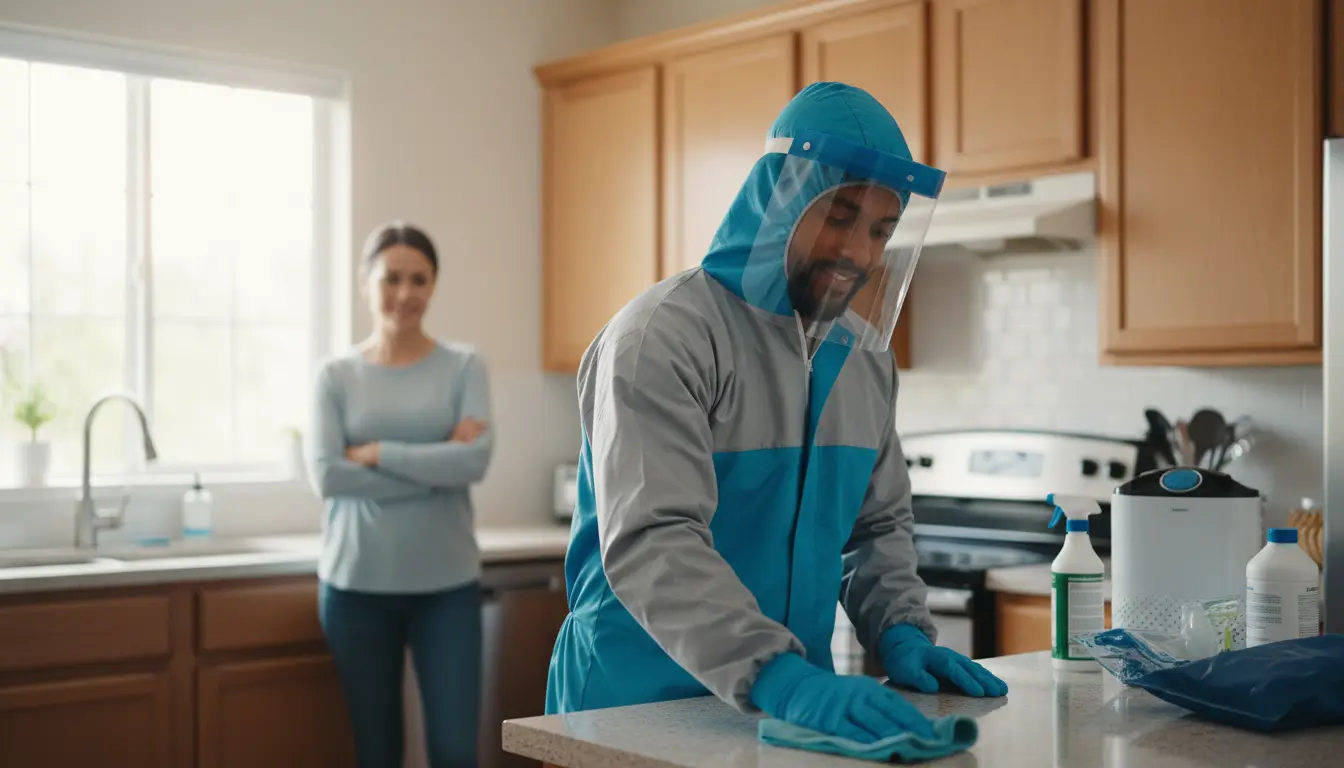
Professional biohazard remediation follows a structured, repeatable workflow designed to eliminate biological contamination and restore structural integrity. The process begins with a thorough risk assessment. Technicians arrive in full personal protective equipment (PPE), including Tyvek suits, N95 respirators, face shields, and chemical-resistant gloves. They establish a containment zone using negative air pressure machines and plastic sheeting to prevent cross-contamination to unaffected areas. This is especially critical in multi-unit buildings or homes with shared ventilation, common in St. Louis’s older neighborhoods.
After containment, the team manually removes all visible biohazardous materials. This includes blood-soaked carpet, padding, drywall, insulation, and any porous items that cannot be fully decontaminated. Non-porous surfaces like tile, concrete, and metal are scrubbed with hospital-grade disinfectants that meet EPA efficacy standards for viral inactivation. Enzyme-based cleaners break down organic matter at a molecular level, eliminating odors at their source. The team then applies a final antimicrobial treatment to prevent future microbial growth. Throughout the process, technicians use adenosine triphosphate (ATP) testing to measure residual biological contamination. ATP swabs produce a numerical reading; if the level exceeds a threshold, the area is re-cleaned until it passes.
Missouri’s climate adds complexity. Hot, humid summers accelerate decomposition and odor penetration into porous surfaces. In winter, cold temperatures can slow but not stop biological activity, and frozen materials may require thawing before removal. St. Louis Biohazard Cleanup accounts for these variables by adjusting drying times, using dehumidifiers, and performing multiple rounds of odor neutralization. The final step is structural encapsulation—sealing treated surfaces with a specialized coating to lock in any remaining microscopic particles and restore the space to a safe, usable condition. For more details on the full workflow, visit our Ultimate Guide to Biohazard Cleanup in St. Louis MO.
Professional Remediation vs. Standard Cleaning: A Data Comparison
Many property owners mistakenly believe that a thorough cleaning crew can handle biohazard situations. The table below contrasts the key differences between professional biohazard remediation and standard residential cleaning, based on IICRC S540 standards and industry best practices.
| Feature / Metric | Professional Biohazard Remediation | Standard Residential Cleaning |
|---|---|---|
| Regulatory Compliance | OSHA 29 CFR 1910.1030, EPA, DOT, state regulations | Not applicable; no legal mandate for biohazards |
| Pathogen Elimination | 99.999% reduction using EPA-registered disinfectants, ATP testing | Bleach or all-purpose cleaners; no verification of kill rate |
| Structural Assessment | Identifies hidden seepage, subfloor saturation, HVAC contamination | Surface cleaning only; ignores structural damage |
| Waste Disposal | Licensed transport to authorized incineration facilities | Household trash; illegal and dangerous |
| Odor Removal | Enzyme treatments, hydroxyl generators, thermal fogging | Air fresheners; masks odors without removal |
| Insurance Billing | Direct billing, itemized documentation for claims | No documentation for biohazard specifics |
Expert Insights: What Experienced Technicians Know
Three advanced diagnostic tips set professional biohazard remediation apart from amateur attempts. First, hidden biological seepage often travels along wall cavities and under floorboards, especially in older St. Louis homes with balloon framing. Technicians use moisture meters and thermal imaging to detect saturation that is invisible to the naked eye. Without this step, residual contamination can cause chronic odor and health issues. Second, porous materials like drywall, carpet, and untreated wood cannot be fully decontaminated; they must be cut out and replaced. Attempting to clean them leaves pathogens embedded in the matrix, posing long-term risks. Third, negative air pressure is essential to prevent airborne particles from spreading to clean areas. In multi-family buildings such as those in University City, failure to contain the zone can lead to neighbor exposure and legal liability.
Common mistakes property owners make include using household bleach on biological matter. Bleach is ineffective against many pathogens on porous surfaces and can produce toxic fumes when mixed with organic material. Waiting for odor to dissipate naturally is another error—odors from decomposition indicate ongoing microbial activity and structural damage. Allowing untrained personnel into the site, such as family members or cleaning staff, exposes them to serious health risks and violates OSHA standards. The consequences include long-term health issues like respiratory illness, bloodborne infections, and extensive structural damage that could have been prevented with prompt professional intervention. For more on prevention, read our Essential Biohazard Prevention Tips.
Pricing for Biohazard Cleanup in St. Louis
Costs for professional biohazard remediation vary based on the scope and complexity of the job. St. Louis Biohazard Cleanup provides transparent pricing with no hidden fees. Typical pricing structures include:
- Site mobilization fee: A flat charge to cover travel, equipment setup, and initial assessment. This ranges from $150 to $350 depending on the distance from our base to neighborhoods like Benton Park or Clayton.
- Hourly remediation rates: Most projects are billed at $125 to $250 per hour per technician. A standard trauma scene cleanup for a single room may take 4 to 8 hours.
- Disposal costs: Biohazard waste must be transported to a licensed incineration facility. Fees include specialized containers, transport, and disposal, typically $50 to $150 per container.
- Structural material replacement: If drywall, flooring, or cabinetry require removal, material and labor costs are added. This can significantly increase the total, especially in older homes with lead paint or asbestos that require abatement.
Three primary factors influence cost: the extent of structural material replacement needed (e.g., full subfloor removal vs. partial carpet extraction), the total volume of biohazardous waste, and the necessity for specialized HVAC decontamination. If airborne contaminants have entered the ductwork, additional cleaning with fogging and HEPA vacuuming is required. For a detailed breakdown, see our page on Biohazard Cleanup Costs: What St. Louis Residents Pay.
Safety and Standards: Protecting People and Properties
Professional biohazard cleanup is governed by multiple layers of regulation. OSHA’s Bloodborne Pathogens Standard (29 CFR 1910.1030) mandates that all technicians receive annual training, have access to hepatitis B vaccinations, and follow strict exposure control plans. The EPA regulates the disinfectants used, requiring that they meet efficacy standards for specific pathogens. The IICRC S540 standard provides best practices for trauma and crime scene cleanup, including documentation, waste disposal, and verification of cleanliness. St. Louis Biohazard Cleanup adheres to all these standards, and our technicians carry active certifications.
In practice, these standards mean that every job is documented with photographs, chain-of-custody forms for waste, and a final clearance report. Property owners receive a certificate of remediation, which is often required by insurance companies and can be vital for resale. The use of authorized waste management services ensures that biohazardous materials are incinerated at permitted facilities, never sent to landfills. This protects not only the current occupants but also future tenants, waste workers, and the community. Without these protocols, the risk of communicable disease transmission remains unacceptably high. For more on the hidden dangers of unattended biohazards, read our article on The Hidden Dangers of Unattended Biohazards in Your Home.
Frequently Asked Questions About Biohazard Cleanup
How does biohazard cleanup work in St. Louis, MO after an unattended death?
When a death goes unnoticed for days or weeks, decomposition fluids saturate flooring, subflooring, and walls. Professional crews begin with containment and negative air pressure to prevent odor spread. All affected porous materials are removed, and the subfloor is treated with enzyme cleaners. The space is then sanitized with EPA-registered disinfectants, and ATP testing confirms cleanliness. Finally, odor neutralization is performed using hydroxyl generators or thermal fogging. In St. Louis’s humid summers, the process may require additional drying time to prevent mold growth.
Is it safe to stay in my home during biohazard remediation?
In most cases, the affected area is sealed off, and the rest of the home remains safe. However, if the HVAC system is contaminated or the containment is adjacent to living spaces, temporary relocation is recommended. Our team assesses airflow and can advise on occupant safety. For severe cases, such as large-scale hoarding or biological contamination, we recommend vacating the property until clearance is issued. Learn more about hoarding cleanup services in St. Louis for related scenarios.
How long does a typical biohazard cleanup take?
Duration depends on the size of the scene and the extent of contamination. A single-room trauma cleanup usually takes 4 to 8 hours. Larger scenes, such as multi-room hoarding or significant decomposition, can take 1 to 3 days. Our 24/7 emergency response ensures that the process begins as soon as possible, minimizing further damage. For businesses, we offer expedited services to reduce downtime; see our emergency cleanup tips for Missouri businesses.
What certifications should I look for in a biohazard cleanup company?
Look for IICRC S540 certification, OSHA bloodborne pathogen training, and membership in organizations like the American Bio Recovery Association (ABRA). Technicians should also have liability insurance and workers’ compensation. St. Louis Biohazard Cleanup holds all these credentials and provides proof upon request. Our team also undergoes continuous education on the latest disinfection technologies and regulatory changes.
Will homeowner’s insurance cover biohazard cleanup?
Many homeowner’s policies cover biohazard remediation, especially if the incident is sudden and accidental (e.g., a crime scene, accident, or unattended death). We work directly with insurance adjusters, providing detailed documentation and itemized invoices. Contact us for a free consultation to discuss your policy and coverage. For more information on what to expect, visit our About Us page.
Professional Biohazard Remediation in St. Louis
Biohazard cleanup is not a task for amateurs. It requires rigorous training, specialized equipment, and a compassionate approach to restore a space while respecting the emotional weight of the situation. St. Louis Biohazard Cleanup combines technical expertise with discreet, respectful service. We understand the unique challenges of the region—from the humidity of summer to the structural quirks of historic homes in neighborhoods like Tower Grove South and The Hill. Our team responds 24/7, arrives in unmarked vehicles, and works efficiently to return your property to a safe, habitable condition.
If you are facing a biohazard situation in St. Louis, do not wait. The longer biological materials remain, the greater the health risks and structural damage. Contact us today for a confidential assessment and a detailed quote. We are here to help you navigate this difficult time with professionalism and care. For immediate assistance, call our emergency line or use our online form. Your safety and peace of mind are our top priorities.