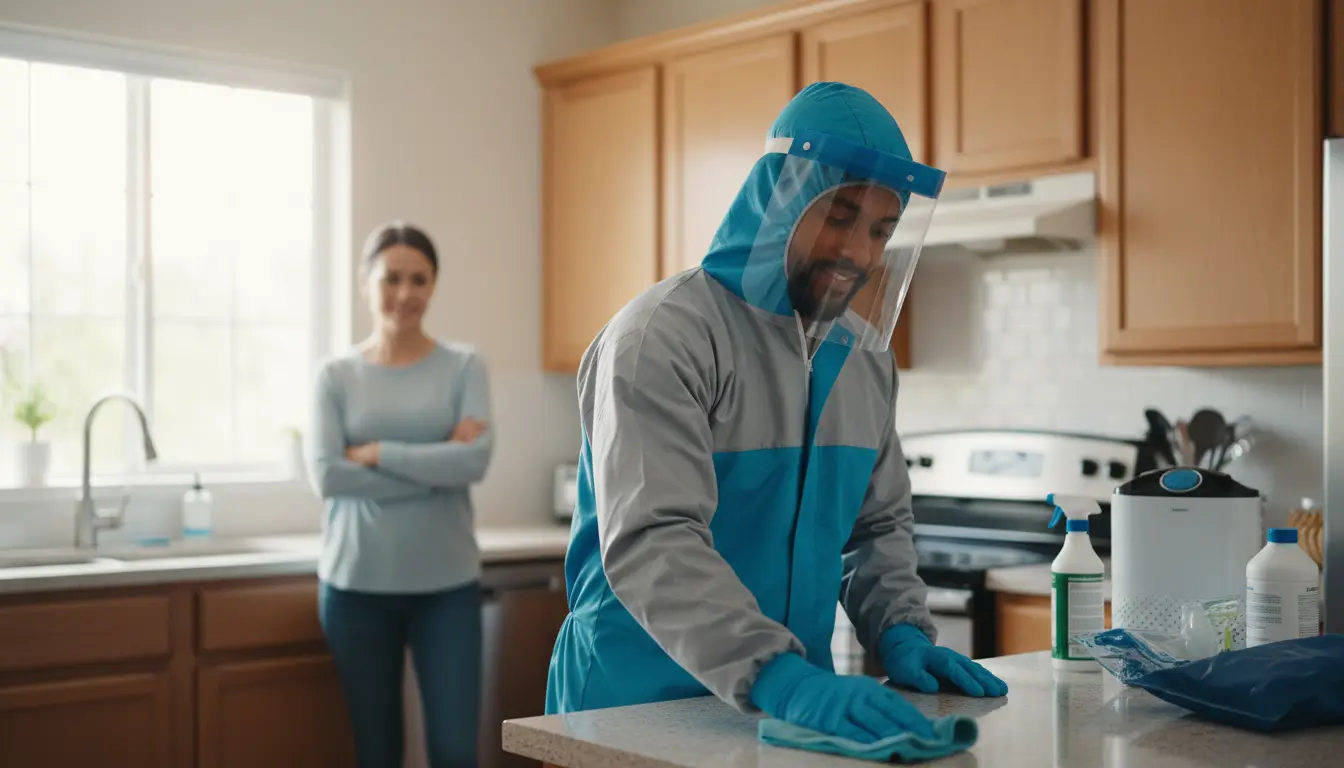
The technician’s boot hit the hardwood floor, and the sound echoed through the empty two-story brick colonial in Tower Grove South. The air was thick with the metallic tang of dried blood, and even with a HEPA-filtered respirator, the smell pressed against the mask. This was a five-day-old unattended death, and the summer humidity had already started to accelerate microbial activity beneath the floorboards. That moment—the intersection of professionalism, compassion, and technical rigor—is where every successful biohazard restoration begins. This step-by-step guide to restoring a property after biohazard contamination outlines the exact process used by certified remediators to return a St. Louis home to a safe, habitable condition.
Biohazard contamination is not a mess you can mop away. Whether it results from a trauma, a meth lab, or a hoarding situation, the biological material involved—bloodborne pathogens, body fluids, chemical residues—poses serious health risks. In St. Louis, where older brick homes and tight urban lots are common, contamination can seep into porous surfaces, crawl spaces, and even ductwork. Professional remediation follows strict protocols from OSHA, the EPA, and the IICRC S540 standard to ensure complete removal and sanitization. St. Louis Biohazard Cleanup brings decades of combined experience to every site, combining forensic restoration techniques with local knowledge of the region’s unique structural and climate challenges.
Initial Risk Assessment and Site Containment
The first step in any restoration project is a thorough risk assessment. The crew arrives with personal protective equipment—Tyvek suits, nitrile gloves, face shields, and full-face respirators with P100 filters. Using a multi-meter and thermal imaging camera, the lead technician identifies areas of moisture intrusion, hidden biological seepage, and compromised structural elements. In St. Louis, the high humidity and frequent temperature swings mean that decomposition fluids can wick into subflooring and wall cavities within hours, making early detection critical.
Once the scope is mapped, the team establishes containment zones. Industrial-grade negative air machines with HEPA filtration are set up to create a pressure gradient, preventing airborne contaminants from spreading to unaffected areas of the property. All doors and windows are sealed with poly sheeting, and a decontamination chamber is erected at the entry point. This is not optional—cross-contamination can turn a contained biohazard into a whole-house problem. For properties that have experienced trauma, the safely cleaning up after a trauma scene requires these exact containment measures.
Physical Removal of Biohazardous Material
With containment in place, the physical removal begins. All visible biological matter—blood, tissue, bodily fluids—is carefully collected using approved absorbents, scoop tools, and biohazard bags. For porous materials like carpet, padding, drywall, and insulation, removal is the only option. The IICRC S540 standard states that porous materials contaminated with blood or body fluids cannot be effectively sanitized and must be cut out and disposed of as regulated medical waste. In St. Louis, this often means removing entire sections of plaster or lath in pre-1950s homes, where the original construction traps moisture.
Non-porous surfaces like tile, glass, and metal are scrubbed with a hospital-grade disinfectant that has a kill claim against HIV, HBV, and tuberculosis. The crew uses color-coded cloths to prevent cross-contamination—red for high-touch areas, blue for general cleaning. Every piece of debris is double-bagged and labeled for transport to a licensed biohazard disposal facility. This stage alone can take several hours, depending on the square footage involved. For a full overview of the process, our ultimate guide to biohazard cleanup in St. Louis MO covers every step in detail.
Chemical Sanitization and ATP Testing
After all visible material is removed, the entire affected area undergoes a three-step chemical treatment. First, a pre-cleaning with a neutral pH detergent lifts any remaining residues. Then, an EPA-registered disinfectant with a 10-minute dwell time is applied via electrostatic sprayer, ensuring coverage on all surfaces—including vertical walls, ceilings, and the undersides of cabinet spaces. The final step is an enzyme treatment that breaks down any organic matter left in microscopic pores.
To verify that the area is truly clean, the team uses adenosine triphosphate (ATP) fluorescence testing. A swab is taken from a surface, inserted into a luminometer, and the reading is compared to the IICRC pass/fail threshold (typically below 100 relative light units). If the result is too high, the disinfectant is reapplied and retested. This scientific validation removes guesswork. In St. Louis, where summer humidity can reactivate dormant bacteria, achieving a negative ATP reading is non-negotiable before the property can be cleared for occupancy.
Structural Decontamination and Odor Removal
Even after surfaces are clean, odor-causing volatiles can linger in the air and in porous materials. The crew deploys ozone generators and hydroxyl generators to neutralize odors at the molecular level. Ozone treatment is effective for unoccupied spaces, while hydroxyl generators are safe for occupied areas and continuous use. For properties with extensive odor migration through HVAC ducts, we perform a complete duct cleaning and apply an antimicrobial coating.
Structural decontamination may also involve sealing exposed subfloors or concrete slabs with a polymeric encapsulant. This prevents any residual moisture from wicking up and causing microbial growth. In the case of a meth lab, chemical residues can be absorbed into drywall and wood, requiring specialized meth lab decontamination procedures that include surface sampling per EPA guidelines. The goal is to restore the property to a condition that is not only visually clean but also hygienically safe.
Professional Remediation vs. Standard Cleaning: A Data Comparison
| Feature/Metric | Professional Biohazard Remediation | Standard Residential Cleaning |
|---|---|---|
| Regulatory Compliance | OSHA 29 CFR 1910.1030, EPA FIFRA, DOT 49 CFR | None |
| Pathogen Elimination | Hospital-grade disinfectants, ATP testing verification | Household bleach (not effective against all pathogens) |
| Structural Assessment | Thermal imaging, moisture mapping, porosity testing | Visual inspection only |
| Waste Disposal | Licensed biohazard waste transport, incineration | Trash pickup (illegal for biohazard waste) |
| Odor Removal | Ozone, hydroxyl, thermal fogging, HVAC decontamination | Air fresheners (mask only) |
Expert Diagnostic Insights
Detecting Hidden Biological Seepage
One of the most overlooked areas in biohazard restoration is the subfloor and the space between floors. Blood and body fluids can seep through cracks in hardwood or tile, pooling under the surface. Professional remediators use a thermal imaging camera combined with a moisture meter to identify these hidden pockets. If left untreated, the organic material will decompose, producing foul odors and attracting pests. In St. Louis’s humid summers, this process accelerates, making early detection essential.
Why Porous Materials Require Replacement
Porous materials—carpet, drywall, upholstery, particleboard—have microscopic pores that trap pathogens. Even after aggressive cleaning, some bacteria and viruses can survive deep inside the material. The IICRC standard mandates removal of any porous material that has been exposed to blood or body fluids. Attempting to clean and reuse these items is a mistake that leads to recurring odors and potential health risks. In a recent St. Louis project, a homeowner tried to salvage a blood-stained sofa; three months later, a family member developed a respiratory infection. Professional removal is the only safe option.
The Importance of Negative Pressure Containment
Without negative air pressure, airborne contaminants can travel through the building’s ventilation system, infecting other rooms. Negative air machines draw air out of the containment zone and exhaust it through HEPA filters, creating a vacuum that prevents cross-contamination. This is especially critical in multi-family buildings common in neighborhoods like Central West End and Soulard, where shared walls and ductwork mean a single site can affect multiple units. Using a standard fan or opening a window is not sufficient and can spread contamination.
Common Mistakes Property Owners Make
Mistake #1: Using household bleach on biological matter. Bleach can denature proteins, but it does not kill all pathogens, and it can damage porous surfaces, making them harder to clean. Professional remediators use EPA-registered disinfectants that are proven to inactivate bloodborne pathogens.
Mistake #2: Waiting for the odor to dissipate naturally. Odors from decomposition are caused by volatile organic compounds that continue to be released as long as organic material remains. Waiting only allows the contamination to spread deeper into the structure. The hidden dangers of unattended biohazards in your home include structural damage and long-term health consequences.
Mistake #3: Allowing untrained personnel into the site. Friends, family, or even general contractors may not have the proper PPE or knowledge of bloodborne pathogens. This puts them at risk of infection and can create liability issues. Always call a certified biohazard remediation company.
Pricing for Biohazard Remediation in St. Louis
- Standard site mobilization fee: $250–$500, covering equipment setup and containment deployment.
- Hourly remediation rates: $150–$300 per hour per technician, depending on the complexity and hazard level.
- Specialized disposal of biohazardous waste: $50–$150 per 30-gallon bag, due to the cost of incineration and transport.
Three factors that influence cost: (1) the extent of structural material replacement required—removing drywall, subfloor, and insulation adds labor and disposal fees; (2) the total volume of biohazardous waste, which affects bagging, labeling, and transport logistics; (3) the necessity for specialized HVAC decontamination, which requires additional equipment and time. For a detailed breakdown of biohazard cleanup costs what St Louis residents pay, consult our pricing guide.
Safety and Industry Standards
Every member of our team is trained under the OSHA Bloodborne Pathogens Standard (29 CFR 1910.1030) and follows the IICRC S540 standard for trauma and crime scene cleanup. We use only EPA-registered disinfectants that meet the required kill claims, and we maintain a contract with a licensed medical waste disposal company. These certifications are not just pieces of paper—they are the foundation of a process that protects property owners, neighbors, and future occupants from communicable diseases. In St. Louis, where real estate turnover is high, thorough restoration also preserves property value and prevents legal liability.
Frequently Asked Questions
What exactly qualifies as a biohazard that requires professional remediation?
Biohazards include any biological material that poses a risk to human health: blood and blood products, body fluids, human tissue, animal waste, mold in large quantities, and chemical residues from meth labs. The CDC and OSHA define these as Category A or B infectious substances. Professional remediation is required because standard cleaning methods cannot guarantee the elimination of bloodborne pathogens like HIV, hepatitis B, and hepatitis C. Additionally, local regulations in St. Louis require that all biohazardous waste be disposed of through a licensed medical waste hauler.
How long does the biohazard restoration process typically take?
The timeline depends on the extent of contamination. A small crime scene in a single room might take one to two days, while a large hoarding or meth lab decontamination can take a week or more. Factors include the size of the area, the type of material affected, the need for structural repairs, and the results of ATP testing. The crew works efficiently to minimize disruption, but safety and thoroughness cannot be rushed. Our 24 7 biohazard response in St Louis and surrounding areas ensures that help arrives quickly, which can reduce overall restoration time.
Can I stay in the home during the remediation process?
In most cases, the affected area must be evacuated during the active remediation phase to prevent exposure to chemical fumes, airborne pathogens, and noise from equipment. If the contamination is isolated to one room, the rest of the home may be habitable, but the containment zone must be sealed off. The crew will advise on temporary relocation. After the final ATP test passes and the area is cleared, the property is safe for occupancy.
What should I do immediately after discovering a biohazard situation?
Do not touch or disturb the area. Evacuate any occupants, pets, and visitors. Secure the room by closing the door and, if possible, turning off the HVAC system to prevent airflow. Call a professional biohazard cleanup company immediately. The faster the response, the less chance the contamination has to spread. For more prevention tips, see our essential biohazard prevention tips.
Professional Biohazard Remediation in St. Louis
Restoring a property after biohazard contamination is a complex, emotionally challenging task that requires specialized knowledge, equipment, and compassion. The team at St. Louis Biohazard Cleanup understands the burden that property owners carry after a traumatic event. We approach each site with the same technical rigor we would use for a hospital operating room, combining forensic restoration methods with a deep respect for the people affected. From the initial risk assessment to the final ATP verification, every step is executed with precision and care.
If you are facing a biohazard situation in your home or business, do not attempt to handle it alone. Our certified technicians are available 24/7 to provide discreet, professional, and thorough property restoration services across the St. Louis metro area. Let us help you return your property to a safe, clean, and livable condition.