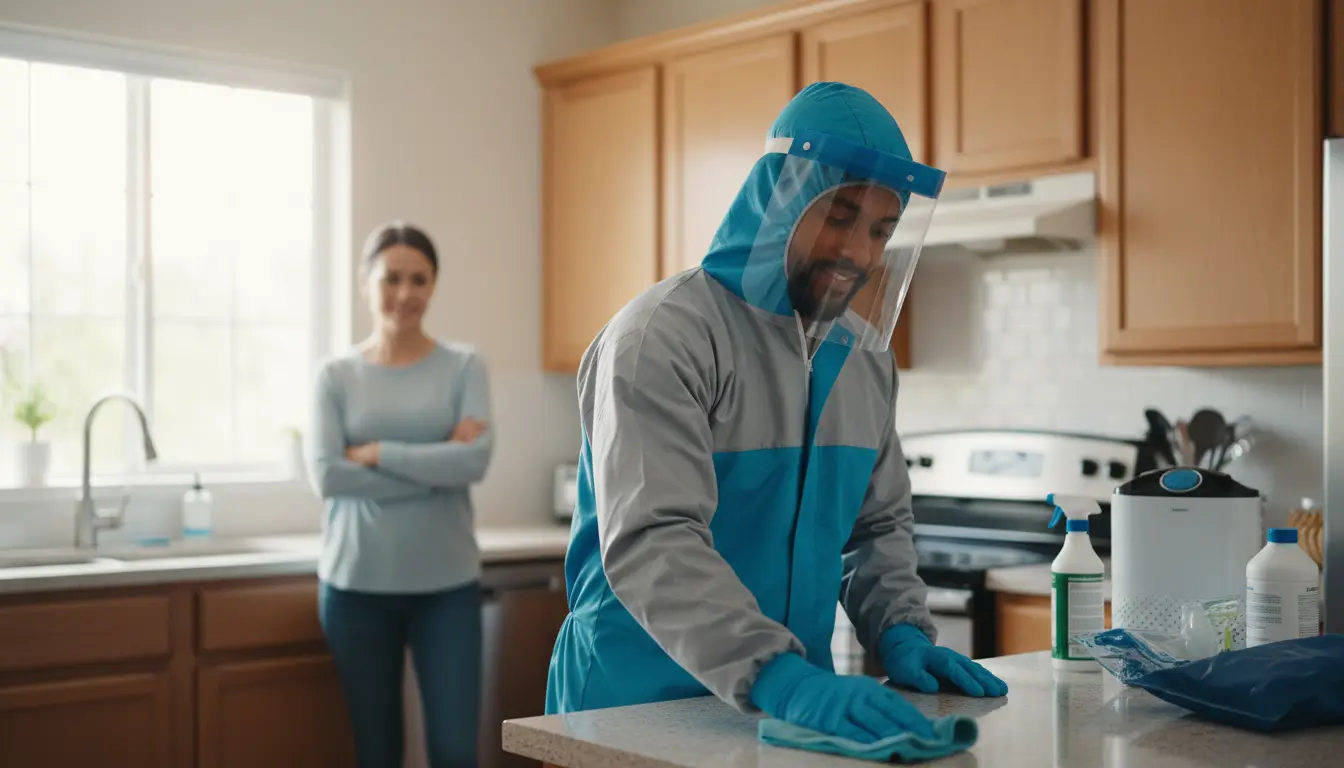
You’ve just discovered a hoarded home, a trauma scene, or a meth lab in a St. Louis property you own or manage. Your first instinct is likely to grab bleach, a mop, and a few volunteers to “clean it up.” That instinct will cost you. The mistake isn’t just emotional—it’s financial. Failing to understand how professional decontamination improves indoor safety in these scenarios can lead to thousands of dollars in structural damage, legal liability, and long-term health risks for anyone who enters the building. In St. Louis, where older brick homes and fluctuating Midwest humidity create unique challenges, a DIY approach or hiring a standard janitorial crew is a recipe for disaster. You need a certified biohazard remediation specialist who understands the science of pathogen elimination and the local building codes.
The reality is that what you can’t see or smell after an incident can be far more dangerous than the visible mess. Bloodborne pathogens like Hepatitis B, Hepatitis C, and HIV can survive on porous surfaces for days or even weeks. Chemical residues from methamphetamine production can permeate drywall and flooring, causing long-term neurological damage to future occupants. Mold spores, accelerated by St. Louis’s humid summers, can colonize hidden cavities within 24 to 48 hours, compromising indoor air quality and triggering severe respiratory issues. Standard cleaning products and household bleach are not formulated to neutralize these threats. Professional decontamination is a rigorously scientific process, governed by OSHA, EPA, and IICRC standards, designed to restore a property to a safe, habitable condition. St. Louis Biohazard Cleanup provides this precise, technically advanced service across the metro area, ensuring that your property is not just clean, but truly safe.
The Critical Step-by-Step Process of Professional Biohazard Remediation
Understanding how professional decontamination improves indoor safety begins with the detailed workflow certified technicians follow. This isn’t a simple scrub-and-rinse operation. It is a forensic-level restoration process that adheres to strict safety protocols and scientific principles. Every St. Louis property presents unique variables—from the age of the building’s infrastructure to the type and duration of the contamination—that must be assessed and addressed systematically.
The first step is a comprehensive risk assessment. The lead technician evaluates the affected area to identify all biohazards, including visible biological matter, potential chemical residues, and structural damage. This assessment dictates the level of personal protective equipment required and the specific remediation strategy. For instance, a trauma scene in Lafayette Square might require different containment procedures than a meth lab cleanup in a suburban home, due to differences in ventilation and building materials like original plaster and lath versus modern drywall. Following the assessment, the team establishes containment zones using heavy-duty plastic sheeting and negative air machines to create a pressure differential, preventing airborne contaminants from spreading to unaffected parts of the property. This step is crucial for cross-contamination prevention, a core principle of IICRC S540 standards.
Once containment is secure, the physical removal of all biohazardous materials begins. This involves the careful extraction of blood-soaked carpets, contaminated drywall, and any porous items that cannot be effectively sanitized. Non-porous surfaces like concrete, glass, and metal are then cleaned using hospital-grade disinfectants and specialized enzyme treatments that break down organic matter at a molecular level. The science behind these treatments is specific: enzymes target the proteins and lipids in biological waste, effectively destroying the structural integrity of pathogens. After cleaning, the team applies an EPA-registered antimicrobial solution to further neutralize any remaining microorganisms. The final verification step involves adenosine triphosphate (ATP) fluorescence testing. This molecular test measures the presence of organic residue on surfaces. A low ATP reading confirms that the area is biologically clean, meeting the stringent standards required for reoccupation. This entire process, from assessment to verification, is how professional decontamination improves indoor safety in a measurable, scientifically validated way.
Local climate variables in St. Louis significantly impact the timeline and complexity of this process. For example, a trauma scene discovered in August, when average humidity exceeds 70 percent, will accelerate bacterial growth and decomposition. Odor molecules can quickly migrate into porous materials like wood framing and insulation, requiring more extensive removal and treatment than a similar incident in the drier winter months. Professional teams adjust their protocols accordingly, using industrial-grade dehumidifiers and ozone treatments to manage moisture and eliminate persistent odors. This climate-specific expertise is something a standard cleaning crew cannot provide, and it underscores why professional intervention is non-negotiable for safe indoor environments.
Professional Remediation vs. Standard Cleaning: A Quantitative Comparison
To fully grasp how professional decontamination improves indoor safety, it helps to compare it directly to the approach most property owners mistakenly consider: standard janitorial cleaning. The differences are not subtle; they are foundational in terms of health risk, legal compliance, and long-term property value. The table below outlines key distinctions based on the IICRC S540 standard for trauma and crime scene cleanup.
| Feature/Metric | Professional Biohazard Remediation | Standard Residential Cleaning |
|---|---|---|
| Regulatory Compliance | Adheres to OSHA 29 CFR 1910.1030, EPA waste disposal rules, and state biohazard transport laws. | No formal training in bloodborne pathogens or hazardous waste regulations. |
| Pathogen Elimination | Uses EPA-registered hospital-grade disinfectants & ATP testing to verify <99.99% reduction. | Relies on household cleaners that do not kill Hepatitis, HIV, or bacterial spores. |
| Structural Assessment | Evaluates porosity, saturation, and hidden seepage; replaces compromised materials. | Cleans only visible surfaces, leaving contamination in subfloors and wall cavities. |
| Containment | Establishes negative air pressure and physical barriers to stop airborne spread. | No containment; pathogens and dust become airborne, contaminating the entire building. |
| Waste Disposal | Professionally packages and transports biohazardous waste to a licensed incineration facility. | Improper disposal in regular trash, which is illegal and dangerous. |
Expert Diagnostic Insights for Property Owners and Managers
Experienced remediation specialists develop a trained eye for conditions that untrained individuals overlook. These diagnostic insights are critical for preventing secondary contamination and ensuring a property is truly safe. Here are three advanced diagnostic techniques professionals use to assess how professional decontamination improves indoor safety at a deeper level.
First, detecting hidden biological seepage. Blood and other bodily fluids can seep through carpet padding and into the subflooring, migrating between floorboards and joists. A specialist uses a moisture meter and thermal imaging camera to identify these areas of saturation that are invisible to the naked eye. If left untreated, this biological matter becomes a nutrient source for bacteria and mold, leading to persistent odors and structural decay. Second, evaluating porous materials for replacement versus cleaning. Items like drywall, particleboard, and fiberglass insulation are inherently porous. Once saturated with biohazards, they cannot be fully decontaminated. The standard of care is to cut and remove such materials at least 12 to 24 inches beyond the visible stain, a practice known as “oversized removal.” Attempting to clean these materials is a common mistake that leaves a reservoir of pathogens behind. Third, implementing negative pressure to prevent cross-contamination. This is not optional. By creating a lower air pressure inside the containment zone relative to the surrounding building, professionals ensure that any airborne particles—including dust contaminated with bloodborne pathogens—are drawn into HEPA-filtered exhaust units rather than escaping into clean areas. This principle is foundational to how professional decontamination improves indoor safety for the entire property, not just the affected room.
Property owners in St. Louis frequently make three mistakes that compound the initial problem. The first is using household bleach on biological matter. Bleach is an oxidizer that can damage surfaces and is rapidly inactivated by organic material, meaning it fails to fully disinfect blood or tissue. The second is waiting for odors to dissipate naturally. Odors are volatile organic compounds (VOCs) that indicate ongoing microbial activity. Waiting allows mold and bacteria to colonize deeper into the structure, increasing remediation costs and health risks. The third mistake is allowing untrained personnel into the site. Exposure to bloodborne pathogens or meth lab chemicals can lead to serious, chronic health conditions for which the property owner may be held liable. These mistakes highlight why professional intervention is not a luxury—it is a necessity for safety and legal protection.
Understanding Biohazard Cleanup Costs and Pricing Factors
- Standard site mobilization fees: These cover the initial response, risk assessment, and setup of containment and negative air systems. In St. Louis, this fee typically ranges from $350 to $800, depending on the distance from the crew’s base and the time of day (e.g., after-hours emergency callouts are higher).
- Hourly remediation rates: Most professional biohazard cleanup services charge by the hour for the labor of certified technicians. Rates generally fall between $150 and $250 per hour per technician. The number of technicians required depends on the size of the site and the volume of hazardous material. A small trauma scene in a Lafayette Square apartment might require two technicians for four hours, while a large hoarding or meth lab scene in a suburban home could require a team of four to six for multiple days.
- Specialized disposal fees: Biohazardous waste must be transported and incinerated at a licensed facility. Disposal costs are often billed by the pound, ranging from $0.50 to $1.50 per pound of waste. A single trauma scene can generate 50 to 200 pounds of waste, including soiled carpet, padding, drywall, and personal protective equipment.
Three primary factors influence the final cost. The first is the extent of structural material replacement. If biological material has soaked into subflooring, wall studs, or ceiling joists, the cost of demolition and rebuilding can escalate significantly. The second factor is the total volume of biohazardous waste. More waste means more labor hours and higher disposal fees. The third factor is the necessity for specialized HVAC decontamination. If the property’s heating and cooling system was operating during the contamination event, it may have drawn in biological particles and circulated them through the ductwork. Cleaning or replacing ductwork adds several hundred to several thousand dollars to the project. While costs can seem high, they are a fraction of what property owners face in health claims, legal penalties, and diminished property value from inadequate cleanup. Understanding how professional decontamination improves indoor safety also means understanding the investment required to achieve that safety.
Safety and Standards: The Regulatory Framework
Professional biohazard remediation is not a discretionary service; it is governed by a network of federal and industry standards that mandate specific procedures. The most directly applicable regulation is the Occupational Safety and Health Administration’s Bloodborne Pathogens Standard, 29 CFR 1910.1030. This standard requires employers to protect workers from exposure to human blood and other potentially infectious materials. In the context of a cleanup, this means technicians must receive annual training, have access to hepatitis B vaccinations, and use appropriate PPE at all times. Failure to comply with this standard exposes both the cleanup company and the property owner to OSHA fines and liability in the event of a worker’s illness.
Beyond OSHA, the Environmental Protection Agency regulates the disinfectants used in remediation. Only EPA-registered products with specific pathogen kill claims are permitted for use on surfaces contaminated with blood or bodily fluids. The IICRC S540 standard for trauma and crime scene cleanup provides the industry’s best practices for structural restoration. It covers everything from initial site assessment to final clearance testing. Adhering to these standards is how professional decontamination improves indoor safety to a level that satisfies insurance companies, health departments, and future occupants. In St. Louis, where older properties may have been constructed with materials that are difficult to decontaminate (such as original hardwood floors and horsehair plaster), compliance with these standards ensures that remediation is thorough and defensible in court if an issue arises later. Authorized waste management services, such as those licensed by the Missouri Department of Natural Resources, are used to transport and incinerate biohazardous waste, completing the chain of custody that protects public health.
Frequently Asked Questions About Biohazard Remediation
Can I use bleach to clean up a trauma scene or biohazard spill?
Bleach is not recommended for primary decontamination of biological matter. While bleach is an effective disinfectant on clean, non-porous surfaces, it is rapidly inactivated by the organic proteins and fats present in blood and tissue. This means that applying bleach to a visible blood stain will not penetrate the material to kill pathogens beneath the surface. Furthermore, bleach can damage porous materials like carpet and drywall, making them more difficult to clean and potentially trapping pathogens. Professional remediation uses EPA-registered hospital-grade disinfectants and enzyme treatments that are specifically formulated to break down biological matter and achieve a verified level of sterility, as confirmed by ATP testing. This is a key aspect of how professional decontamination improves indoor safety.
How long do bloodborne pathogens survive on surfaces?
The survival time of bloodborne pathogens depends on the specific virus and environmental conditions. Hepatitis B virus can survive in dried blood on surfaces for up to seven days at room temperature. Hepatitis C virus can survive for up to four days, and HIV can survive for several hours to a few days under optimal conditions. In St. Louis’s humid climate, these survival times can be extended, as higher moisture levels help preserve the virus. This is why a rapid, professional response is critical. Waiting even 24 hours can allow pathogens to remain viable and pose a transmission risk to anyone entering the space. Professional decontamination eliminates this threat through the use of chemical disinfectants with validated kill times for each specific pathogen.
What happens if I don’t properly remediate a meth lab?
Improper remediation of a former meth lab can have severe consequences. Chemical residues, including lead, mercury, iodine, and anhydrous ammonia, can permeate drywall, carpets, and HVAC systems. These residues are not removed by standard cleaning and can cause long-term health effects such as neurological damage, respiratory problems, and cancer in future occupants. In St. Louis, health departments require a certified professional to perform meth lab decontamination before a property can be reoccupied or sold. Failure to comply can result in legal liability, fines, and the property being condemned. A professional meth lab decontamination service follows strict protocols to test for chemical residues, remove contaminated materials, and apply specialized treatments to neutralize remaining hazards.
How is waste from a biohazard cleanup disposed of?
Biohazardous waste is classified as regulated medical waste under federal and state law. It must be handled separately from regular household or construction waste. During a professional cleanup, all contaminated materials—including PPE, absorbents, removed building materials, and biological matter—are placed in red biohazard bags or rigid, leak-proof containers. These containers are labeled with the universal biohazard symbol and transported by a licensed medical waste hauler to a permitted incineration facility. The incineration process destroys all pathogens and reduces the waste to sterile ash. This chain of custody is documented for regulatory compliance. Improper disposal, such as placing biohazard waste in a standard dumpster, is illegal and poses a public health risk. Professional services ensure that every aspect of disposal is handled safely and legally, which is a fundamental part of how professional decontamination improves indoor safety for the community.
Professional Biohazard Remediation in St. Louis
Restoring a property after a traumatic event, a hoarding situation, or a chemical contamination requires more than cleaning supplies and good intentions. It demands scientific knowledge, specialized equipment, and strict adherence to safety standards that protect everyone involved. How professional decontamination improves indoor safety is not an abstract concept—it is a measurable outcome achieved through a rigorous, step-by-step process that eliminates pathogens, removes hazardous residues, and restores the structural integrity of the building. For property owners in St. Louis, from the historic homes of Soulard to the newer constructions in Tower Grove South, the choice is clear: professional remediation is the only safe and legally compliant path forward.
St. Louis Biohazard Cleanup provides the technical expertise, compassionate service, and rapid response that these situations demand. Our team is trained in the latest IICRC S540 protocols and OSHA standards, and we understand the unique challenges of St. Louis properties, from humidity-driven decomposition to the intricacies of older brick construction. We handle every aspect of the remediation, from initial risk assessment to final ATP testing and waste disposal, so you can be confident in the safety of your property. If you are facing a biohazard situation, do not gamble with health and legal liability. Trust the specialists who know how professional decontamination improves indoor safety and are ready to help you reclaim your space.