The moment you realize you’re standing in a biohazard situation, your first instinct is to grab a mop and bleach. That single decision, made in a split second of panic, could cost you thousands in property damage and expose your family to bloodborne pathogens that linger for months. In St. Louis, where historic brick homes trap moisture and seasonal humidity accelerates decomposition, a well-intentioned cleanup attempt often turns a contained incident into a structural nightmare.
The truth is that standard household cleaners are not designed to eliminate biological hazards. They fail to neutralize viruses like hepatitis B or C, and they cannot penetrate porous surfaces such as unsealed concrete or aged wood. When you try to handle a biohazard yourself, you risk contaminating HVAC systems, spreading aerosolized pathogens, and creating a persistent odor that no air freshener can mask. This is exactly why the question of what to do immediately after discovering a biohazard situation is not a matter of convenience—it is a matter of safety, legality, and long-term property value.
Professional biohazard remediation in St. Louis is not just about cleaning; it is about restoring a site to a safe, habitable condition while complying with OSHA, EPA, and IICRC standards. St. Louis Biohazard Cleanup brings decades of combined experience, specialized equipment, and a deep understanding of local building materials and climate conditions. We handle every step with the discretion and technical rigor that a certified trauma scene cleanup demands.
Immediate Steps After Discovering a Biohazard
As soon as you identify a potential biohazard, your first and only action is to evacuate the area. Do not touch anything. Do not attempt to contain the spill. The risk of cross-contamination is highest in the first few minutes, and even a single footstep can track infectious material throughout your home. Secure the space by closing doors and windows, and prevent anyone else—including pets—from entering.
Once the area is isolated, contact a professional biohazard remediation service immediately. In St. Louis, the average response time for a certified team is under two hours, but the window for effective containment is much shorter. The longer you wait, the deeper biological fluids seep into porous materials, and the more likely odors will permeate the entire structure. This is especially critical in older neighborhoods like Soulard or Lafayette Square, where brick walls and plaster can absorb moisture and biological matter rapidly.
Do not use any cleaning products, fans, or air purifiers. Agitating the air can spread airborne pathogens. Instead, leave the site untouched until the remediation team arrives. They will perform a thorough risk assessment, set up negative air pressure, and begin the methodical decontamination process. This initial delay for professional help is the single most important factor in preventing secondary damage and ensuring full pathogen elimination.
The Professional Remediation Workflow
Professional biohazard cleanup follows a strict, science-based protocol that begins with a comprehensive risk assessment. The technician identifies the type of biohazard (blood, bodily fluids, mold, animal waste, etc.), evaluates the extent of contamination, and determines which materials are salvageable. This assessment is critical because it dictates the level of personal protective equipment (PPE) required, the type of disinfectant to use, and whether the space needs to be sealed off with plastic sheeting and negative air machines.
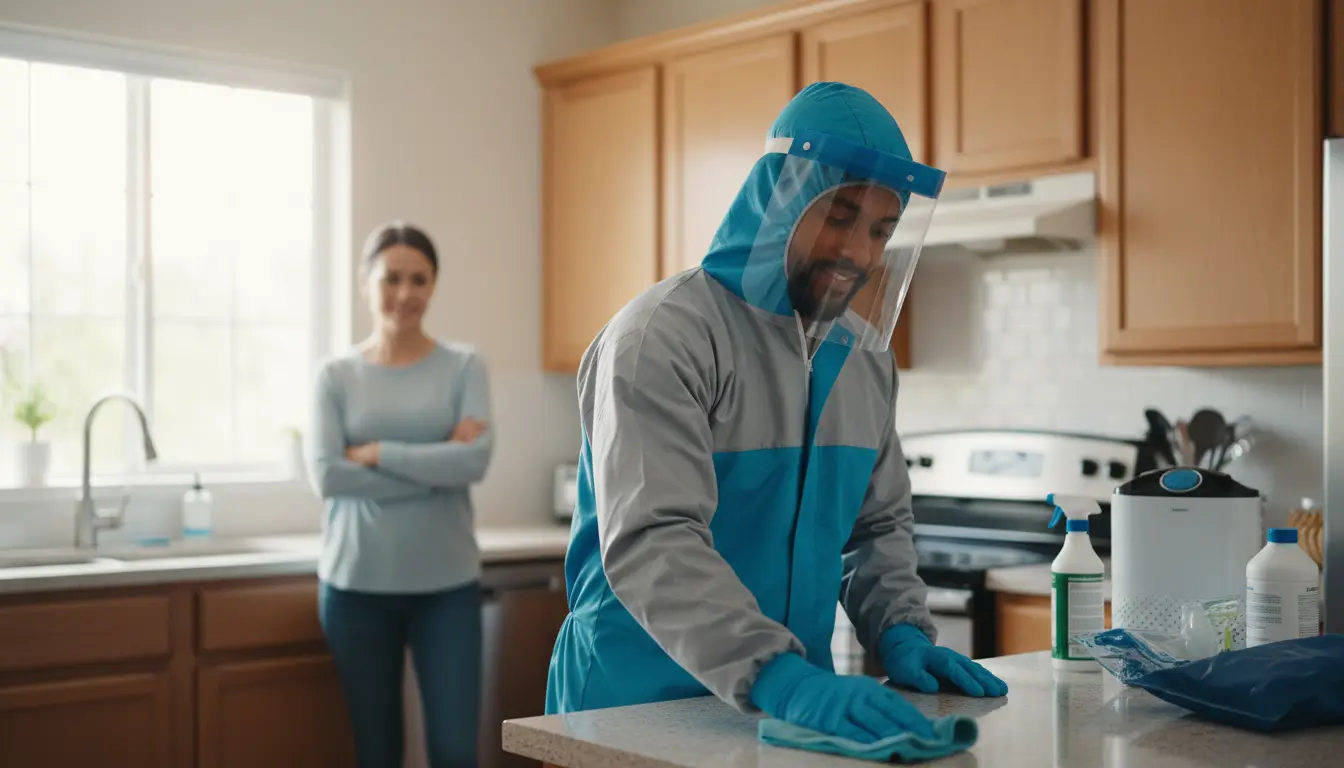
Next, the team dons full PPE, including Tyvek suits, N95 or P100 respirators, and chemical-resistant gloves, all compliant with OSHA Bloodborne Pathogens Standard 29 CFR 1910.1030. They then physically remove all visible biohazardous materials using tools like low-abrasion wipes, sharps containers, and hospital-grade biohazard bags. Every item that comes into contact with the contaminant is handled as regulated waste and disposed of through authorized medical waste disposal services.
After gross removal, the team applies an EPA-registered hospital-grade disinfectant that is specifically formulated to inactivate viruses, bacteria, and fungi. The disinfectant is left to dwell for the manufacturer’s recommended contact time—usually 10 to 15 minutes—to ensure complete viral inactivation. Then, a second cleaning with an enzyme-based cleaner breaks down any remaining organic matter at the molecular level. This step is crucial for eliminating odors that would otherwise attract pests and cause further contamination.
To verify that the surface is truly clean, the team uses adenosine triphosphate (ATP) testing. This handheld device measures the amount of biological residue left on a surface. A reading below a certain threshold confirms that the area is safe for reoccupation. If the reading is too high, the technician repeats the cleaning process until the surface passes inspection. Finally, the team performs a structural assessment to determine if any porous materials—such as drywall, carpet, or insulation—need to be removed and replaced. In St. Louis’s humid climate, even a small amount of trapped moisture can lead to microbial remediation issues within days.
Professional Remediation vs. Standard Janitorial Cleaning
| Feature/Metric | Professional Biohazard Remediation | Standard Residential Cleaning |
|---|---|---|
| Regulatory Compliance | Full compliance with OSHA 29 CFR 1910.1030, EPA, and IICRC S540 | No compliance; no knowledge of bloodborne pathogen laws |
| Pathogen Elimination | Hospital-grade disinfectants with verified contact times; ATP testing | Household bleach or all-purpose cleaners that do not kill hepatitis or HIV |
| Structural Assessment | Identifies hidden contamination in porous materials, subfloor, and HVAC | No assessment; only surface cleaning |
| Waste Disposal | Regulated medical waste transport and incineration | Landfill disposal, which is illegal and hazardous |
| Odor Removal | Enzyme treatments, ozone generators, and negative air machines | Air fresheners that mask but do not eliminate the source |
Expert Insights: What Professionals Look For
Experienced remediation specialists know that the visible stain is only the beginning. Three advanced diagnostic tips can help property owners understand why professional intervention is non-negotiable. First, biological seepage often travels horizontally under baseboards and behind walls. A simple visual inspection will miss this, but a moisture meter and thermal imaging camera can reveal hidden saturation. Second, porous materials like drywall, carpet, and unsealed grout can never be fully sanitized. Once biological material penetrates, the only safe solution is removal and replacement. Third, negative pressure systems are essential to prevent cross-contamination. Without them, airborne particles can travel through the entire house via ductwork, turning a single room into a full-building hazard.
Common mistakes property owners make include applying household bleach to biological matter. Bleach is caustic and can damage surfaces, but it does not effectively kill bloodborne pathogens because it is inactivated by organic material. Another frequent error is waiting for the odor to dissipate naturally. Odors are caused by volatile organic compounds that adhere to surfaces; they will not fade without professional enzyme treatment. Finally, allowing untrained personnel into the site—such as family members, friends, or even general contractors—exposes them to serious health risks and can lead to liability issues. The consequences of these mistakes include long-term health risks from lingering pathogens, structural damage that costs thousands to repair, and potential legal fines for improper waste disposal.
Pricing: What to Expect for Biohazard Remediation in St. Louis
- Standard site mobilization fee: $150–$350, which covers the travel of the certified team and initial safety equipment setup.
- Hourly remediation rates: $100–$250 per hour, depending on the complexity of the scene and the type of biohazard. Blood and bodily fluid incidents typically require more time and specialized chemicals.
- Specialized disposal of biohazardous waste: $200–$600 per drum, which includes transportation, incineration, and documentation of proper disposal under regulated medical waste protocols.
- Three key factors that influence cost: the extent of structural material replacement required (e.g., removing drywall, carpet, or subflooring adds significant labor and material costs), the total volume of biohazardous waste (larger volumes require more drums and disposal fees), and the necessity for specialized HVAC decontamination (if the unit has been contaminated, a full duct cleaning and antimicrobial treatment may be needed).
Safety and Standards: Why Certifications Matter
Every technician at St. Louis Biohazard Cleanup holds certifications from the IICRC, specifically the Trauma and Crime Scene Cleanup designation (S540). This standard covers everything from initial site assessment to final clearance testing. Additionally, all team members are trained in OSHA Bloodborne Pathogens Standard 29 CFR 1910.1030, which mandates the use of appropriate PPE, proper handling of sharps, and immunization against hepatitis B. These certifications are not just pieces of paper—they are evidence of rigorous, ongoing training that ensures every job is performed safely and legally.
In practice, these standards protect property owners from liability. If a homeowner attempts a cleanup and later sells the property, undisclosed biohazard contamination can lead to lawsuits and void insurance claims. Professional remediation provides a paper trail of compliance, including waste disposal manifests and ATP test results, which can be used to demonstrate that the property was restored to a safe condition. For St. Louis businesses, proper remediation is also a requirement under local health department regulations, especially in industries like food service, healthcare, and hospitality.
Frequently Asked Questions About Biohazard Remediation
Can I use bleach to clean up blood or bodily fluids?
Bleach is not recommended for biological waste because it is rapidly inactivated by organic matter. Household bleach typically contains only 5–6% sodium hypochlorite, and when it comes into contact with blood or vomit, the chlorine is consumed by the proteins before it can kill pathogens. Professional remediation uses hospital-grade disinfectants that are specifically formulated to maintain efficacy in the presence of organic soil. Furthermore, bleach can damage porous surfaces, making it harder to achieve a clean result.
How long does it take for a professional biohazard cleanup to be completed?
The duration depends on the size of the affected area and the type of contamination. A small single-room incident involving blood may take 4–6 hours from start to final clearance testing. Larger scenes involving hoarding, decomposition, or animal waste can take 1–3 days or more, especially if structural materials need to be removed. The team works efficiently to minimize disruption, but safety and thoroughness always take priority. In St. Louis, seasonal humidity can slow down drying times, adding extra time for microbial remediation if moisture is present.
Is biohazard cleanup covered by homeowners insurance?
Many homeowners insurance policies cover biohazard cleanup if the incident is sudden and accidental, such as a crime scene or a sewer backup. However, policies often exclude gradual damage like mold caused by unattended leakage or decomposition. It is essential to contact your insurance provider as soon as possible after the incident. St. Louis Biohazard Cleanup can provide detailed documentation and invoices to support your claim. We recommend reviewing your policy for specific coverage limits and exclusions.
What happens to the waste after it is removed?
All biohazardous waste is placed in regulated, leak-proof containers and transported to a licensed medical waste disposal facility. There, it is incinerated at high temperatures to destroy all pathogens. The facility provides a certificate of destruction, which the remediation team includes in the final report. This documentation is important for legal and insurance purposes, as it proves that the waste was handled according to federal and state regulations.
Do I need to leave my home during the cleanup?
In most cases, yes. The remediation team will set up containment barriers and negative air pressure to prevent pathogens from spreading. It is safest for residents and pets to remain outside the work area until the team has completed the entire process, including final ATP testing. For large-scale incidents, the entire property may need to be vacated for 24–72 hours. The team will advise you on the best course of action based on the specific situation.
Professional Biohazard Remediation in St. Louis
When you face a biohazard situation, the immediate steps you take—or fail to take—can have lasting consequences. Choosing professional remediation is not an expense; it is an investment in your health, your property, and your peace of mind. St. Louis Biohazard Cleanup is equipped to handle any scale of incident, from a small blood spill to a full-scale trauma scene, with the technical expertise and compassion that the situation demands.
We work throughout St. Louis City and County, including neighborhoods like Central West End, Soulard, Benton Park, and Clayton. Our team is available 24/7 for emergency response, and we provide free, no-obligation initial assessments. Let us restore your property safely and professionally, so you can move forward without the worry of hidden hazards.