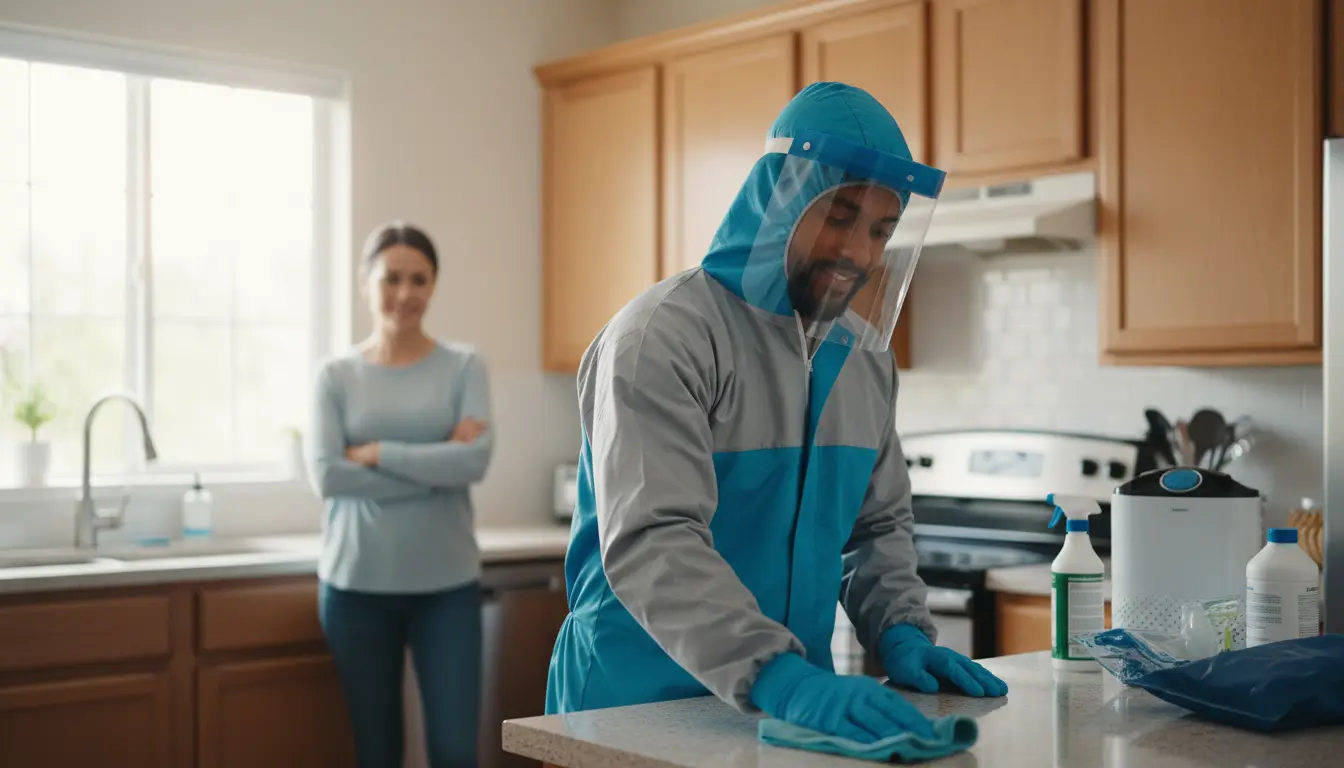
Most people assume that a strong bottle of bleach and a pair of rubber gloves are enough to clean up a biohazard scene. That assumption is not only incorrect—it is actively dangerous. The reality is that standard household cleaning products and equipment are fundamentally incapable of eliminating bloodborne pathogens, neutralizing volatile organic compounds, or preventing cross-contamination in porous materials. Why specialized equipment is necessary for biohazard remediation becomes immediately clear when you understand the science behind pathogen survival, the structural complexity of older St. Louis homes, and the legal liability that attaches to every improperly remediated site.
Professional remediation is not a luxury; it is a public health necessity. In St. Louis, where summer humidity accelerates decomposition and winter freezes can cause structural materials to trap biological residues, the local climate adds another layer of complexity. Without industrial-grade negative air machines, hospital-grade disinfectants, and ATP fluorescence testing, even the most thorough visual cleanup can leave behind invisible health hazards. That is why St. Louis Biohazard Cleanup deploys equipment specifically designed to meet IICRC S540 and OSHA standards, ensuring that every trace of biological contamination is removed and the property is restored to a safe, habitable condition.
The Technical Reality of Biohazard Remediation
Understanding why specialized equipment is necessary for biohazard remediation begins with the nature of the contaminants involved. Bloodborne pathogens such as hepatitis B and C, HIV, and MRSA can survive on surfaces for days or even weeks, depending on environmental conditions. Standard mops and buckets simply spread these pathogens around rather than removing them. Industrial-grade equipment, such as HEPA-filtered vacuums and negative air machines, creates a controlled environment that prevents airborne particles from migrating to unaffected areas of the property.
In St. Louis, many homes are over a century old, with brick foundations, hardwood floors, and plaster walls that are highly porous. When biological fluids seep into these materials, they penetrate deep below the surface. Effective remediation requires specialized forensic cleaning tools like enzyme-based treatments that break down organic matter at the molecular level, followed by structural decontamination with EPA-registered disinfectants. This process cannot be replicated with off-the-shelf products.
The Role of Negative Air Pressure
One of the most critical pieces of equipment is the negative air machine. These units create a pressure differential that forces airborne contaminants out of the work area and through a series of HEPA filters, capturing particles as small as 0.3 microns. Without this equipment, disturbing a biohazard site can release dangerous bacteria and viruses into the air, putting everyone in the building at risk. This is especially important in multi-unit residential buildings common in St. Louis neighborhoods like the Central West End and Soulard, where shared ventilation systems can spread contamination between units.
Comparing Professional Remediation with Standard Cleaning
To illustrate the gap between what standard cleaning can achieve and what professional remediation requires, consider the following comparison:
| Feature/Metric | Professional Biohazard Remediation | Standard Residential Cleaning |
|---|---|---|
| Regulatory Compliance | Full compliance with OSHA 29 CFR 1910.1030, EPA waste disposal rules, and state/local health codes | No compliance requirements; often violates disposal laws |
| Pathogen Elimination | Hospital-grade disinfectants with verified contact times; ATP testing to confirm 99.99% reduction | Household bleach or ammonia; no verification of efficacy |
| Structural Assessment | Moisture mapping, thermal imaging, and porosity testing to determine what can be saved vs. replaced | No assessment; surface cleaning only |
| Air Quality Control | Negative air pressure, HEPA filtration, and containment barriers | No air handling; contaminants can become airborne |
| Waste Disposal | Licensed biohazard waste transport and incineration per federal and state regulations | Often placed in regular trash, creating legal and health risks |
| Insurance Documentation | Detailed chain-of-custody logs, photos, and final clearance reports | No documentation |
Expert Diagnostic Insights
Experienced remediation specialists employ several advanced diagnostic techniques that are impossible without specialized equipment. First, thermal imaging cameras can detect hidden moisture pockets behind walls and under flooring, which often indicate where biological fluids have seeped. In St. Louis’s humid climate, areas that remain damp become breeding grounds for mold and bacterial growth, compounding the health risks. Second, adenosine triphosphate (ATP) testing measures the presence of organic residue on surfaces after cleaning. A reading above a certain threshold means the surface is still contaminated, even if it looks clean. Third, forensic restoration specialists use ultraviolet (UV) light to identify latent biological stains that are invisible to the naked eye, especially on porous materials like unsealed concrete or aged wood.
Property owners often make three critical mistakes. The first is using household bleach on biological matter. Bleach can actually fix proteins to surfaces, making them harder to remove and leaving behind a false sense of cleanliness. The second is waiting for odors to dissipate naturally. Odors from decomposition are caused by volatile organic compounds that continue to off-gas long after the visible matter is removed, requiring chemical neutralization rather than air fresheners. The third mistake is allowing untrained personnel—family members, well-meaning neighbors, or even standard janitorial staff—into the site before professional remediation. This exposes them to pathogens and can lead to cross-contamination that spreads throughout the building. These errors can result in long-term health issues for occupants and significant structural damage that reduces property values.
Pricing Factors for Biohazard Remediation
- Site mobilization fees: These cover the cost of transporting specialized equipment, such as negative air machines, HEPA vacuums, and containment materials, to the location. In St. Louis, response times can vary based on traffic and the distance from the service hub, but 24/7 availability ensures that delays are minimized.
- Hourly remediation rates: The complexity of the work determines the number of technicians and the duration of the job. Heavily contaminated sites requiring extensive structural decontamination or the removal of porous materials will naturally cost more.
- Specialized waste disposal: Biohazardous waste must be handled, transported, and incinerated according to strict regulations. Disposal costs are influenced by the volume of waste, which can increase dramatically if large amounts of contaminated carpet, drywall, or insulation need to be removed.
- Structural material replacement: When biological contaminants have penetrated beyond the surface, replacement of affected materials is necessary. This is common in older St. Louis homes with unsealed brick or plaster, and the cost depends on the extent of the damage and the materials needed for restoration.
- HVAC decontamination: If the site’s HVAC system was operating during the incident, pathogens may have circulated through the ductwork. Specialized cleaning of the entire system is often required to prevent recontamination, adding to the overall cost.
Safety Standards and Certifications
Professional biohazard remediation is governed by rigorous standards that ensure the safety of both the technicians and the property’s future occupants. The Occupational Safety and Health Administration’s Bloodborne Pathogens Standard (29 CFR 1910.1030) mandates that all workers handling potentially infectious materials receive annual training, be provided with appropriate personal protective equipment (PPE), and follow strict protocols for decontamination and waste disposal. Additionally, the Institute of Inspection, Cleaning and Restoration Certification (IICRC) publishes the S540 Standard for Trauma and Crime Scene Cleanup, which outlines the minimum requirements for cleaning, sanitizing, and restoring affected areas.
In St. Louis, local regulations also require that biohazard waste be transported by licensed carriers and disposed of at authorized facilities. Failure to comply can result in fines, legal liability, and even criminal charges. For property owners, hiring a certified remediation company like St. Louis Biohazard Cleanup ensures that every step of the process—from initial assessment to final clearance testing—is documented and compliant with all applicable laws. This not only protects the health of everyone who enters the property but also preserves the property’s value and insurability.
Frequently Asked Questions
Can I use bleach to clean up a small amount of blood myself?
Bleach is often recommended for disinfection, but it is not effective for cleaning up biological matter on porous surfaces. When blood or other bodily fluids soak into materials like wood, drywall, or unsealed concrete, bleach cannot penetrate deep enough to kill pathogens. Moreover, bleach can cause proteins to clump and adhere to the surface, making it even harder to remove the contamination. Professional remediation uses enzyme-based cleaners that break down organic matter at the molecular level, followed by hospital-grade disinfectants that are proven to inactivate viruses and bacteria. For any significant biohazard, especially in an older St. Louis home, relying on bleach is a gamble with your health and your property’s safety.
How long do pathogens survive on surfaces after a trauma scene?
Survival times vary widely depending on the pathogen and environmental conditions. Hepatitis B virus can survive for at least seven days on dry surfaces, and MRSA can persist for weeks. In St. Louis’s humid summers, the survival time may even increase, as moisture helps pathogens remain viable. This is why prompt professional remediation is critical. The longer the contamination remains, the greater the risk of airborne transmission during cleanup, and the deeper the residues can penetrate into porous building materials. Specialized equipment like ATP testers and UV lights ensure that all traces are detected and eliminated, not just the visible ones.
What happens if I try to clean a biohazard site myself and then sell the property?
If you attempt a DIY cleanup and later sell the property without disclosing the incident, you could face legal liability for fraud and negligence. More importantly, residual contamination can cause health problems for the new occupants, leading to lawsuits. Even if you disclose the incident, potential buyers will likely require a professional clearance report to confirm the property is safe. Without proper documentation and third-party testing, the property may be uninsurable or unsellable. Professional remediation not only removes the health risk but also provides a chain-of-custody report and final clearance testing that satisfies insurance and real estate requirements.
Is it safe to stay in the home during remediation?
In most cases, occupancy is not recommended during active remediation. The use of negative air machines, containment barriers, and chemical disinfectants creates an environment that is unsafe for unprotected individuals. Technicians wear full PPE, including Tyvek suits, respirators, and shoe covers, to prevent exposure. For large-scale remediation, the affected area may be sealed off, but the rest of the home could still be at risk from airborne particles if the HVAC system is not properly isolated. St. Louis Biohazard Cleanup always advises temporary relocation and coordinates with property owners to ensure that the living space is safe before re-entry.
How do I know if the cleanup was thorough enough?
Professional remediation companies use ATP fluorescence testing to measure the amount of organic residue left on surfaces after cleaning. A reading below a specific threshold indicates that the surface is biologically clean. Additionally, final clearance testing may involve air sampling to check for airborne pathogens. All results are documented in a report that you can share with your insurance company or future buyers. If you are unsure about the quality of a cleanup, you can request an independent assessment, but it is far more effective to hire a certified provider from the start.
Professional Biohazard Remediation in St. Louis
Why specialized equipment is necessary for biohazard remediation is not a theoretical question—it is a practical reality that affects the safety, legality, and financial value of a property. In St. Louis, where the combination of historic architecture, humid summers, and cold winters creates unique challenges for decontamination, relying on general cleaning supplies is simply not an option. The difference between a property that looks clean and one that is truly safe is the difference between a mop and a forensic restoration system.
St. Louis Biohazard Cleanup brings years of experience, IICRC-certified training, and an arsenal of specialized equipment to every job. Whether you are dealing with the aftermath of a trauma incident, a hoarding situation, or a flood that has introduced biological contaminants, our team approaches each site with the technical rigor and compassion that the situation demands. We serve the entire St. Louis metro area, including Central West End, Soulard, The Hill, Tower Grove South, Lafayette Square, and Benton Park, with 24/7 emergency response. When you need a property restored to a safe, livable condition, you need professionals who understand the science behind biohazard remediation and have the equipment to get it done right.