According to data from the Missouri Department of Health and Senior Services, the St. Louis metropolitan area reports an average of 420 unattended death scenes each year. In a climate where summer humidity routinely exceeds 80% and winter temperatures swing below freezing, biological material decomposes rapidly—often within hours—creating severe health hazards for property owners and neighbors in Clayton and nearby communities. Professional biohazard cleanup services near Clayton and nearby communities are not a luxury; they are a critical public health intervention.
When a traumatic event occurs—whether a suicide, homicide, accident, or unattended death—the aftermath involves far more than visible stains. Bloodborne pathogens such as hepatitis B, hepatitis C, and HIV can remain infectious for days on surfaces. The porous brick and mortar common in older St. Louis homes trap biological fluids, requiring specialized structural decontamination. St. Louis Biohazard Cleanup provides the only locally owned, IICRC-certified remediation team with 24/7 emergency response across Clayton, University City, Ladue, and the entire metro region.
The Technical Remediation Process for Biohazard Sites
Every biohazard cleanup begins with a comprehensive risk assessment. Our certified technicians conduct a zone-by-zone inspection using adenosine triphosphate (ATP) fluorescence testing to identify invisible biological contamination. This quantitative swab test measures organic residue on surfaces, providing a baseline to ensure complete decontamination. Following the assessment, we establish a containment perimeter using heavy-gauge polyethylene sheeting and negative air machines to prevent cross-contamination to adjacent rooms or HVAC systems.
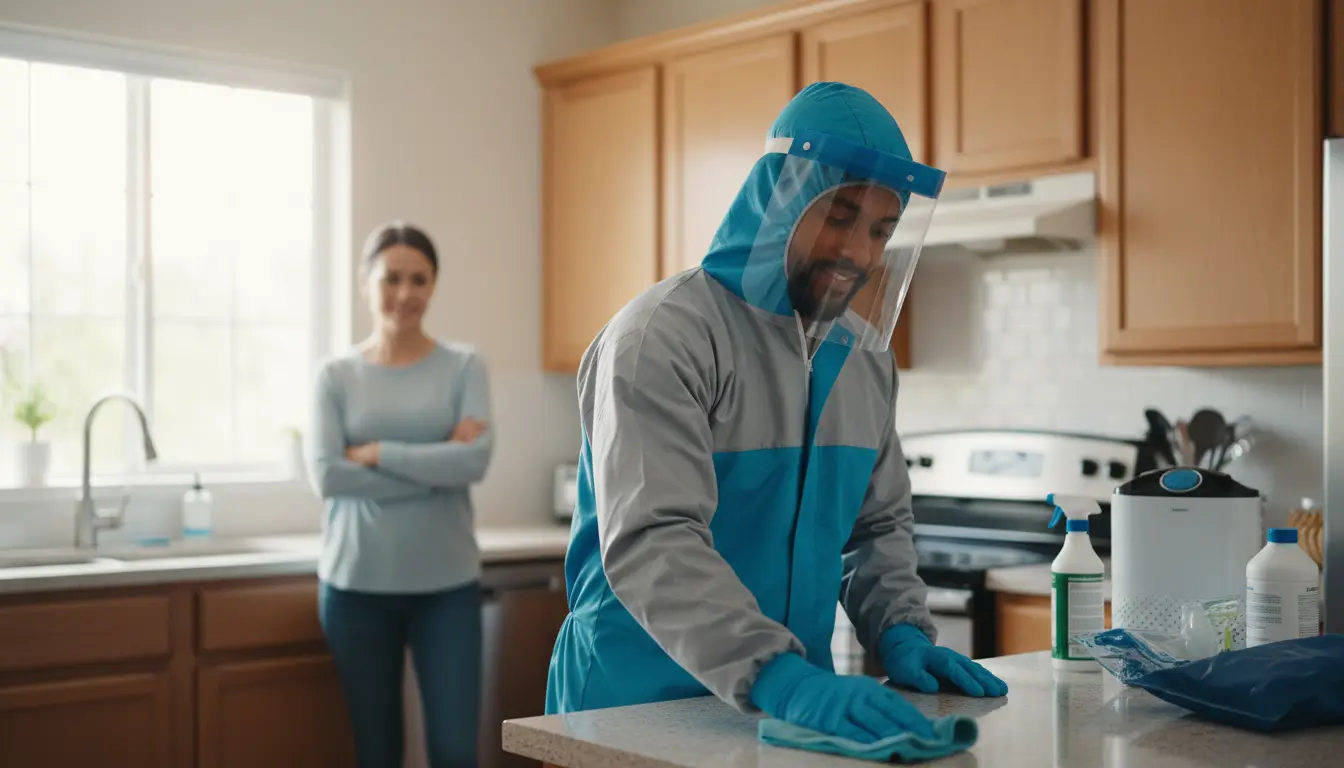
Personal protective equipment (PPE) protocols align with OSHA Bloodborne Pathogens Standard 29 CFR 1910.1030. Technicians wear Tyvek suits, nitrile gloves, full-face respirators with P100 filters, and steel-toed boots. Only then does physical removal begin: all porous materials—carpet, drywall, insulation, ceiling tiles—are cut out and bagged in red biohazard bags. For non-porous surfaces like brick and concrete, we apply EPA-registered hospital-grade disinfectants with a dwell time of at least ten minutes. Missouri’s seasonal humidity accelerates odor migration, so we deploy hydroxyl generators and ozone shock treatments to neutralize volatile organic compounds at the molecular level.
Why ATP Testing Matters for Structural Decontamination
Standard household cleaning cannot eliminate microbial contamination. ATP testing measures the presence of cellular material that bleach and detergents often leave behind. After chemical sanitation, we retest surfaces to confirm a 99.99% reduction in organic load—a requirement for IICRC S540 Trauma and Crime Scene Cleanup certification. In Clayton’s historic homes, where sub-floor spaces may harbor decades of moisture, this step prevents future mold infestation and ensures structural integrity.
Professional Remediation vs. Standard Janitorial Cleaning
The difference between hiring a certified biohazard remediation firm and a general cleaning service is profound. Below is a comparison based on the IICRC S540 standard and practical outcomes observed across St. Louis properties.
| Feature/Metric | Professional Biohazard Remediation | Standard Residential Cleaning |
|---|---|---|
| Regulatory Compliance | OSHA, EPA, DOT, and Missouri state waste disposal regulations | None; may violate local biohazard transport laws |
| Pathogen Elimination | ATP-verified 99.99% reduction using EPA-registered hospital disinfectants | No verification; household bleach is ineffective on porous surfaces |
| Structural Assessment | Full moisture mapping, thermal imaging, and sub-floor inspection | Visual-only; hidden biohazards left untreated |
| Waste Disposal | Licensed transport to permitted medical waste incinerator | Illegal dumping or improper bagging risk |
| Odor Elimination | Hydroxyl generators, ozone, and enzyme treatments | Air fresheners only; no molecular neutralization |
Expert Insights: Three Diagnostic Tips Every Property Owner Should Know
First, hidden biological seepage often travels along plumbing chases and electrical conduits. In Clayton’s brick row houses, fluid from an upper-floor unattended death can saturate insulation and drywall two stories below without any visible ceiling stain. Thermal imaging cameras detect these cold, damp zones before odor becomes apparent. Second, porous materials like unsealed grout, hardwood, and acoustic ceiling tiles cannot be fully decontaminated—IICRC standards mandate removal. Attempting to clean them only pushes pathogens deeper into the substrate. Third, negative pressure containment is non-negotiable. Without it, airborne particles travel through shared HVAC ducts, contaminating entire buildings.
Common mistakes property owners make include using household bleach on biological matter. Bleach loses effectiveness in the presence of organic soil and is corrosive to many surfaces. Waiting for odor to dissipate naturally is another error—odor molecules indicate ongoing microbial activity and potential airborne pathogen release. Finally, allowing untrained family members or general contractors into a trauma scene exposes them to bloodborne pathogens and psychological trauma, often leading to legal liability.
Pricing Considerations for Biohazard Cleanup in Clayton
- Site Mobilization Fee: A flat rate covering initial assessment, containment setup, and transport of specialized equipment—typically $500–$900 depending on distance from our St. Louis base.
- Hourly Remediation Rate: $175–$275 per technician per hour, with a minimum of four hours. Complex scenes involving structural demolition or HVAC decontamination may require multiple technicians.
- Biohazard Waste Disposal: $150–$400 per 55-gallon drum of red bag waste, including transportation to a licensed medical waste incinerator. Missouri Department of Natural Resources mandates manifest tracking for all biological waste.
Three factors that most influence cost: the extent of structural material replacement required (entire rooms vs. small areas), the total volume of biohazardous waste (including saturated porous materials), and the necessity for specialized HVAC decontamination if biological material entered ductwork. Our 24 hour biohazard services include a free on-site estimate to provide precise pricing before any work begins.
Safety Standards and Certifications You Can Trust
St. Louis Biohazard Cleanup holds certifications that go beyond basic licensing. Our team is IICRC-certified in Trauma and Crime Scene Remediation (S540) and Water Damage Restoration (W500). Every technician completes OSHA’s Bloodborne Pathogens Standard 29 CFR 1910.1030 training annually, plus EPA RRP (Renovation, Repair, and Painting) certification for older buildings that may contain lead paint. We use only EPA-registered disinfectants with proven efficacy against hepatitis, norovirus, and MRSA. All biohazard waste is transported in sealed, labeled containers to a permitted medical waste facility under a Department of Transportation tracking number. This protects property owners from liability and ensures that the site is safe for reoccupation.
For properties with hoarding biohazard removal needs, we follow a separate protocol that combines remediation with compassionate coordination of social services. In all cases, we provide a final clearance report with ATP test results and photographic documentation for insurance carriers and regulatory agencies.
Frequently Asked Questions About Biohazard Cleanup
How quickly must biohazard cleanup begin after a traumatic event?
The window for safe remediation is narrow. Bloodborne pathogens can remain viable on surfaces for up to seven days in ideal conditions, but in St. Louis’s humid summers, decomposition accelerates rapidly. Fluids seep into sub-flooring within hours, and odor molecules attract insects and rodents. We recommend initiating emergency response cleanup within two hours of notification to minimize health risks and structural damage. Our team responds 24/7 and typically arrives on-site within 60 minutes across the Clayton area.
Do I need to leave my home during remediation?
Yes, for safety. The containment zone will be sealed off, and negative air machines create pressure differentials that prevent cross-contamination. We advise all occupants—including pets—to vacate the property until ATP verification confirms zero biological residue. In multi-unit buildings, adjacent units may remain occupied, but we coordinate with property managers to seal shared ventilation. The time frame ranges from four hours for a single-room incident to several days for whole-structure contamination.
Is biohazard cleanup covered by homeowners insurance?
Most standard homeowners policies cover biohazard cleanup under “sudden and accidental” damage provisions, especially if the event is a covered peril like a crime scene or unattended death. We provide detailed invoices and ATP test reports to support claims. It is essential to contact your insurance agent before remediation begins; we can coordinate directly with adjusters to ensure coverage. In cases of hoarding or long-term neglect, separate liability policies may apply.
Can I clean a trauma scene myself to save money?
No. Under OSHA regulations, only trained personnel in full PPE may enter an area known to contain bloodborne pathogens. Household cleaning products lack the dwell time and contact kill rate required for biological decontamination. Additionally, improper disposal of biohazard waste is a class C felony in Missouri. DIY attempts often result in incomplete remediation, leading to health problems for future residents and legal liabilities for property owners. The cost of professional trauma scene decontamination is an investment in safety and legal compliance.
Professional Biohazard Remediation in St. Louis
Choosing the right partner for biohazard cleanup services near Clayton and nearby communities means selecting a team that combines technical rigor with compassion. St. Louis Biohazard Cleanup has restored hundreds of properties across the metro area, from historic brick homes in Clayton to modern apartments in Chesterfield. We understand the local building stock, the regulatory environment, and the emotional weight these situations carry. Every job is handled discreetly, with minimal disruption to neighbors and a clear focus on returning the property to a safe, habitable state.
When you need immediate, certified biohazard remediation, we are available around the clock. Contact us for a no-obligation assessment and let our experience guide your property to full recovery.