The call came in at 10:47 PM on a Tuesday. A property manager in Tower Grove South had just entered a second-floor unit after a tenant failed to respond to repeated notices. The smell hit him before he even opened the door—a thick, sweet odor that signaled a death had gone unnoticed for several days. Inside, the scene was not something any general contractor or cleaning crew was equipped to handle. Biological fluids had seeped through the carpet pad into the original hardwood subfloor below, a common issue in St. Louis’s older brick residential buildings. Within hours, the property manager needed a biohazard cleanup checklist for homeowners and property managers to navigate the next 48 hours practically, legally, and safely. For anyone managing residential property in St. Louis, understanding the difference between standard janitorial cleaning and a certified biohazard remediation workflow is not optional—it is a matter of liability, safety, and structural preservation.
This scenario repeats across the metro area more often than most realize. Whether you are dealing with a trauma scene, an unattended death, or a severe hoarding situation contaminated with biohazards, the initial decisions made in the first few hours dramatically impact both the health of everyone involved and the long-term value of the property. Missouri’s seasonal humidity swings—from muggy summers that accelerate decomposition to cold winters that can mask odors until thaw—create unique challenges for property managers who may not recognize the immediate need for professional intervention. The following checklist is designed to serve as a practical, step-by-step guide rooted in OSHA compliance, IICRC S540 standards, and real-world experience in St. Louis residential environments.
Immediate Risk Assessment and Site Security
Before any cleaning begins, the absolute first priority is establishing a perimeter and assessing the immediate health threats. If the scene involves blood or other potentially infectious materials (OPIM), you are facing exposure to bloodborne pathogens such as Hepatitis B, Hepatitis C, and HIV. These pathogens can survive on surfaces for days or even weeks depending on temperature and humidity. In a St. Louis row house or a Clayton apartment, the confined air circulation can concentrate airborne contaminants. The property manager or homeowner must immediately restrict access to only trained personnel. Lock the unit, post warning signs if appropriate, and notify local law enforcement if the death is unattended or suspicious. Do not allow friends, family, or well-meaning neighbors inside. Every person who enters without proper personal protective equipment (PPE) becomes a potential contamination vector.
Simultaneously, turn off any HVAC system serving the affected area. Forcing air through a contaminated space pushes bioaerosols—tiny particles containing bacteria and viruses—into adjacent rooms or units. In multi-family buildings common in neighborhoods like the Central West End or Soulard, this can transform a single-site incident into a building-wide problem. Professional remediation crews use negative air machines equipped with HEPA filtration to create a controlled environment, pulling contaminated air out of the space and exhausting it safely. Until that equipment arrives, sealing the room with plastic sheeting and duct tape can help contain the spread. This step is not paranoid; it is standard practice in forensic restoration and is critical for preventing cross-contamination.
Personal Protective Equipment (PPE) Protocol
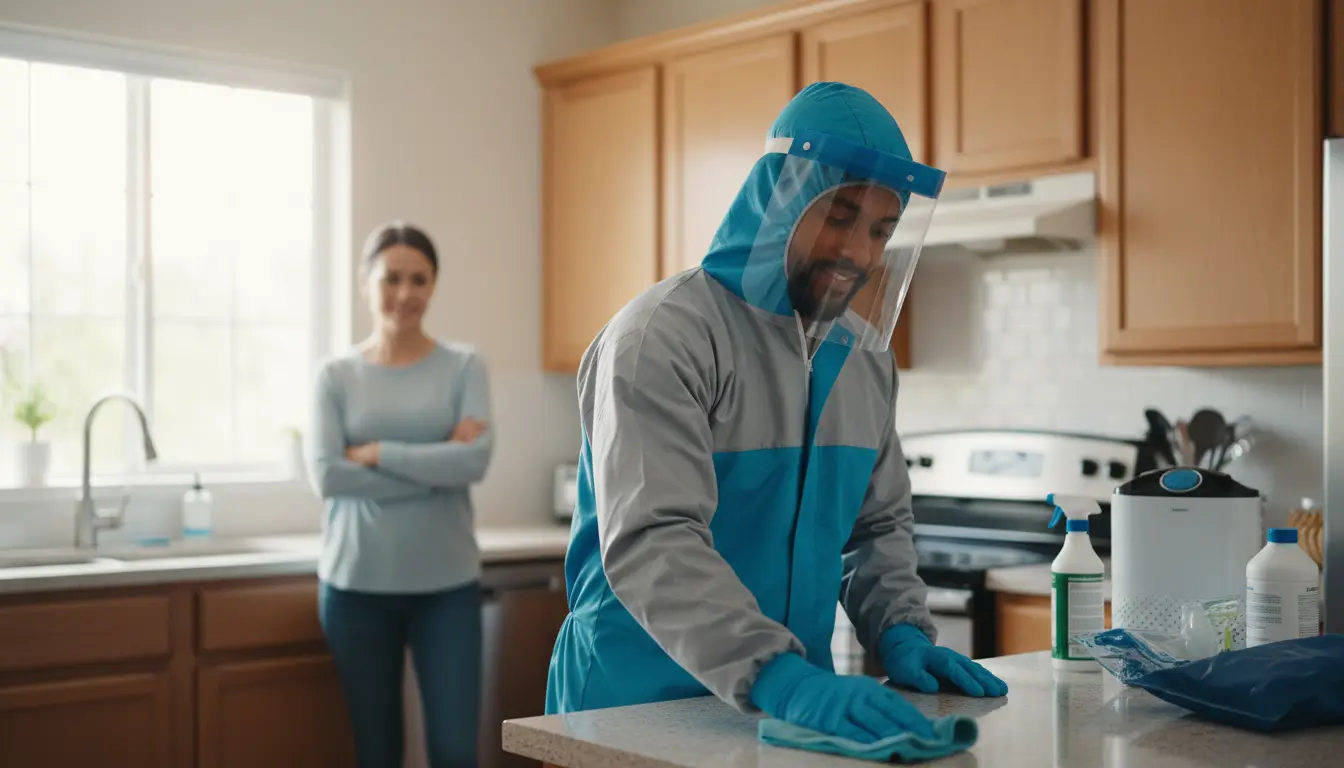
Using household gloves and a dust mask is dangerously inadequate for biohazard remediation. Certified professionals follow the OSHA Bloodborne Pathogens Standard (29 CFR 1910.1030), which mandates specific levels of PPE depending on the risk of exposure. For most trauma scenes or decomposition events in residential settings, this includes: fluid-impermeable Tyvek coveralls, nitrile gloves worn in double layers, splash-resistant goggles or a full-face shield, and an N95 respirator at minimum—often a half-face or full-face elastomeric respirator with P100 filters for scenes with strong airborne particulate. Property managers should never attempt to source or wear this gear without training. The risk of cross-contamination during doffing (removal of PPE) is one of the most common ways untrained individuals expose themselves. A single mistake—touching the outside of a glove to bare skin—can undo every protective measure.
Furthermore, the PPE protocol extends beyond just the cleanup crew. Any clothing or personal items exposed to the affected area must be treated as potentially contaminated. This includes shoes, which are often overlooked. Professionals use disposable boot covers or dedicated work boots that remain on-site. For property managers who have already entered the scene, a careful assessment of their own clothing and skin contact is necessary. In my practice, I have seen cases where a property manager tracked biological material into their vehicle and then into their own home, creating a secondary contamination site. The cost of professional remediation for a vehicle is significant, but it pales in comparison to the health risks. If you have entered a biohazard scene without proper PPE, contact a professional immediately for guidance on decontamination protocols for yourself and your belongings.
Physical Removal of Biohazardous Materials
Once the site is secure and the remediation team is suited up, the physical removal process begins. This is not a cleaning step; it is a surgical removal of all contaminated materials. In the case of the Tower Grove South unit, the blood and bodily fluids had saturated the carpet, pad, and the underlying hardwood subfloor. Standard cleaning solutions cannot penetrate porous surfaces to a depth that eliminates all biological contaminants. The only safe approach is removal and disposal. Carpet and padding are cut into manageable sections, double-bagged in six-mil biohazard waste bags, and sealed with zip ties. Any furniture, bedding, or personal belongings that are saturated or visibly contaminated must also be removed. This is often the most emotionally difficult part for property owners and family members, but it is non-negotiable from a safety and structural integrity perspective.
For hard, non-porous surfaces such as tile, concrete, or sealed countertops, the process involves a two-step cleaning and disinfection protocol. First, all visible organic material is removed using a detergent solution and mechanical action. Then, an EPA-registered hospital-grade disinfectant with demonstrated efficacy against bloodborne pathogens is applied with a sufficient dwell time—typically ten minutes of wet contact. ATP testing (adenosine triphosphate testing) is then used to verify the absence of biological residue. This is a critical quality control measure that standard cleaning services do not perform. An ATP meter measures the amount of organic matter on a surface; a high reading indicates that biological material remains, even if the surface looks clean. This scientific verification is what separates professional biohazard remediation from a surface-level wipe-down. In St. Louis, where older properties often have uneven subfloors and hidden crevices, ATP testing helps ensure that no contaminated pockets remain to cause future health issues or odor problems.
Comparison of Professional Biohazard Remediation vs. Standard Janitorial Cleaning
The following table outlines the key differences between a certified biohazard remediation process and a standard residential cleaning service. These distinctions are critical for property managers and homeowners evaluating their options after an incident.
| Feature / Metric | Professional Biohazard Remediation | Standard Residential Cleaning |
|---|---|---|
| Regulatory Compliance | OSHA 29 CFR 1910.1030, IICRC S540, DOT waste transport regulations | No specific biohazard regulatory framework |
| Pathogen Elimination | EPA-registered hospital-grade disinfectants with verified kill claims; ATP testing for verification | Household bleach or all-purpose cleaners; no efficacy testing |
| Structural Assessment | Evaluation of porous materials (subfloor, drywall, insulation) for saturation and replacement | Surface-level cleaning only; no evaluation of hidden contamination |
| Waste Disposal | Sealed, labeled, tracked biohazard waste incineration per state and federal regulations | General trash disposal, which is illegal for biohazard waste |
| Odor Remediation | Source removal, enzyme treatments, ozone or hydroxyl generators for molecular odor elimination | Air fresheners or temporary masking; does not address the source |
Expert Diagnostic Tips for Property Managers
Detecting hidden biological seepage is one of the most challenging aspects of remediation, especially in St. Louis’s older housing stock where plaster-and-lath walls and brick foundations can conceal fluid migration. A common diagnostic technique involves thermal imaging combined with moisture meters. Biological fluids have a different thermal signature than clean water, and a trained technician can identify areas of saturation behind walls or under flooring that are not visible to the naked eye. For example, in a Benton Park property, a small bloodstain on a carpet was the only visible sign, but thermal imaging revealed that fluid had wicked up the drywall base about eight inches and had pooled under the floorboards in a three-foot radius. Without this diagnostic step, the remaining contamination would have caused persistent odor and potential mold growth within weeks.
Another critical insight concerns porous materials. Many property owners ask if a contaminated carpet can be steam-cleaned. The answer is no. Steam cleaning does not reach the temperature or chemical concentration required to inactivate bloodborne pathogens embedded in the carpet fibers and backing. Furthermore, the moisture from steam cleaning can actually drive biological material deeper into the pad and subfloor, creating a more extensive and expensive problem. The only safe approach for porous materials saturated with biohazards is removal and replacement. This is not a cost-saving opportunity; it is a health and safety imperative. Finally, the use of negative pressure cannot be overstated. Without it, opening a door or walking through the space can disturb airborne particles and spread them into hallways, common areas, or adjacent units. In multi-family dwellings common in neighborhoods like Lafayette Square, this cross-contamination can lead to tenant complaints, health issues, and legal liability.
Common Mistakes Property Owners Make
The most frequent error I observe is the use of household bleach on biological matter. While bleach is a disinfectant on clean, non-porous surfaces, it is rapidly neutralized by organic material. When applied to blood or tissue, the bleach reacts with the proteins and loses its effectiveness before it can kill pathogens. Additionally, bleach does not clean; it only disinfects. The organic material must be physically removed first. Using bleach on a porous surface like wood or drywall can also damage the material, making structural assessment more difficult and increasing replacement costs. A second common mistake is waiting for odor to dissipate naturally. Odors from decomposition are caused by volatile organic compounds (VOCs) produced by bacterial activity. These compounds are not just unpleasant; they indicate ongoing microbial activity. Waiting days or weeks for the smell to fade means allowing bacteria to continue breaking down organic material, potentially penetrating deeper into building materials and creating a larger remediation zone.
Allowing untrained personnel—such as maintenance staff or general contractors—into the site is another critical error. Beyond the immediate health risks to those individuals, there are legal and regulatory consequences. Improper handling of biohazard waste can result in fines from the Missouri Department of Natural Resources or OSHA. Furthermore, if a contractor who is not certified in biohazard remediation attempts to clean a scene and fails to fully decontaminate the area, the property owner can be held liable for future health issues of tenants or buyers. The long-term consequences of these mistakes include structural damage that reduces property value, lingering health risks for occupants, and significant financial liability. In one St. Louis case, a property manager who attempted a DIY cleanup of a small trauma scene ended up paying three times the original remediation cost after a professional had to tear out and replace subflooring that had been improperly cleaned and sealed.
Pricing Factors for Biohazard Remediation
- Site mobilization and assessment fee: Most professional remediation companies charge a flat fee to dispatch a certified crew to the site, conduct an initial risk assessment, and secure the area. In St. Louis, this typically ranges from $250 to $500, depending on the time of day and the urgency of the response. 24-hour emergency services, like those offered by St. Louis Biohazard Cleanup, may have a premium for immediate after-hours dispatch, but this is often offset by the reduction in secondary damage from delayed response.
- Hourly remediation rates: The actual cleaning, removal, and disinfection work is generally billed by the hour per technician. Rates in the St. Louis metro area typically fall between $125 and $200 per hour per technician. A standard trauma scene in a one-bedroom apartment may require two to three technicians working for four to eight hours, depending on the extent of contamination. Complex scenes involving decomposition fluid migration into subfloors or HVAC systems can require significantly more labor.
- Specialized waste disposal: Biohazard waste cannot go into standard trash receptacles. It must be transported by a licensed medical waste hauler to an approved incineration facility. Disposal costs are often calculated by weight, with rates around $50 to $100 per pound for biological waste. While this seems high, it reflects the strict regulatory chain-of-custody requirements and the specialized handling protocols. In cases involving large volumes of contaminated carpet, padding, or furniture, disposal can become a substantial portion of the total bill.
Other cost-influencing factors include the need for structural material replacement (e.g., drywall, subflooring, insulation), the requirement for specialized HVAC decontamination if the system was running during the incident, and the use of advanced odor removal equipment such as hydroxyl generators or thermal foggers. Every site is unique, and a reputable company will provide a detailed written estimate after the initial assessment. Property managers should be wary of any company that provides a flat rate over the phone without seeing the site.
Safety Standards and Certifications
Adherence to established safety standards is the foundation of legitimate biohazard remediation. The IICRC S540 Standard for Trauma and Crime Scene Cleanup provides the industry-recognized framework for procedures, from initial site assessment to final clearance. Companies and technicians certified under this standard have demonstrated competency in proper cleaning methods, waste disposal, and safety protocols. Similarly, compliance with OSHA’s Bloodborne Pathogens Standard (29 CFR 1910.1030) is not optional. This regulation mandates specific engineering controls, work practices, and PPE to protect workers from exposure to infectious materials. A certified remediation company will have a written exposure control plan, provide proof of annual employee training, and maintain records of all safety incidents. When vetting a service provider, ask for their IICRC certification number and OSHA training documentation. Reputable companies, like those featured on the St. Louis Biohazard Cleanup website, are transparent about their credentials.
The practical importance of these standards extends to the protection of property owners and future occupants. A scene that is improperly remediated can harbor pathogens for months or years, posing a risk to anyone who enters the space—including contractors, new tenants, or buyers. In one documented case in Missouri, a family moved into a home where a prior unattended death had been cleaned by a general contractor. Six months later, a child developed a respiratory infection traced to residual biological contaminants in the HVAC system. The homeowner’s insurance denied the claim because the initial remediation was not performed by a certified professional. Proper certification is not just a badge; it is a guarantee that the work meets a verifiable standard of safety and effectiveness.
Frequently Asked Questions About Biohazard Remediation
How long does a typical biohazard remediation take in a residential property?
The duration depends entirely on the scope of contamination, the size of the affected area, and the complexity of the structural materials involved. A straightforward cleanup of a small trauma scene in a single room of a Clayton apartment might be completed in a single day. However, if biological fluids have migrated into subflooring, drywall, or an HVAC system, the process can extend to two or three days. This timeline includes the physical removal of contaminated materials, application of disinfectants with proper dwell times, ATP testing for verification, and a final inspection. Property managers should plan for the unit to be uninhabitable for at least 24 to 72 hours following the incident.
Can I claim biohazard cleanup costs on my insurance?
Many homeowner’s and commercial property insurance policies cover biohazard remediation under specific circumstances, particularly if the incident is a result of a covered event such as a crime scene, unattended death, or accident. However, policies vary widely, and coverage often depends on the specific language regarding “pollution cleanup” or “biological hazard removal.” It is essential to contact your insurance provider immediately after an incident and before any remediation work begins. A certified remediation company can provide detailed documentation and invoices that support your claim. In some cases, the insurance adjuster may require an estimate or on-site inspection by a certified professional before authorizing the work.
What happens if I find biohazard contamination in a property I am renovating?
If you encounter biological contamination during a renovation—such as old bloodstains, animal waste, or other biohazards—stop all work immediately and secure the area. Continuing to demolish or disturb the contaminated area can aerosolize pathogens and spread them throughout the structure. Contact a professional remediation service to assess the situation. The contamination may be decades old, but pathogens can still be viable under certain conditions. A professional will test the material, determine the appropriate level of PPE and containment, and remove the contaminated section safely. After remediation, the area will be cleared for your renovation team to proceed. Skipping this step can lead to worker illness and legal liability.
How do I choose a reputable biohazard cleanup company in St. Louis?
Start by verifying credentials. Look for a company that is IICRC-certified in Trauma and Crime Scene Cleanup and that explicitly follows OSHA standards. Ask for references from previous clients, particularly property managers or homeowners in similar situations. A reputable company will be willing to provide a detailed written estimate, explain their process in clear terms, and show up in marked vehicles with professional equipment. They should also handle all aspects of the job, including waste disposal and final clearance testing. Avoid companies that offer vague pricing, refuse to provide credentials, or suggest that standard cleaning products are sufficient. Companies like St. Louis Biohazard Cleanup provide transparent information about their services and certifications, making it easier for property owners to make an informed decision.
Professional Biohazard Remediation in St. Louis
Confronting a biohazard situation in a residential property is never easy, but having a clear, actionable checklist can transform a chaotic emergency into a managed process. The steps outlined here—from immediate site security and proper PPE to physical removal, ATP-verified disinfection, and professional waste disposal—represent the minimum standard for protecting human health and preserving property value. For property managers and homeowners in St. Louis, the local variables of climate, building age, and regulatory environment make professional guidance not just helpful, but essential. Attempting to handle a biohazard scene with household tools and good intentions often leads to higher costs, greater health risks, and long-term structural damage. The most practical decision you can make in the first hour is to call a certified biohazard remediation team that understands the unique challenges of the St. Louis metro area. With the right expertise, a difficult situation can be resolved safely, thoroughly, and with respect for the property and the people involved.