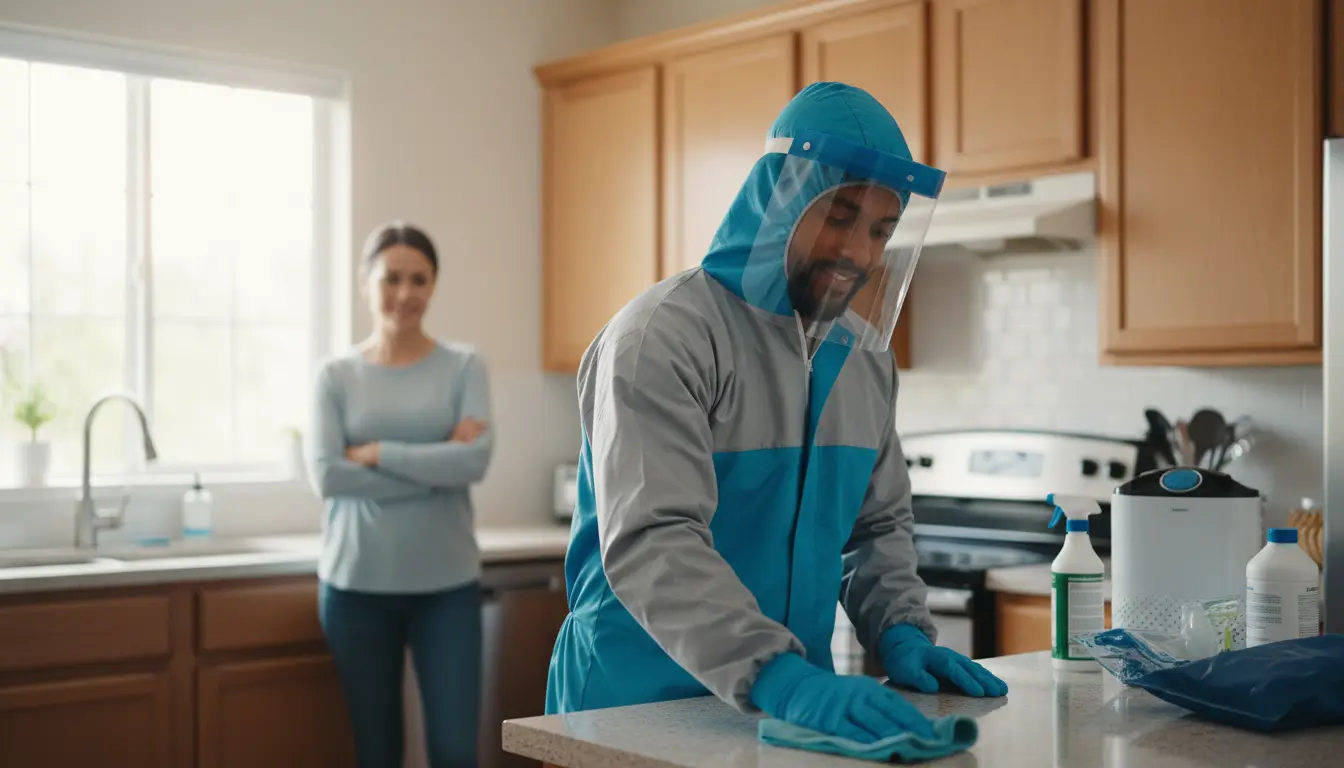
In 2026, the St. Louis Metropolitan Police Department responded to over 14,000 violent crimes, a statistic that, behind every number, represents a location requiring professional restoration. Whether it’s a crime scene, an unattended death, or a severe industrial accident, the aftermath leaves behind biological hazards that standard cleaning protocols cannot address. For property owners, property managers, and family members in St. Louis, the decision to hire a biohazard cleanup company is rarely optional—it is a critical step toward restoring safety and habitability.
The process of returning a site to a livable or sellable state involves more than removing visible mess. It requires strict adherence to OSHA, EPA, and IICRC S540 standards, specialized equipment, and a deep understanding of bloodborne pathogens and microbial remediation. The questions you ask before signing a contract can mean the difference between a thorough, compliant restoration and a future filled with health risks, legal liabilities, and structural decay. This guide provides the technical, practical, and financial questions every St. Louis resident should ask before hiring a biohazard cleanup company.
What Certifications and Training Does the Crew Hold?
Biohazard remediation is not a trade learned through on-the-job observation. True expertise begins with formal certifications that align with national safety standards. The company you hire should hold current IICRC certifications, specifically in Trauma and Crime Scene Cleanup, as well as OSHA Bloodborne Pathogens Standard 29 CFR 1910.1030 compliance for every crew member. These credentials ensure that the team understands the proper handling of sharps, the use of personal protective equipment (PPE), and the correct disposal protocols for regulated medical waste.
Beyond the paper, ask about ongoing training. The best companies invest in quarterly recertification and scenario-based drills that simulate the unique challenges found in St. Louis properties. For example, a crew that has trained in older brick homes in Soulard or Benton Park understands how blood can seep into mortar joints and subflooring, requiring targeted structural decontamination rather than simple surface cleaning. Without this specific knowledge, a crew might miss hidden biological material, leading to long-term odor migration and potential pathogen exposure for future occupants.
How Do You Handle the Initial Risk Assessment and Site Containment?
A professional biohazard remediation process begins long before any cleaning agent is applied. The first step is a comprehensive risk assessment that identifies all potential hazards, from visible biohazards to airborne particulates. The crew should explain how they establish containment zones using negative air machines and poly sheeting to prevent cross-contamination to unaffected areas of the property. In St. Louis, where properties often share walls in row-house configurations, proper containment is legally and ethically mandatory to protect neighbors.
The assessment also involves testing for biological residues using adenosine triphosphate (ATP) fluorescence testing. This technology detects microscopic organic matter that the human eye cannot see, providing a quantitative measure of cleanliness before and after the remediation. A company that uses ATP testing demonstrates a commitment to forensic restoration rather than cosmetic appearance. If the crew cannot articulate their initial assessment protocol, that is a red flag that they may skip critical steps in the remediation workflow.
What Is Your Step-by-Step Remediation Workflow?
Understanding the technical process separates a professional remediation firm from a general cleaning service. The workflow should follow a structured sequence: initial risk assessment and PPE protocol initiation, physical removal of all biohazardous materials using specialized tools and hospital-grade disinfectants, followed by structural decontamination using EPA-registered antimicrobial agents. After these steps, the crew should perform final ATP testing to verify pathogen elimination, and then apply structural encapsulation where necessary to seal porous materials.
The equipment used in each phase matters as much as the chemicals. Industrial-grade negative air machines equipped with HEPA filters capture airborne pathogens, while enzyme treatments break down organic material at a molecular level, eliminating odors at their source rather than masking them. In St. Louis, the seasonal shifts between humid summers and cold winters influence how quickly biological matter decomposes and how odors migrate through porous building materials. A crew that adjusts their workflow based on local climate conditions—for example, using accelerated drying techniques in the winter to prevent mold growth—shows the kind of adaptive expertise that protects your property long-term.
Professional Remediation vs. Standard Janitorial Cleaning
The following comparison illustrates why standard residential cleaning cannot handle biohazardous situations. Data is based on IICRC S540 and OSHA standards.
| Feature/Metric | Professional Biohazard Remediation | Standard Residential Cleaning |
|---|---|---|
| Regulatory Compliance | OSHA 29 CFR 1910.1030, EPA waste disposal, IICRC S540 | None |
| Pathogen Elimination | 99.99% reduction verified by ATP testing | Reduces visible dirt, may spread pathogens |
| Structural Assessment | Identifies hidden biological seepage and porous material replacement | Surface-level only |
| Waste Disposal | Regulated medical waste in authorized facilities | Household trash, illegal for biohazards |
Source: IICRC S540 Trauma and Crime Scene Cleanup Standard
Expert Diagnostic Tips for Property Owners
Even before a remediation company arrives, property owners can make informed observations that help the crew plan more effectively. First, if you notice a persistent, sweet, or musty odor that deepens in warmer weather, it often indicates biological material has seeped into subflooring or wall cavities. This requires extraction rather than cleaning. Second, any porous material—carpet, drywall, upholstery—that has been exposed to blood or bodily fluids must be removed and replaced. No chemical agent can fully sanitize porous surfaces, and attempting to do so creates a long-term health hazard. Third, never allow untrained personnel into the site. Disturbing a scene can aerosolize bloodborne pathogens, increasing the risk of inhalation and cross-contamination throughout the property.
Common mistakes property owners make include using household bleach on biological matter. Bleach loses its effectiveness in the presence of organic material and can actually fix stains into surfaces, making professional removal more difficult. Another frequent error is waiting for odors to dissipate naturally. Decomposition odors are caused by volatile organic compounds (VOCs) that continue to emanate from porous materials until those materials are physically removed. Finally, some property owners attempt to lower costs by hiring a general contractor to handle cleanup. This approach almost always leads to incomplete remediation, regulatory fines, and eventual structural damage that costs far more to correct.
How Is Pricing Structured, and What Factors Influence the Final Cost?
- Standard site mobilization fees cover the transport of equipment, crew, and waste disposal containers to your location in St. Louis.
- Hourly remediation rates vary based on the number of crew members required, the complexity of the scene, and the need for specialized equipment like negative air machines and thermal foggers.
- Itemized costs for specialized disposal of biohazardous materials are calculated by the weight and category of waste, with blood-soaked materials and sharps requiring incineration at authorized facilities.
Three significant factors influence the final invoice. The extent of structural material replacement is often the largest variable. If blood has soaked through hardwood floors or seeped behind baseboards, the removal and replacement of those materials adds time and materials to the project. The total volume of biohazardous waste directly impacts disposal fees, as each pound of regulated medical waste must be tracked and processed under strict environmental guidelines. Finally, the necessity for specialized HVAC decontamination can arise if biological material has entered the ductwork, requiring full system cleaning and antimicrobial fogging. A transparent company will provide a written estimate after a thorough on-site assessment, not a vague quote over the phone.
What Safety Standards and Certifications Do You Follow?
Safety in biohazard remediation is not optional—it is enforced by multiple federal and state agencies. Your chosen company must follow OSHA Bloodborne Pathogens Standard 29 CFR 1910.1030, which mandates the use of PPE, proper sharps disposal, and a written exposure control plan. Additionally, the EPA regulates the disposal of disinfectants and antimicrobial agents, and the Missouri Department of Natural Resources oversees the transportation and disposal of medical waste. A company that cannot produce documentation for these regulations is operating outside the law.
The IICRC S540 standard specifically for Trauma and Crime Scene Cleanup provides the industry’s most rigorous framework. It covers everything from initial containment to final verification testing. Adherence to this standard ensures that every step of the remediation process—from the type of cleaning agent used to the method of waste packaging—is verifiable and defensible. For property owners in St. Louis, hiring a company that follows these protocols protects you from future liability should a tenant or buyer discover unresolved contamination. It also provides peace of mind that the site is safe for occupancy, whether that happens next week or next year.
Frequently Asked Questions About Biohazard Remediation
How quickly should a biohazard cleanup begin after an incident?
Ideally, remediation should begin within 24 to 48 hours of the incident. In St. Louis, where summer humidity can accelerate decomposition and microbial growth, even a 24-hour delay can significantly increase the complexity and cost of the cleanup. Blood and bodily fluids begin to break down immediately, releasing pathogens and attracting insects. Prompt action minimizes structural damage, reduces odor migration, and lowers the risk of secondary contamination to other areas of the property. Our 24/7 biohazard response in St. Louis and surrounding areas ensures that we can mobilize a crew within hours, not days.
Can I stay in my home during the remediation process?
For safety reasons, it is generally not recommended. Biohazard remediation involves the use of strong chemical agents, HEPA filtration systems, and physical removal of contaminated materials. The site must be treated as a containment zone to prevent cross-contamination. Depending on the scope, you may need to vacate the property for 48 to 72 hours. Your remediation company should provide a clear timeline and, if necessary, assist with recommendations for temporary lodging. The hidden dangers of unattended biohazards in your home make it clear that exposure to airborne pathogens during the process poses real health risks.
What happens to biohazardous waste after it is removed from my property?
All biohazardous waste is packaged in legally compliant, color-coded containers and transported to a licensed medical waste processing facility. In Missouri, this waste must be incinerated or autoclaved under strict temperature and pressure conditions to ensure complete sterilization. The waste is tracked through a chain of custody, and the property owner receives a certificate of disposal. This documentation is crucial for insurance claims and legal purposes. Attempting to dispose of biohazardous materials in household trash is illegal and carries significant fines.
Will my homeowner’s insurance cover the cost of biohazard cleanup?
Coverage depends on your specific policy and the cause of the incident. Many standard homeowner’s policies cover cleanup after a crime scene or unattended death, but exclusions apply for certain types of contamination. It is best to contact your insurance provider immediately after the incident. A professional remediation company can often provide the documentation and scope of work needed to support your claim. We recommend reading our guide on hoarding cleanup services in St. Louis for related scenarios that may also be covered under property insurance.
How do you handle odor removal that standard cleaning cannot address?
Odor removal in biohazard remediation requires a multi-faceted approach. First, we identify and remove the source: the contaminated material itself. Then, we use thermal fogging with enzyme-based neutralizers that penetrate porous surfaces at a molecular level. Finally, we apply structural encapsulation where needed. This process is far more effective than air fresheners or ozone generators, which only mask odors temporarily. Our team has extensive experience with the unique challenges of older St. Louis properties, where odors can become trapped in brick, mortar, and plaster.
Professional Biohazard Remediation in St. Louis
Choosing a biohazard cleanup company is a decision that affects your health, your property value, and your peace of mind. Asking the right questions—about certifications, workflow, pricing, and safety standards—ensures that you hire a team capable of performing a thorough, compliant restoration. In St. Louis, where properties range from historic brick homes in Lafayette Square to modern developments in Clayton, the nuances of each structure demand experienced professionals who understand local building materials and climate factors.
St. Louis Biohazard Cleanup meets every standard outlined in this guide. Our crew holds current IICRC and OSHA certifications, uses ATP testing to verify cleanliness, and follows a documented remediation workflow that addresses the specific challenges of the St. Louis metro area. We provide transparent pricing, comprehensive waste disposal documentation, and a commitment to restoring your property with both technical rigor and compassion. When you need a partner who treats your property with the seriousness it deserves, we are ready to respond.