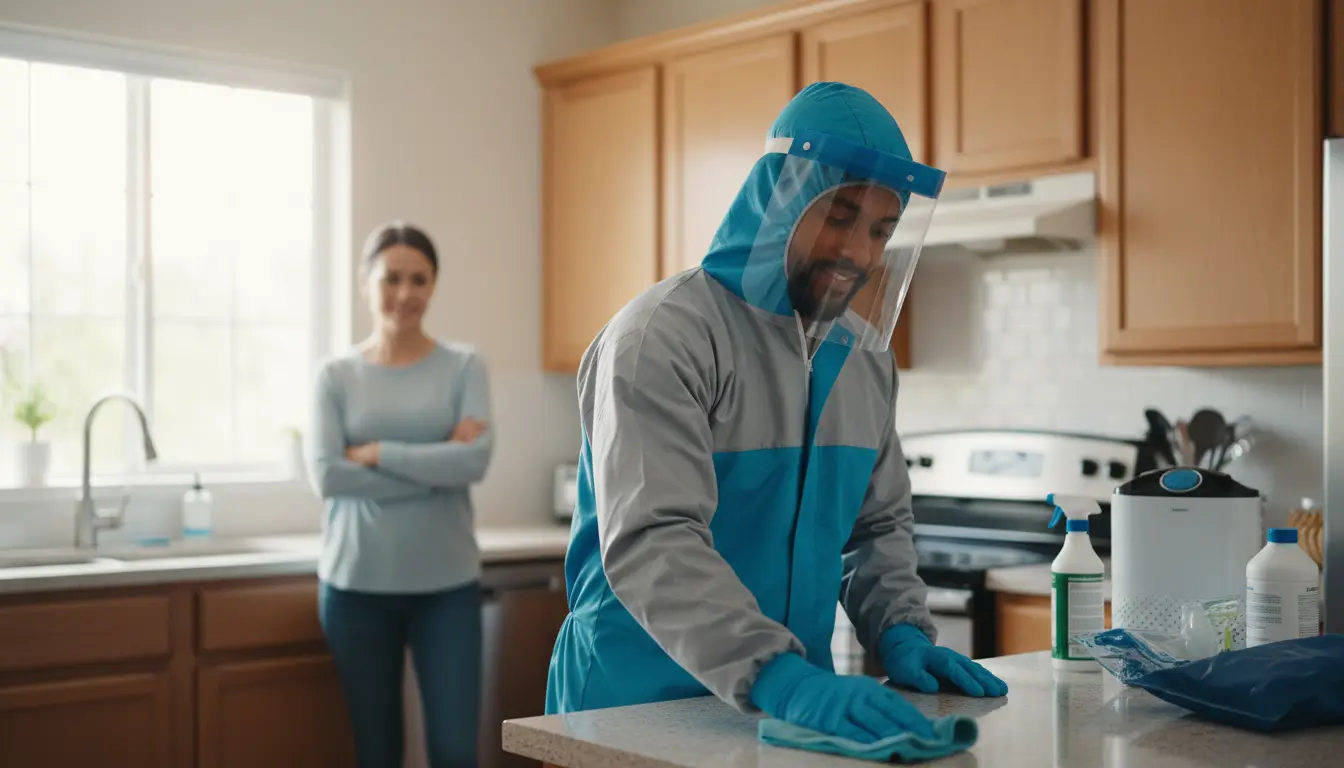
In St. Louis, the combination of aging brick structures, humid summers, and tight building envelopes creates a perfect storm for biohazard contamination to spread far beyond the visible stain. Restoring indoor air quality after such an event is not a matter of ventilation or off-the-shelf sprays. It requires a systematic, scientific approach backed by industry standards, specialized equipment, and a deep understanding of how pathogens behave in the built environment. This is where professional remediation becomes essential—not just for safety, but for the long-term habitability of the property.
St. Louis Biohazard Cleanup has the training, the technology, and the local experience to handle these complex scenarios. We follow the IICRC S540 standard for trauma and crime scene cleanup, and we apply the same rigor to air quality restoration. Whether you are a property owner, a facility manager, or a family member dealing with a traumatic event, knowing the steps involved can help you make informed decisions and avoid costly mistakes.
The First Step: Containment and Airborne Pathogen Control
Before any cleaning begins, the contaminated area must be isolated. The first responders on scene—the remediation team—will establish a containment zone using heavy-duty polyethylene sheeting and zipper entries. This prevents cross-contamination to unaffected areas of the building. Simultaneously, industrial-grade negative air machines are deployed to create negative pressure within the containment. These machines, fitted with HEPA filters rated at 99.97% efficiency for particles down to 0.3 microns, draw air out of the contaminated space and filter it before exhausting it outside. This is critical because airborne pathogens, including bloodborne viruses like hepatitis B and C, can remain viable in droplet nuclei for hours.
In St. Louis, where many residential buildings are constructed with porous brick and plaster, the risk of microbial migration through walls and ductwork is higher than in modern drywall construction. The negative air pressure system ensures that no contaminated air escapes into hallways or neighboring units. This step alone can mean the difference between a contained problem and a building-wide contamination issue. After the containment is secure, the team proceeds with a thorough risk assessment using moisture meters and thermal imaging cameras to detect hidden pockets of biological fluid that may have seeped into subflooring or behind baseboards.
Removal of Biohazardous Materials and Structural Decontamination
Once the site is contained, the physical removal of biohazardous materials begins. This includes all visibly contaminated items—carpet, padding, drywall, insulation, and any porous furniture that cannot be effectively disinfected. In a typical trauma scene, the volume of biohazardous waste can range from 50 to 200 pounds, depending on the nature of the event and the duration of decomposition. Each item is carefully bagged in red biohazard bags, labeled, and prepared for transport to a licensed medical waste incinerator. The handling of this waste is governed by OSHA’s Bloodborne Pathogens Standard (29 CFR 1910.1030) and must be tracked with a chain of custody.
After the gross removal, the team performs structural decontamination using EPA-registered hospital-grade disinfectants that are effective against a broad spectrum of pathogens, including those that cause tuberculosis, HIV, and norovirus. These disinfectants are applied using electrostatic sprayers that charge the droplets, allowing them to wrap around surfaces and into crevices that manual wiping might miss. The dwell time—the time the disinfectant must remain wet on a surface to achieve kill—is strictly observed. For most products, this is 10 minutes. After that, the surfaces are rinsed or wiped down, depending on the material.
In St. Louis, the humidity and temperature swings can affect the efficacy of chemical disinfectants. Our team adjusts the dilution rates and application methods based on ambient conditions, a practice that is often overlooked by untrained cleaners. This is just one of the reasons why professional remediation is non-negotiable for restoring indoor air quality after a biohazard event.
Verification Through ATP Testing and Air Sampling
Cleaning alone is not enough. The only way to confirm that a surface is truly free of biological contamination is through adenosine triphosphate (ATP) testing. ATP is a molecule found in all living cells—bacteria, mold, blood, and tissue. After cleaning, the remediation team uses a swab to sample a surface, then inserts the swab into a luminometer. The device measures the amount of light produced by the reaction of ATP with the test reagents. A reading below a certain threshold—typically 30 relative light units (RLU) for healthcare environments—indicates that the surface is biologically clean. In residential biohazard cleanup, we aim for the same standard.
Air quality sampling is also conducted using a calibrated air pump that draws a known volume of air through a cassette or a culture plate. The samples are sent to a third-party lab for analysis of total volatile organic compounds (TVOCs), particulate matter, and microbial colony-forming units (CFUs). The results are compared to baseline outdoor air levels and EPA-recommended guidelines. This provides a scientific, objective measure of whether the indoor air quality has been restored. Without this step, the property owner is left guessing, and the risk of lingering health effects remains.
For a property owner in St. Louis, investing in ATP and air sampling is a wise decision. It provides documentation that can be used for insurance claims, legal liability protection, and peace of mind for future occupants. It also helps identify areas that may need additional remediation, such as hidden biohazard residues in HVAC ducts or behind walls.
| Feature/Metric | Professional Biohazard Remediation | Standard Residential Cleaning |
|---|---|---|
| Regulatory Compliance | Follows OSHA 29 CFR 1910.1030, IICRC S540, EPA guidelines | No regulatory compliance; may use unsafe practices |
| Pathogen Elimination | EPA-registered hospital-grade disinfectants with verified dwell times; ATP testing for verification | Household bleach or general cleaners; no verification of kill |
| Structural Assessment | Moisture meters, thermal imaging to detect hidden contamination | Visual inspection only; hidden contamination missed |
| Safety Protocols | Full PPE, negative air containment, HEPA filtration, waste tracking | No containment or PPE; risk of cross-contamination |
| Odor Removal | HEPA scrubbing, ozone treatment, hydroxyl generators, enzyme treatments | Air fresheners or passive ventilation; odor masking only |
| Air Quality Testing | Third-party lab analysis for TVOCs, particulates, microbial CFUs | No testing; subjective assessment |
Source: IICRC S540 Trauma and Crime Scene Cleanup Standard
Expert Insights: What Professionals Know That Others Miss
Detecting Hidden Biological Seepage
One of the most common oversights in biohazard cleanup is failing to identify where biological fluids have seeped into subflooring, under baseboards, or into wall cavities. In St. Louis, many older homes have hardwood floors laid over plywood subfloors with gaps. Blood can pool in these gaps and remain undetected for weeks. Thermal imaging cameras can detect temperature differences caused by moisture, but we also use a combination of moisture meters and visual inspection with UV lights. The UV light causes biological stains to fluoresce, revealing areas that need to be cut out and replaced. Ignoring this step leads to ongoing odor and microbial growth that compromises indoor air quality.
Why Porous Materials Must Be Replaced, Not Cleaned
Many property owners ask if we can simply clean and disinfect carpet, drywall, or upholstery. The answer is almost always no. Porous materials absorb biological fluids, making it impossible to achieve complete disinfection. Even if the surface appears clean, the interior of the material can harbor pathogens. For example, blood can wick up drywall paper several inches beyond the visible stain. The IICRC S540 standard requires removal of all porous materials within a 24-inch buffer zone around any visible contamination. In a recent job in Tower Grove South, we had to remove drywall, insulation, and floorboards that extended 30 inches from the primary stain because testing showed background contamination. The extra cost was worth it for the safety of the future occupants.
The Importance of Negative Pressure to Prevent Cross-Contamination
Negative pressure is not just a box to check. It is a dynamic barrier that must be maintained throughout the entire remediation process. If the negative air machine stops working or the containment is breached, contaminated air can travel through the building’s HVAC system, affecting every room. In St. Louis, where many buildings have shared ventilation systems, this is a serious risk. We use two layers of containment and monitor pressure differentials continuously with digital manometers. The exhaust air is filtered through a HEPA filter, and we also place a secondary HEPA filter on the intake side of the machine to ensure no recirculation of fine particles. This is a level of detail that standard cleaning crews simply do not provide.
Common Mistakes Property Owners Make
One of the biggest mistakes is using household bleach. Bleach is corrosive, can damage surfaces, and is not effective against all pathogens. It also produces harmful fumes that can exacerbate respiratory issues. Another mistake is waiting for the odor to dissipate naturally. Odor is a sign of ongoing microbial activity. If you can smell it, the air is contaminated. Finally, allowing untrained personnel—family members, janitorial staff, or even well-meaning contractors—into the site without proper PPE and training exposes them to serious health risks. We have seen cases where a property manager tried to clean a small blood spill with a mop, only to spread the contamination and create a larger problem that required full remediation. The cost of professional cleanup is always less than the cost of medical bills or legal liability.
Pricing and Cost Factors for Biohazard Air Quality Restoration
The cost to restore indoor air quality after a biohazard event in St. Louis varies based on several factors. Typical pricing includes:
- Site mobilization fee: $500–$1,500, depending on distance and urgency. 24/7 emergency response in the metro area may incur a higher fee.
- Hourly remediation rate: $150–$300 per hour per technician. Most residential jobs require 2–4 technicians for 8–16 hours.
- Biohazard waste disposal: $200–$800 per pound, depending on the type and volume of waste. Incineration fees are regulated by the Missouri Department of Natural Resources.
- Structural material replacement: $1,000–$5,000 for drywall, flooring, and insulation, based on square footage.
- HVAC decontamination: $500–$2,500, if the ductwork requires cleaning and fogging with disinfectants.
- Air quality testing and lab analysis: $300–$800 per sample, with multiple samples often needed.
Three major factors influence the final cost:
- Extent of structural material replacement: The more porous surfaces that are contaminated, the more material must be removed and replaced. Old brick and plaster can be more absorbent, increasing the scope.
- Total volume of biohazardous waste: Larger piles of waste mean higher disposal fees and more labor hours for removal and packaging.
- Necessity for specialized HVAC decontamination: If the HVAC system has been running during the event, it can spread contaminants throughout the building. Decontaminating the ductwork requires specialized equipment and may involve cleaning coils, blowers, and registers.
For a detailed cost breakdown, refer to our guide to biohazard cleanup costs for St. Louis residents.
Safety Standards and Certifications That Protect You
Professional biohazard remediation is governed by multiple standards and regulations. The most important is the IICRC S540 standard for trauma and crime scene cleanup, which outlines the procedures for cleaning, disinfection, and verification. Compliance with this standard is not legally required in Missouri, but it is the benchmark of professional practice. Additionally, OSHA’s Bloodborne Pathogens Standard (29 CFR 1910.1030) mandates that all workers who handle human blood or other potentially infectious materials receive annual training, hepatitis B vaccination, and use appropriate PPE. Our team undergoes this training yearly and maintains documentation.
We also use only EPA-registered disinfectants that are listed on List N for use against SARS-CoV-2 and other viruses. These products are applied according to the label instructions, including proper contact time and safety precautions. Finally, all biohazardous waste is disposed of through licensed medical waste services that follow the Missouri Department of Natural Resources and the federal Resource Conservation and Recovery Act (RCRA) guidelines. These standards are not just bureaucratic steps—they are the foundation of a safe, effective restoration that protects everyone involved.
Understanding these standards can help property owners ask the right questions when hiring a remediation service. For example, ask if the company follows IICRC S540, if they provide ATP testing, and if they have a written chain of custody for waste. A reputable company will be transparent about their protocols. For more information on what to look for, check out our ultimate guide to biohazard cleanup in St. Louis.
Frequently Asked Questions About Indoor Air Quality Restoration After a Biohazard
How long does it take to restore indoor air quality after a biohazard event?
The timeline depends on the severity of contamination and the size of the affected area. For a typical single-room event, the initial containment and removal can take one to two days. The decontamination, drying, and verification process adds another one to two days. Air quality testing results from the lab usually take 24 to 48 hours. All told, expect a minimum of three to five days before the space is safe for reoccupancy. However, if the HVAC system is contaminated or if structural materials need extensive replacement, the timeline can extend to a week or more.
Can I use air purifiers alone to clean the air after a biohazard?
No. Consumer-grade air purifiers are not designed to handle the high concentration of biological particles, volatile organic compounds, and odors found in a biohazard environment. They can help as a supplementary measure after professional remediation, but they cannot remove the source of contamination. The source must be physically removed and the surfaces disinfected. Relying on air purifiers alone will leave the underlying contamination intact, leading to ongoing health risks and odor recurrence.
What about mold growth after a biohazard event? Is that a concern?
Yes, mold growth is a significant secondary concern. When biological fluids and moisture are present, especially in a humid environment like St. Louis, mold can begin to colonize within 24 to 48 hours. The same nutrients that support bacterial growth also support mold. Professional remediation addresses this by thoroughly drying the affected area using industrial desiccant dehumidifiers and air movers. Moisture readings are taken to confirm that all materials are below the threshold for mold growth (typically below 15% moisture content for wood and below 1% for drywall). If mold is already present, it must be removed according to EPA guidelines for mold remediation.
Is it safe to stay in the house during biohazard remediation?
Generally, no. The remediation area is a hazardous zone. Even with containment, there is a risk of exposure to airborne pathogens and chemical disinfectants. For the safety of the occupants, it is best to vacate the affected portion of the home, and ideally the entire home, during the active remediation phase. The containment area is sealed off, but the noise, vibration, and potential for accidental breaches make it unsafe for untrained individuals. Our team provides clear guidance on when it is safe to return, based on air quality testing results.
Professional Biohazard Remediation in St. Louis
Restoring indoor air quality after a biohazard event is a complex, multi-step process that requires specialized knowledge, equipment, and adherence to strict safety standards. In St. Louis, the challenges of older brick buildings, high humidity, and extreme temperature swings make professional remediation even more critical. At St. Louis Biohazard Cleanup, we combine technical expertise with compassionate service to help property owners navigate these difficult situations. We handle everything from the initial containment to final air quality testing, ensuring that your property is safe, clean, and odor-free.
If you are facing a biohazard event, do not wait. The longer the contamination remains, the more it spreads and the more expensive the cleanup becomes. Our team is available 24/7 for emergency response across the metro area. We serve neighborhoods from Clayton to Soulard, and from the Central West End to Tower Grove South. Contact us today to discuss your situation and learn how we can help restore your property and your peace of mind.