Dealing with the aftermath of a trauma scene is one of the most distressing situations anyone can face. Whether it’s an accident, crime, or unattended death in your St. Louis home or business, the emotional toll is immense. But beyond the heartbreak, there’s a hidden danger: biohazards like blood, bodily fluids, and pathogens that can pose serious health risks if not handled properly. In a city like St. Louis, where historic neighborhoods and bustling urban areas mix, ensuring a safe cleanup is crucial to restoring peace of mind.
At St. Louis Biohazard Cleanup, we understand the unique challenges of trauma scene remediation in our community. From the vibrant streets of Soulard to quiet suburbs in St. Charles, we’ve helped countless families and property owners navigate this process. This guide will walk you through how to safely approach cleanup after a trauma incident, offering practical tips while emphasizing why professional services are often the best choice. Remember, improper handling can lead to contamination spread, legal issues under Missouri health regulations, and long-term health problems.
Understanding Trauma Scene Hazards in St. Louis
Trauma scenes involve biohazardous materials that require specialized knowledge to manage. In St. Louis, local environmental factors like humidity along the Mississippi River can exacerbate bacterial growth if cleanup is delayed.
Common Biohazards You Might Encounter
Blood and bodily fluids are primary concerns, carrying risks of hepatitis, HIV, and other infections. Decomposing matter from unattended deaths can release foul odors and toxic gases, attracting pests in densely populated areas like Central West End.
Other hazards include:
- Sharps and debris: Needles, broken glass, or weapons that can cause injury.
- Chemical residues: From cleaning attempts or incident-related substances.
- Structural damage: In older St. Louis buildings, trauma can weaken floors or walls, leading to mold if not addressed.
Missouri’s Department of Health and Senior Services mandates proper disposal of biohazards, and violations can result in fines. Always prioritize safety over speed.
Initial Steps: Securing the Scene
Before touching anything, secure the area to prevent exposure and contamination.
Isolate and Notify Authorities
If the incident is recent, contact St. Louis police or emergency services immediately. For post-incident scenes, notify local authorities if required, especially in rental properties under city codes. Cordon off the area with tape or barriers to keep family, pets, and neighbors away—essential in close-knit communities like Tower Grove South.
Personal Protective Equipment (PPE) Essentials
Never enter without proper gear. Start with:
- Nitrile gloves (latex can tear).
- N95 masks or respirators for airborne particles.
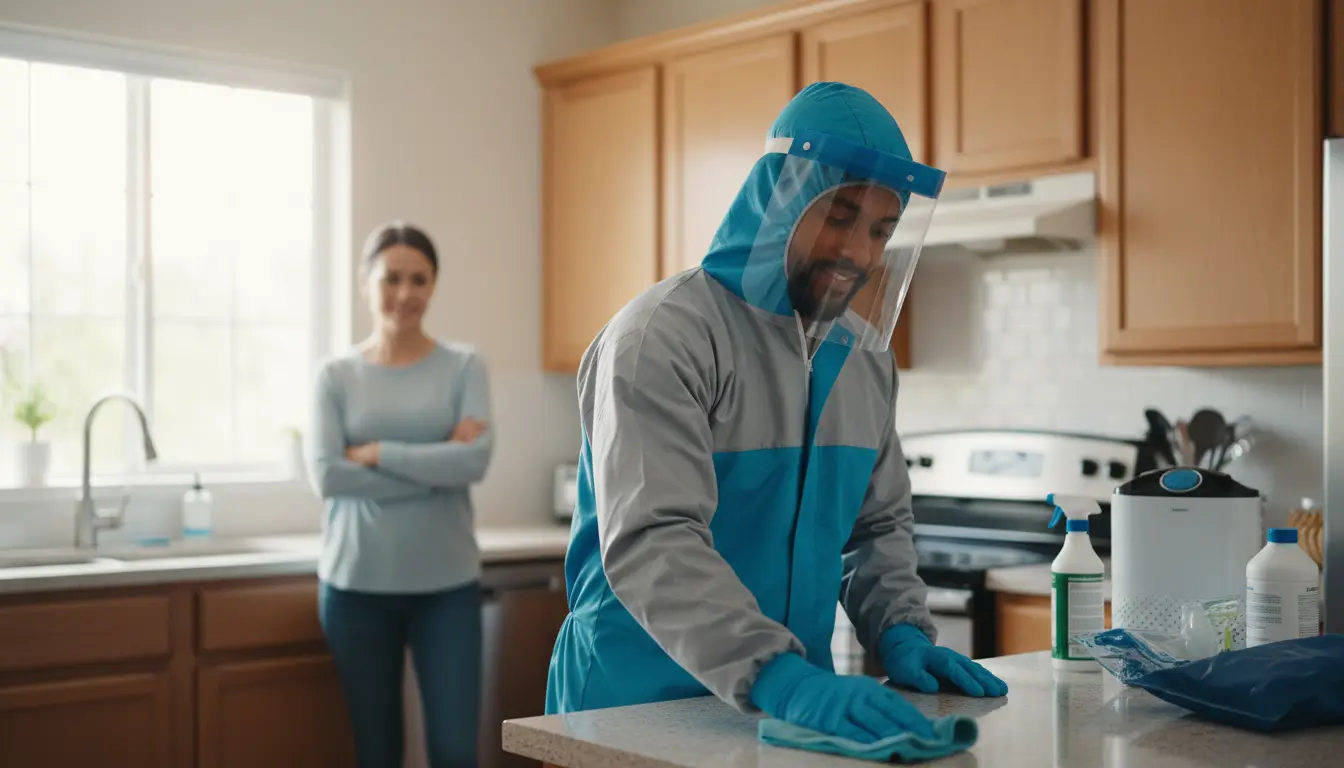
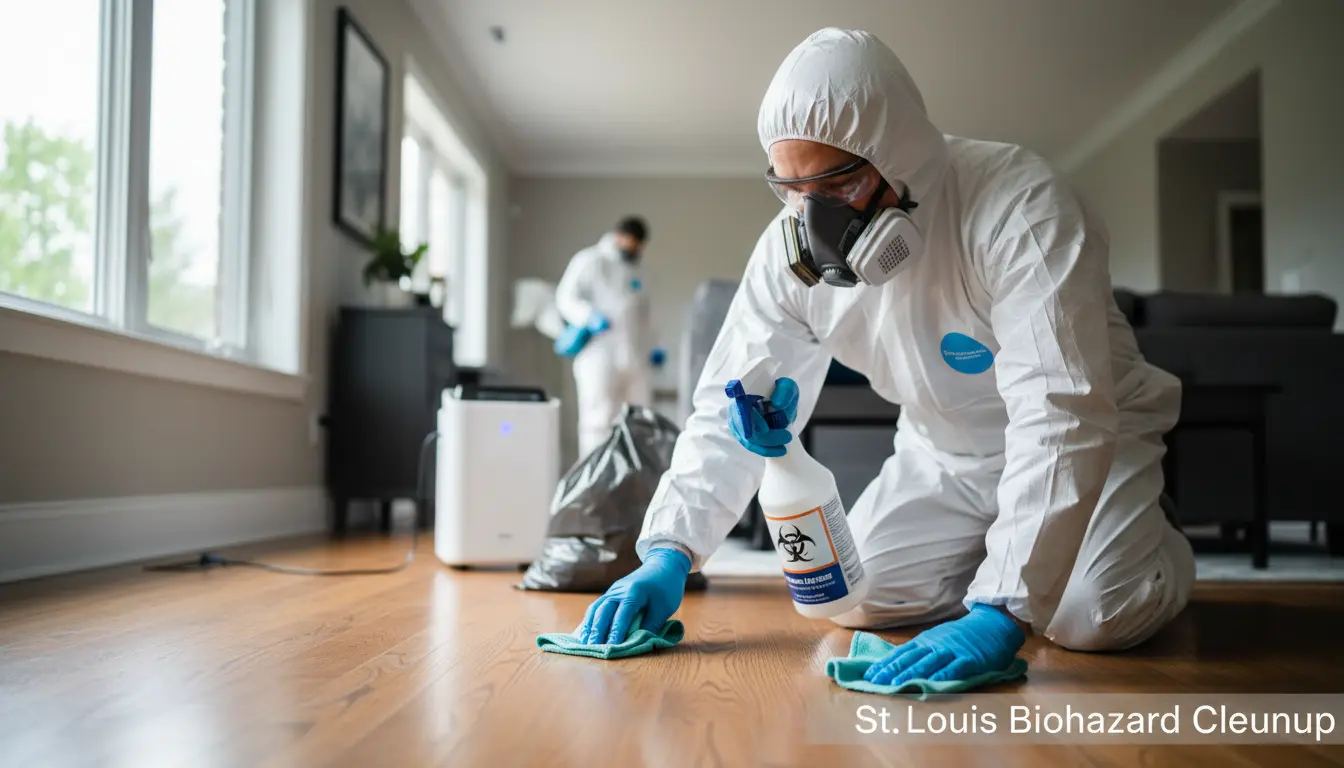
- Full-body suits, goggles, and boot covers.
Source PPE from local suppliers or online, but for complex scenes, professionals like us at St. Louis Biohazard Cleanup provide certified equipment. DIY attempts without this can lead to cross-contamination.
Safe Cleanup Techniques: Step-by-Step Guide
Once secured, follow these evidence-based steps. Note: These are general guidelines; for severe cases, call experts immediately.
Step 1: Ventilation and Air Quality
Open windows and use fans to ventilate, but avoid spreading contaminants. In St. Louis’s variable weather, use HEPA-filtered air purifiers to capture airborne pathogens. Test for mold, common in our humid climate post-trauma.
Step 2: Removing Visible Biohazards
Use absorbent materials like cat litter or commercial biohazard powders on fluids. Double-bag waste in red biohazard bags, labeled per EPA standards. For homicide site remediation, preserve evidence by documenting before removal—consult authorities first.
Avoid vacuuming without HEPA filters, as it can aerosolize particles. In multi-story homes in areas like Affton, work from top to bottom to prevent drips.
Step 3: Disinfection Protocols
Clean surfaces with a 10% bleach solution or EPA-approved disinfectants (List N for emerging pathogens). Let it sit for 10 minutes before wiping. For porous materials like carpets, professional extraction is needed—consider our property restoration services to avoid incomplete sanitization.
In St. Louis rentals, landlords must comply with health codes; improper disinfection can lead to tenant disputes or voided insurance claims.
Step 4: Waste Disposal and Transport
Biohazard waste can’t go in regular trash. Use licensed haulers for transport to facilities. St. Louis Biohazard Cleanup handles biohazard waste transport compliantly, ensuring no environmental impact on our Gateway City.
For smaller items, seal in biohazard containers and schedule pickup through local waste services, but verify Missouri regulations.
When to Call Professionals: Why DIY Isn’t Always Best
While basic steps help, trauma scenes often exceed DIY capabilities. Professionals use OSHA-compliant methods, advanced tools like ozone generators, and ensure 100% decontamination.
In St. Louis, incidents in high-traffic areas like Soulard require quick response to minimize business downtime. We’ve seen cases where amateur cleanups led to secondary infections or property devaluation.
Related services include sewage backup cleanup, which shares similar protocols, or hoarding biohazard removal for complex accumulations.
Local St. Louis Considerations
St. Louis’s architecture, from Victorian homes in Central West End to modern condos in St. Charles, influences cleanup. Older buildings may have asbestos, adding layers of hazard. City ordinances require permits for large-scale cleanups, and our team navigates these seamlessly.
Summer humidity accelerates decomposition, so act fast. Winter scenes in snowy Affton demand heating to prevent freezing biohazards.
Partnering with local authorities ensures compliance, protecting your investment in this vibrant city.
FAQ: Common Questions About Trauma Scene Cleanup
1. How long does it take to clean a trauma scene?
It varies from hours for small areas to days for extensive ones. Professionals like St. Louis Biohazard Cleanup aim for efficiency without compromising safety.
2. Is professional cleanup covered by insurance?
Often yes, under homeowner’s or liability policies. Contact your provider and us at (314) 380-0207 for guidance.
3. What if the trauma scene is in a rental property?
Landlords are responsible under Missouri law. Tenants should notify immediately to avoid liability.
4. Can I clean up myself to save money?
For minor incidents, possibly, but risks are high. We recommend pros for health and legal assurance.
5. How do I know if the area is fully decontaminated?
Use ATP testing or hire certified techs. Our services include verification reports.
Conclusion: Restore Safety with Expert Help
Cleaning up after a trauma scene in St. Louis demands caution, knowledge, and often professional intervention. By following these steps, you protect yourself and your loved ones, but don’t hesitate to lean on experts for peace of mind.
St. Louis Biohazard Cleanup is here 24/7, serving neighborhoods from Tower Grove South to St. Charles with compassionate, thorough service. Call us today at (314) 380-0207 to schedule a confidential assessment and reclaim your space safely.