In the heart of Missouri, where bustling St. Louis businesses drive the local economy, unexpected biohazard incidents can strike without warning. From sewage backups in a Chesterfield restaurant to medical waste spills in a Central West End clinic, these situations demand swift action to ensure safety and compliance. As a leading provider, St. Louis Biohazard Cleanup understands the unique challenges faced by businesses in our community. This guide delivers practical, actionable tips to help you navigate emergency biohazard cleanup effectively, minimizing health risks and operational disruptions.
Whether you’re managing a retail space in Tower Grove South or an office in Creve Coeur, knowing how to respond can make all the difference. Let’s dive into essential strategies tailored for Missouri businesses.
Understanding Biohazards in a Business Setting
Biohazards pose serious threats to health, property, and your bottom line. In St. Louis, where industries range from hospitality to healthcare, exposure to blood, bodily fluids, or infectious materials can lead to legal liabilities and reputational damage.
Common Biohazard Scenarios for Missouri Businesses
Businesses in Missouri often encounter biohazards from:
- Accidents or Injuries: Workplace incidents involving blood or fluids, common in high-traffic areas like downtown St. Louis shops.
- Sewage or Water Damage: Flooding from the Mississippi River or burst pipes, leading to bacterial contamination.
- Medical Waste: Improper disposal in clinics or salons, especially in densely populated neighborhoods like the Central West End.
- Pest Infestations: Rodent droppings carrying diseases in older buildings around Collinsville.
Recognizing these early is crucial. For specialized handling of sewage backup cleanup, always consult professionals to avoid cross-contamination.
Immediate Response Steps: What to Do First
Time is critical during a biohazard event. Acting quickly prevents the spread of pathogens and protects your employees and customers.
Step 1: Secure the Area
Evacuate non-essential personnel immediately. In a St. Louis office building, cordon off the affected zone using barriers or signage. Avoid touching contaminated surfaces without proper protection—gloves, masks, and gowns are essential for initial responders.
Step 2: Assess the Situation
Determine the type and extent of the biohazard. Is it a small blood spill or widespread contamination from a medical waste disposal issue? Document everything for insurance and regulatory purposes, as Missouri OSHA guidelines require detailed reporting.
Step 3: Contact Professionals
Don’t attempt a full cleanup yourself—biohazards require certified expertise. Reach out to St. Louis Biohazard Cleanup at (314) 380-0207 for 24/7 emergency response. Our team serves areas like Chesterfield and Tower Grove South, arriving equipped to handle any scale of incident.
Essential Cleanup Tools and Techniques
Equipping your business with basic tools can aid initial containment, but professional intervention is non-negotiable for thorough remediation.
Personal Protective Equipment (PPE)
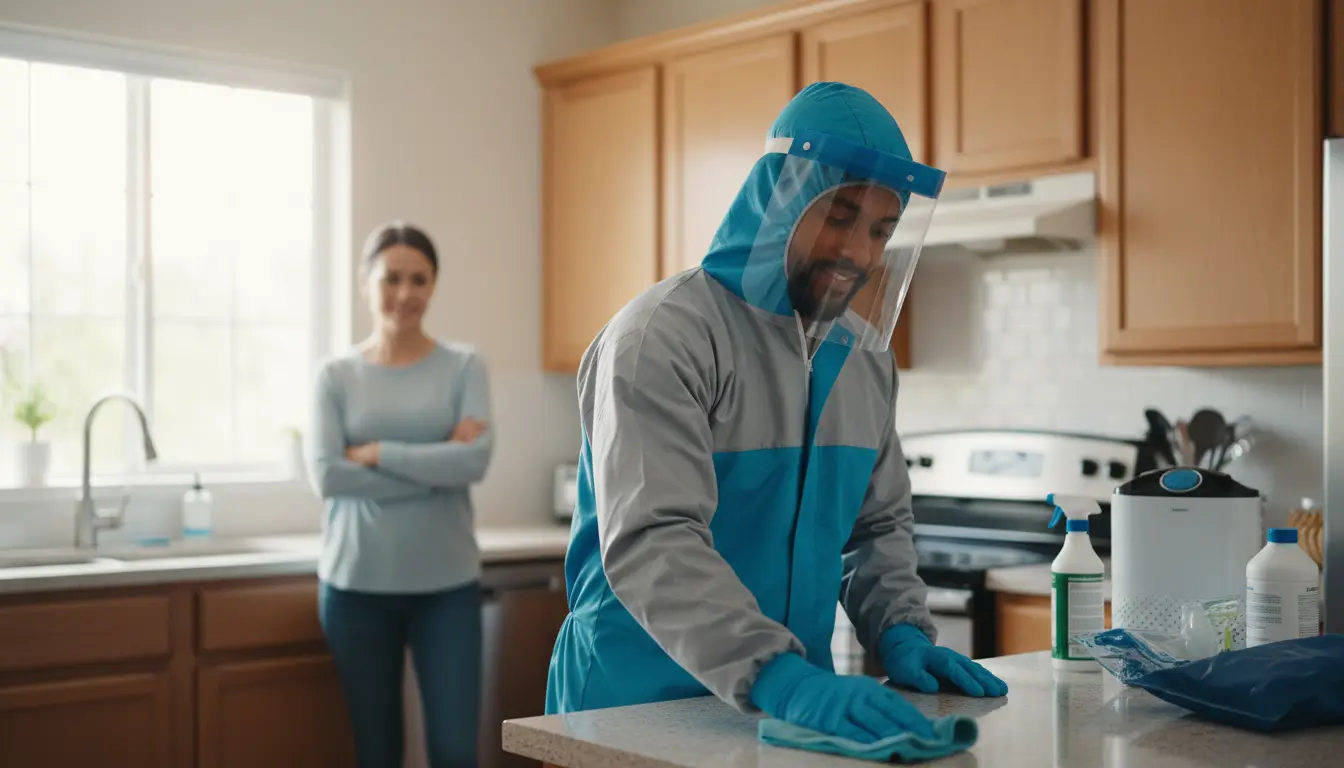
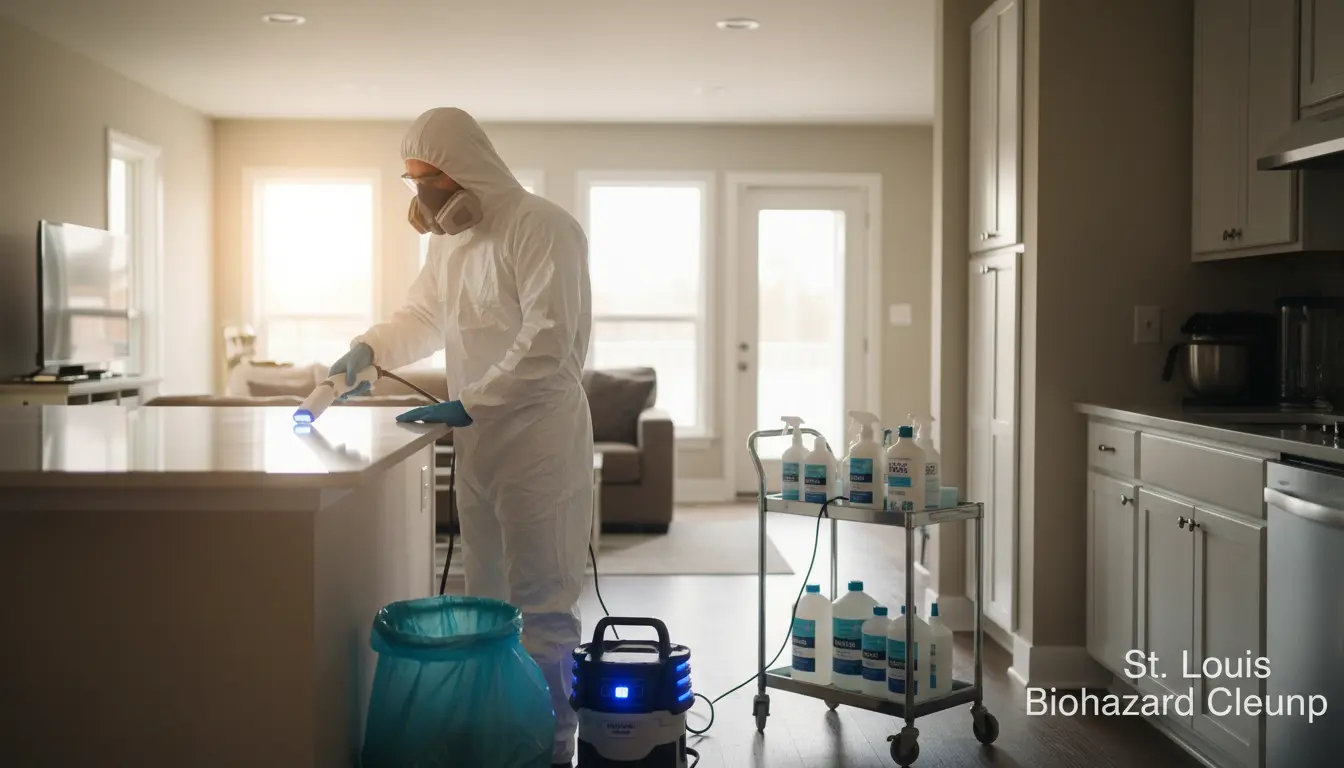
Invest in high-quality PPE: N95 respirators, nitrile gloves, and disposable coveralls. For businesses in humid Missouri climates, ensure gear is breathable to maintain safety during extended exposure.
Disinfection Protocols
Use EPA-approved disinfectants effective against bloodborne pathogens. Apply them with microfiber cloths or sprayers, allowing sufficient contact time—typically 10 minutes. In St. Louis’s variable weather, ventilate areas post-cleanup to aid drying and reduce odor elimination services needs.
Waste Disposal Best Practices
Segregate biohazardous waste in red biohazard bags and store in leak-proof containers. Missouri regulations mandate transport to licensed facilities—never use regular trash. For complex cases like crime scene cleanup, our experts ensure compliant disposal.
Preventive Measures for St. Louis Businesses
Prevention is the best defense. Implement these strategies to reduce biohazard risks in your Missouri operations.
Employee Training Programs
Conduct regular training on biohazard recognition and response. In areas like Creve Coeur, where corporate offices abound, schedule quarterly drills to keep staff prepared.
Facility Maintenance
Routine inspections for leaks or mold can prevent escalations. If you suspect mold infestation remediation, address it promptly to avoid biohazard complications.
Emergency Preparedness Kits
Stock kits with PPE, absorbents, and spill kits. Tailor them to your business type—restaurants in Collinsville might need extra for food-related incidents.
Local St. Louis businesses benefit from partnering with certified cleaners who understand regional regulations, ensuring seamless compliance.
Navigating Insurance and Legal Requirements
Missouri businesses must adhere to strict standards post-incident.
Insurance Coverage
Review your policy for biohazard coverage. Many St. Louis commercial insurances include cleanup costs, but exclusions apply—consult your agent early.
Regulatory Compliance
Follow Missouri Department of Health guidelines and federal OSHA standards. Proper documentation protects against fines, especially in high-regulation sectors like healthcare in the Central West End.
For tailored advice, St. Louis Biohazard Cleanup assists with paperwork, serving businesses across Tower Grove South and beyond.
FAQ: Common Questions About Biohazard Cleanup
What Should I Do If a Biohazard Incident Occurs After Hours in St. Louis?
Contact emergency services if there’s immediate danger, then call St. Louis Biohazard Cleanup at (314) 380-0207. We provide round-the-clock response for areas like Chesterfield.
How Long Does Biohazard Cleanup Typically Take?
It varies by severity—small spills may take hours, while extensive cleanups in Creve Coeur offices could span days. Our team prioritizes efficiency without compromising safety.
Is DIY Biohazard Cleanup Safe for Missouri Businesses?
No, it’s risky due to health hazards and legal issues. Professionals ensure proper decontamination, as required by state laws.
What Are the Costs Associated with Emergency Biohazard Cleanup?
Costs depend on the scope, but insurance often covers much. We offer transparent pricing for St. Louis businesses—request a quote today.
How Can I Prevent Future Biohazards in My Collinsville Facility?
Focus on training, maintenance, and quick spill response. Regular audits help identify vulnerabilities unique to industrial sites.
Conclusion: Safeguard Your Business Today
Biohazard incidents can disrupt operations, but with these emergency cleanup tips, Missouri businesses in St. Louis and surrounding areas can respond confidently. From immediate securing to professional remediation, proactive steps protect your team, property, and peace of mind.
Don’t wait for a crisis—partner with St. Louis Biohazard Cleanup for expert services tailored to your needs. Whether in Tower Grove South or Central West End, we’re here to help. Call (314) 380-0207 now for a consultation and ensure your business stays safe and compliant.