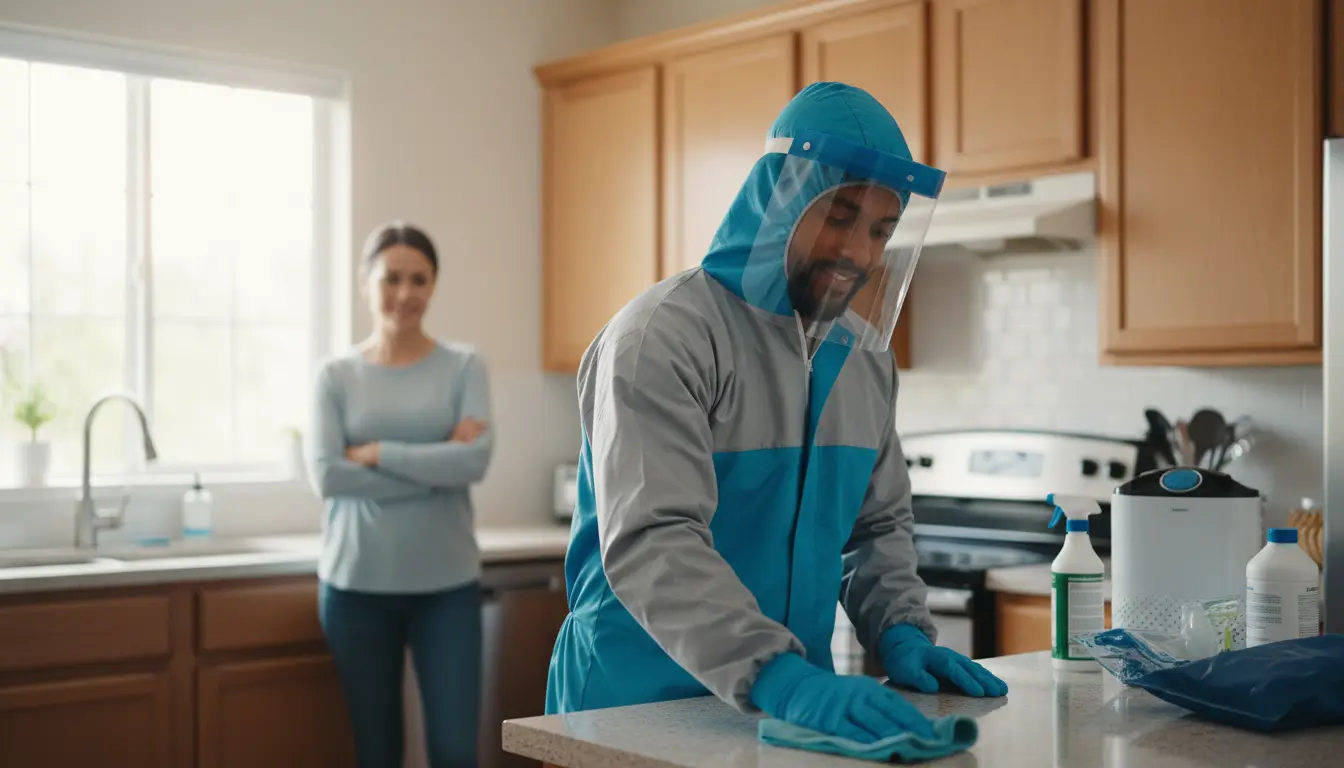
Biohazard cleanup for apartments, homes, and commercial properties is a specialized field that goes far beyond surface cleaning. In St. Louis, where older brick buildings with porous materials are common, biological contaminants can migrate into walls, HVAC systems, and crawl spaces within hours. Whether the scene involves a trauma, a hoarding situation, flood-related sewage backup, or an infectious disease outbreak, the goal is the same: restore the property to a safe, habitable condition while preventing cross-contamination and long-term health risks. At St. Louis Biohazard Cleanup, we combine technical rigor with compassionate service to help property owners and families navigate these difficult moments.
While many assume that any cleaning company can handle biohazards, the reality is that improper remediation can leave behind pathogens, odors, and structural damage that persist for years. In this article, we walk through the technical process, the standards that govern our work, and the critical factors that set professional biohazard remediation apart from standard cleaning. We also address common questions and provide pricing insights so that property owners in St. Louis can make informed decisions when facing an emergency.
The Technical Process of Professional Biohazard Remediation
Every biohazard cleanup project begins with a thorough risk assessment. Our team arrives on-site wearing appropriate personal protective equipment (PPE)—typically Tyvek suits, N95 or P100 respirators, chemical-resistant gloves, and boot covers. We establish containment zones using polyethylene sheeting and negative air machines to prevent airborne contaminants from spreading to unaffected areas. This is especially critical in multi-unit apartment buildings where hallways and shared ventilation systems can quickly distribute pathogens.
Once containment is secured, we begin physical removal of all biohazardous materials. This includes blood, bodily fluids, tissue, and any porous items that have been saturated—carpet, drywall, insulation, and sometimes subflooring. In St. Louis’s humid summers, decomposition can accelerate dramatically, causing fluids to wick up walls and soak into wooden joists. We use specialized enzyme cleaners to break down organic matter at the molecular level, followed by EPA-registered hospital-grade disinfectants that kill a broad spectrum of bloodborne pathogens, including hepatitis B, hepatitis C, and HIV. After disinfection, we perform adenosine triphosphate (ATP) testing using a luminometer to verify that biological residue has been eliminated. ATP testing measures the presence of organic material; a reading below the established threshold confirms that the surface is biologically clean. For structural decontamination, we may apply antimicrobial sealants to encapsulate remaining contaminants in areas that cannot be fully removed, such as concrete slabs or brick walls.
Professional Remediation vs. Standard Janitorial Cleaning: A Data Comparison
Many property managers mistakenly believe that a deep cleaning service can handle biohazard scenes. The following table highlights the critical differences between professional biohazard remediation and standard residential or commercial cleaning.
| Feature / Metric | Professional Biohazard Remediation | Standard Residential Cleaning |
|---|---|---|
| Regulatory Compliance | OSHA 29 CFR 1910.1030, EPA waste disposal, IICRC S540 | No specific biohazard regulations |
| Pathogen Elimination | Hospital-grade disinfectants + ATP verification | Household bleach (ineffective against some viruses) |
| Structural Assessment | Moisture mapping, thermal imaging, subfloor inspection | Visual inspection only |
| Air Quality Control | Negative air machines, HEPA filtration | No air scrubbing |
| Waste Disposal | Licensed biomedical waste transport and incineration | Regular trash (illegal for biohazards) |
| Insurance Documentation | Detailed chain-of-custody logs and photos | Not applicable |
As the table illustrates, the gap is not merely about cost—it is about safety, legality, and long-term property protection. Using a standard cleaning crew on a biohazard scene can result in fines, health code violations, and liability if future occupants become ill.
Expert Insights: Advanced Diagnostic Tips and Common Mistakes
Professional Diagnostic Tips
Tip 1: Detect Hidden Biological Seepage with Moisture Meters
Biological fluids can migrate through drywall and into wall cavities without visible staining on the surface. In older St. Louis homes with lath and plaster, fluids often travel along wooden studs. We use pin-type moisture meters and thermal imaging cameras to identify saturated areas that must be removed. In one case in Soulard, a small bloodstain on a carpet masked a large pool that had soaked into the subfloor and the joists below. Cutting only the visible area would have left a reservoir of pathogens that would eventually produce odor and attract insects.
Tip 2: Porous Materials Require Removal, Not Cleaning
A common misconception is that steam cleaning or shampooing carpets can salvage them after biological contamination. In reality, porous materials like carpet, padding, upholstery, and unsealed wood absorb fluids and cannot be disinfected to an acceptable level. The IICRC S540 standard mandates removal and disposal of any porous item that has come into contact with blood or bodily fluids. We always explain this to property owners upfront to avoid false hope and repeated service calls.
Tip 3: Negative Pressure Prevents Cross-Contamination
In multi-tenant buildings, establishing negative pressure in the work zone is non-negotiable. We set up containment barriers and exhaust air through HEPA filters to the outside. Without this step, airborne pathogens can drift into hallways and adjacent units, creating a larger contamination zone. In a recent project in a Clayton high-rise, our containment prevented what could have been a building-wide evacuation.
Common Mistakes Property Owners Make
Mistake 1: Using Household Bleach on Biological Matter
Bleach is a disinfectant only when used on clean surfaces. Organic matter inactivates bleach, rendering it useless against pathogens. Moreover, bleach does not break down proteins and can create toxic fumes when mixed with bodily fluids. We have seen cases where a property owner applied bleach to a trauma scene, thinking it was safe, only to create a hazardous chemical reaction that required our emergency response.
Mistake 2: Waiting for Odor to Disappear Naturally
Decomposition odors indicate active bacterial growth. Waiting allows fluids to penetrate deeper into materials and increases the risk of mold and insect infestation. In St. Louis’s humid climate, a scene that sits for even 48 hours can double the scope of work. Quick action is essential, and our 24/7 response team is always ready.
Mistake 3: Allowing Untrained Personnel into the Site
Well-meaning family members or employees who enter a biohazard scene without proper PPE risk exposure to bloodborne pathogens. Even a tiny scratch can become an entry point for hepatitis or other diseases. We always recommend that no one enters the affected area until a professional team has completed the initial assessment and hazard containment.
Pricing for Biohazard Cleanup Services
Costs for biohazard remediation vary widely based on the scope of contamination, property type, and required structural repairs. While each project is unique, the following pricing structures are typical in the St. Louis market:
- Site mobilization fee: $350–$750 to cover travel, containment setup, and initial assessment. This fee is waived for customers within the metro area who book through our contact page.
- Hourly remediation rate: $125–$250 per technician per hour for labor, equipment use, and chemical application. Most single-room scenes require 4–8 hours of work.
- Biohazardous waste disposal: $75–$150 per container (typically 30-gallon biohazard bags). Disposal through licensed medical waste facilities is included in our pricing.
- Structural material replacement (e.g., drywall, subfloor): $400–$1,200 per affected area, depending on the extent of removal and the need for reconstruction.
Safety Standards and Certifications
Every technician at St. Louis Biohazard Cleanup undergoes rigorous training in OSHA’s Bloodborne Pathogens Standard (29 CFR 1910.1030) and holds current IICRC certifications in trauma and crime scene remediation. We also adhere to the EPA’s guidelines for the use of registered disinfectants and follow state regulations for the transport and disposal of biomedical waste. In practice, this means that we use only EPA-registered disinfectants with proven efficacy against a broad spectrum of pathogens, and we maintain a strict chain of custody for all waste—from the scene to a licensed incineration facility.
The practical importance of these standards cannot be overstated. Proper disposal prevents biohazardous materials from entering the municipal waste stream, where they could endanger sanitation workers. Furthermore, our documentation provides property owners with a paper trail that satisfies insurance audits, health department inquiries, and future real estate disclosures. When a property is restored to a biologically safe condition, occupants can return with confidence, knowing that all hazards have been eliminated.
Frequently Asked Questions About Biohazard Remediation
What qualifies as a biohazard that requires professional cleanup?
A biohazard is any biological material that poses a threat to human health, including blood, bodily fluids, human tissue, animal waste, mold (certain toxic species), and medical waste. In St. Louis, common scenarios that trigger professional remediation include trauma scenes (accidents, suicides, homicides), unattended deaths, hoarding environments with biological contamination, sewage backups, and crime scenes involving blood. Even a small amount of blood from a minor injury can harbor pathogens like hepatitis C, which can survive on surfaces for up to three weeks. Professional cleanup is always recommended when the source involves human or animal biological matter, especially if the area has been contaminated for more than a few hours.
How long does the remediation process typically take?
The duration depends on the size and severity of the contamination. A single-room trauma scene in a standard apartment may take 4–6 hours for removal and disinfection, followed by 24–48 hours for drying and air quality testing if structural materials were removed. Larger commercial spaces or homes with extensive contamination (e.g., a hoarding situation involving multiple rooms) can require several days. We always provide a time estimate after the initial assessment and work as efficiently as possible to minimize disruption to the property owner and neighbors. Our 24/7 response capability ensures that we can begin work immediately, which often reduces the overall timeline.
Is it safe to stay in my home during biohazard cleanup?
In most cases, we recommend that occupants vacate the affected area—and sometimes the entire property—during active remediation. The use of negative air machines and chemical disinfectants can create temporary respiratory hazards, and the containment zone is off-limits to anyone without PPE. For multi-unit apartments, we coordinate with property managers to relocate residents to unaffected units or temporary housing. Once we complete final ATP testing and air quality monitoring, the area is safe for reoccupancy. We provide a certificate of decontamination upon request.