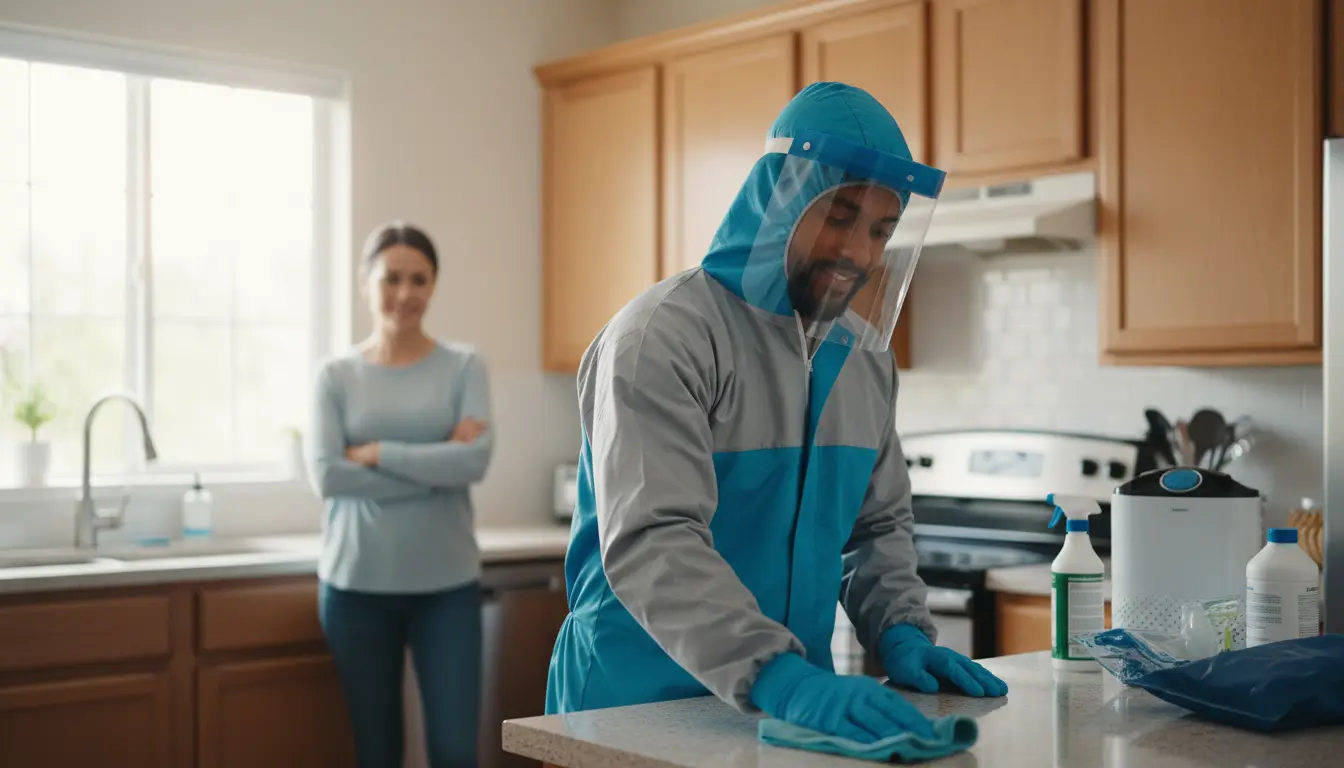
Biohazard cleanup for businesses is the professional process of removing, disinfecting, and restoring environments contaminated by potentially infectious materials—such as blood, bodily fluids, chemical spills, and microbial growth—that pose a direct risk to human health. This is distinctly different from commercial janitorial services or standard carpet cleaning. While a general cleaning crew focuses on aesthetics and routine dirt, biohazard remediation operates under strict regulatory frameworks designed to eliminate pathogens and prevent cross-contamination. For a business owner in St. Louis, understanding this distinction is not just a matter of protocol; it is a legal and ethical obligation to protect employees, customers, and the company’s long-term viability.
The need for specialized biohazard cleanup can arise from a variety of incidents: workplace accidents involving significant blood loss, the discovery of a deceased individual on the premises, chemical exposure events, or the aftermath of a violent crime. In each case, the biological material involved can harbor bloodborne pathogens like Hepatitis B (HBV), Hepatitis C (HCV), and Human Immunodeficiency Virus (HIV). The Occupational Safety and Health Administration (OSHA) mandates that any employee potentially exposed to these pathogens must be protected, and the cleanup itself must be performed by trained professionals using approved protocols. Attempting to handle this with in-house staff or a standard cleaning crew not only violates federal safety standards but also exposes everyone involved to severe health risks.
Defining the Professional Biohazard Remediation Process
Professional biohazard remediation follows a meticulously structured workflow that begins long before any cleaning solution touches a surface. The first step is always a comprehensive risk assessment. A certified technician arrives at the St. Louis commercial property, evaluates the scene for visible and hidden hazards—such as blood saturation into porous materials or airborne pathogens—and establishes containment zones. This assessment dictates every subsequent action, from the level of personal protective equipment (PPE) required to the specific disposal pathways for waste.
Following the assessment, the team initiates a strict PPE protocol. This includes full-body Tyvek suits, N95 respirators or powered air-purifying respirators (PAPRs), chemical-resistant gloves, and face shields. Once protected, the physical removal of biohazardous material begins. Technicians use specialized tools like forensic cleaning agents and enzymatic treatments that break down organic matter at a molecular level. This is not surface wiping; it is the systematic removal of all contaminated items, including saturated drywall, carpeting, and subflooring, followed by the application of EPA-registered hospital-grade disinfectants that are proven to inactivate viruses and bacteria on contact.
To verify the effectiveness of the disinfection, professionals employ adenosine triphosphate (ATP) fluorescence testing. This scientific method uses a handheld luminometer to measure the presence of ATP, a molecule found in all living cells. A clean reading confirms that biological residues have been removed at a microscopic level. The final phase often involves structural decontamination, where high-efficiency particulate air (HEPA) vacuums and negative air machines filter the air and remove any lingering airborne contaminants. For businesses in older St. Louis brick structures, this step is critical, as biological fluids can seep into mortar joints and beneath hardwood floors, creating long-term odor issues and hidden health hazards.
Professional Remediation vs. Standard Janitorial Cleaning
The table below outlines the fundamental differences between professional biohazard remediation and standard commercial cleaning services. This comparison is essential for any business owner evaluating their response to a biological incident.
| Feature/Metric | Professional Biohazard Remediation | Standard Residential Cleaning |
|---|---|---|
| Regulatory Compliance | Adheres to OSHA 29 CFR 1910.1030, EPA disposal laws, and IICRC S540 standards | No specific biohazard or bloodborne pathogen training required |
| Pathogen Elimination | Uses EPA-registered hospital-grade disinfectants with validated kill claims; ATP testing for verification | Household bleach or general-purpose cleaners; no kill claim verification |
| Structural Assessment | Identifies hidden saturation in porous materials; may require removal of drywall, subflooring, or insulation | Surface cleaning only; leaves biological residues beneath surfaces |
| Waste Disposal | Follows DOT and state regulations for regulated medical waste; uses approved incineration facilities | Disposed of in standard trash, which is illegal and unsafe |
Expert Insights for St. Louis Business Owners
Having managed numerous commercial sites across the metro area, I can offer several advanced diagnostic tips that go beyond basic protocol. First, consider the behavior of fluids in older buildings. In many St. Louis neighborhoods like Soulard or Lafayette Square, properties feature original plaster walls and wooden subfloors. Blood or other biological fluids can wick into these materials far beyond the visible stain. A professional will use a moisture meter and thermal imaging to detect hidden biological seepage that must be removed to prevent future odor and microbial growth.
Second, understand that porous materials—such as upholstered furniture, carpets, and drywall—cannot be fully sanitized once saturated with biological fluids. The pathogens can migrate deep into the material’s structure, where disinfectants cannot reach. The only safe course of action is removal and replacement. Attempting to clean these items often leads to cross-contamination, where the contaminant is spread rather than eliminated. Finally, the use of negative air pressure is not optional. By creating a vacuum within the containment zone, we ensure that airborne pathogens are captured and filtered before they can escape to other parts of the business, protecting unaffected areas and HVAC systems.
Common mistakes property owners make are often born from a desire to minimize disruption or cost. Using household bleach on blood is one of the most frequent errors. Bleach can degrade organic matter but does not fully kill all bloodborne pathogens, and it can damage surfaces, making them more porous and harder to clean. Waiting for an odor to dissipate naturally is another critical mistake. The odor you smell is likely the result of microbial decomposition, which means pathogens are active and potentially airborne. Allowing untrained personnel, including well-meaning employees or family members, into the site before remediation is complete exposes them to serious health consequences and creates additional liability for the business owner.
Understanding the Costs of Biohazard Cleanup
Pricing for professional biohazard remediation is not a one-size-fits-all figure, but it is structured around specific, justifiable components. A typical project begins with a site mobilization fee, which covers the cost of dispatching a certified crew, specialized vehicle transport, and the setup of containment equipment. From there, hourly rates for remediation labor apply, reflecting the technical expertise, safety training, and specialized equipment required for the job. Disposal costs for biohazardous waste are itemized separately, as regulated medical waste must be transported and incinerated following strict state and federal guidelines.
- Site mobilization fee: Covers travel, initial assessment, and setup of containment barriers and negative air machines.
- Hourly remediation rate: Reflects technician time for physical removal, disinfection, and ATP testing.
- Specialized disposal fee: Based on the weight and classification of biohazardous waste, ensuring compliance with Missouri Department of Natural Resources regulations.
Several factors can significantly influence the final cost. The extent of structural material replacement is the largest variable. If blood or fluids have saturated drywall, carpet, or subflooring, those materials must be cut out and replaced. The total volume of biohazardous waste generated directly impacts disposal fees. In a scenario involving a large trauma scene or significant hoarding situation, this volume can be substantial. Finally, the necessity for specialized HVAC decontamination arises when biological particles have been circulated through a building’s ventilation system. This requires closing off ductwork and applying antimicrobial treatments, adding complexity and time to the project. For a more detailed breakdown specific to the St. Louis market, you can review our comprehensive guide on Biohazard Cleanup Costs What St Louis Residents Pay.
Safety Standards and Certifications That Matter
The foundation of every safe biohazard cleanup operation is adherence to established standards. The most critical of these is OSHA’s Bloodborne Pathogens Standard, codified as 29 CFR 1910.1030. This regulation mandates that all employees with potential occupational exposure must receive training, be offered the Hepatitis B vaccine, and use appropriate PPE. For a remediation company, this standard governs every action, from the handling of sharps to the decontamination of tools. The Institute of Inspection, Cleaning and Restoration Certification (IICRC) also provides the S540 standard specifically for Trauma and Crime Scene Cleanup, which outlines the procedural and ethical requirements for the industry.
For St. Louis businesses, these standards translate into practical, real-world protection. When a professional team arrives, they are not just following a checklist; they are executing a plan that legally protects the property owner from future liability. If a future tenant or employee were to become ill from an improperly cleaned site, the business owner could face significant legal consequences. Furthermore, authorized waste management services ensure that contaminated materials are not placed in standard dumpsters, where they could pose a risk to sanitation workers and the public. Following a flood, for example, the biohazard risks escalate dramatically, and the protocols for what to do after a flood biohazard risks in St Louis are specifically designed to address this overlap of water damage and microbial contamination.
Frequently Asked Questions About Biohazard Remediation
How quickly must a business respond after a biohazard incident?
Response time is critical. Biological materials begin to decompose immediately, and pathogens can remain viable on surfaces for days or weeks depending on the environment. The IICRC S540 standard recommends that remediation begins within hours to minimize health risks and prevent secondary damage to the structure. In St. Louis, where summer humidity can accelerate decomposition and odor migration, a delay of even 24 hours can significantly increase the scope of work. A 24/7 biohazard response service ensures that the scene is secured and remediation begins promptly, reducing the overall impact on the business.
Can a business reopen immediately after the cleaning is finished?
Not immediately. After the physical removal and disinfection are complete, the site must pass a post-remediation verification process. This includes ATP testing to confirm the absence of biological residues and a visual inspection to ensure all contaminated materials have been removed. In cases involving airborne contaminants, air quality testing may be necessary to confirm that pathogen levels are below safe thresholds. Only after these tests are passed can the area be declared safe for occupancy. Premature re-entry exposes staff and customers to potential health risks and legal liability.
What should a business owner do while waiting for the cleanup crew to arrive?
The first and most important action is to secure the area. Close off the affected room or section of the building and restrict access to all non-essential personnel. This prevents the spread of contaminants and protects untrained individuals from exposure. Do not attempt to clean the area yourself, use fans to air it out, or apply any household chemicals. Turn off any HVAC systems that serve the affected area to prevent airborne particles from circulating. Document the scene with photographs for insurance purposes, but maintain a safe distance. Finally, contact your insurance provider to initiate the claims process, as professional biohazard cleanup is often covered under commercial property policies.
Are there specific regulations for biohazard waste disposal in Missouri?
Yes. The Missouri Department of Natural Resources regulates the management of infectious waste under state code 10 CSR 25-7. Biohazardous waste, including items saturated with blood or other potentially infectious materials, must be placed in red biohazard bags, stored in rigid leak-proof containers, and transported by a licensed medical waste hauler to an approved treatment facility, typically an incinerator. A professional remediation company handles all aspects of this process, from on-site containment to manifest documentation. Improper disposal, such as placing biohazard waste in standard commercial trash, can result in fines and legal action against the business owner.
Professional Biohazard Remediation in St. Louis
When a biohazard incident occurs at your St. Louis business, the path to recovery requires more than just cleaning—it demands technical expertise, regulatory knowledge, and a compassionate approach. Every incident presents unique challenges, from the structural complexities of historic buildings to the rapid escalation of health risks in our regional climate. Choosing a team that understands these variables is essential for protecting your property, your employees, and your business’s reputation.
St. Louis Biohazard Cleanup is committed to providing the highest standard of professional biohazard remediation. Our certified technicians are trained in the latest IICRC and OSHA protocols, and we are available 24/7 to respond to emergencies across the metro area. We handle every step of the process with discretion, efficiency, and a focus on restoring your property to a safe, habitable condition. If you are facing a biohazard situation, do not wait. Contact us to discuss your specific needs and to schedule a professional assessment.