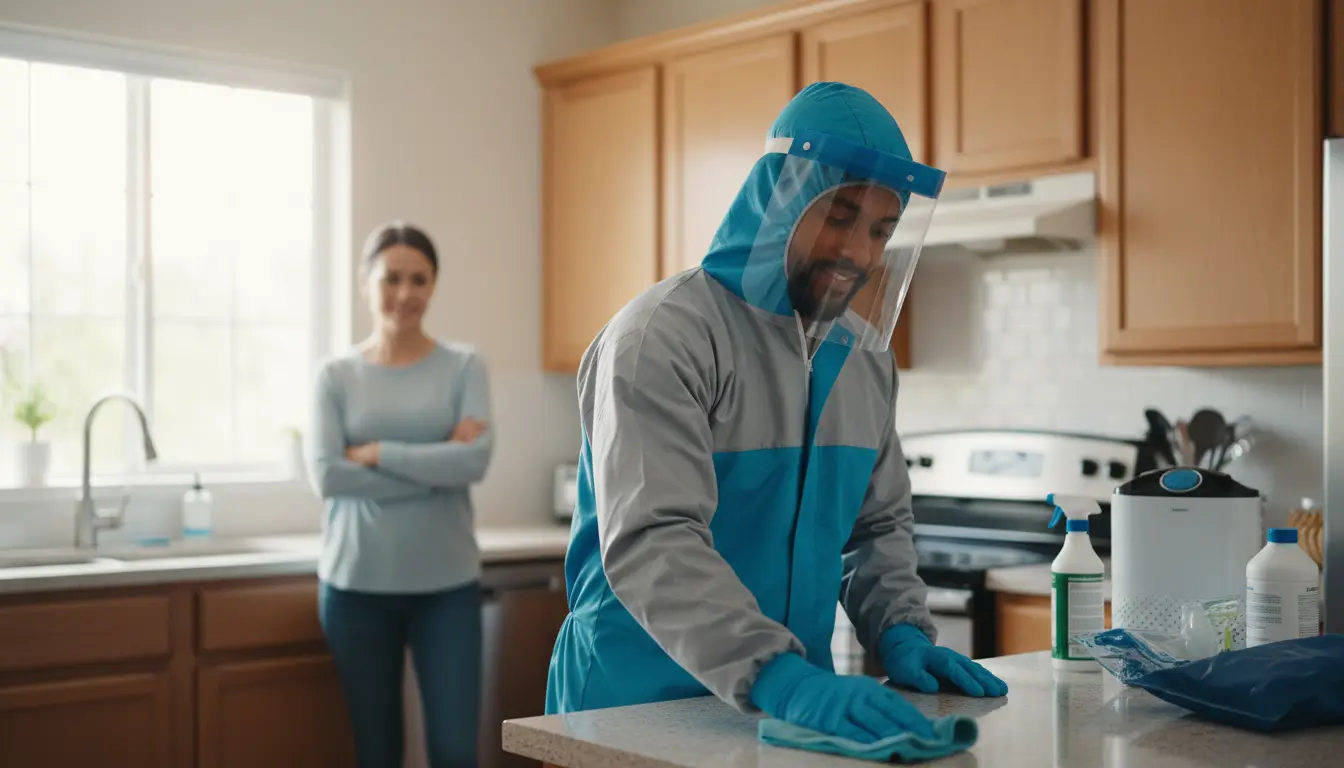
The call came in just after midnight. A family in a South City split-level had returned from a week at the Lake of the Ozarks to find that a pipe had burst behind the kitchen wall, and the August humidity had done the rest. The smell hit the responding technician before he even stepped through the door—a thick, sweet-ammonia odor that meant biological material had already begun to liquefy. Within minutes, a full crews was setting up negative air pressure, and the first of several containment barriers went up. That moment, the split-second between assessment and action, is where professional biohazard remediation begins.
Biohazard cleanup services near South City and surrounding areas are not janitorial work. They are a specialized field of forensic restoration governed by strict OSHA Bloodborne Pathogens Standard 29 CFR 1910.1030 and IICRC S540 protocols. When an unattended death, a violent incident, or a severe hoarding situation occurs, the biological materials left behind—blood, bodily fluids, tissue—can harbor bloodborne pathogens like Hepatitis B, Hepatitis C, and HIV. These pathogens do not survive long outside a host, but the proteins and cellular debris they leave behind can trigger severe immune responses and create long-term health hazards if not properly eliminated. The job is to restore a space to a safe, habitable condition, and in the St. Louis metro area, that job requires understanding local architecture, climate, and regulations.
For property owners, landlords, and family members facing the aftermath of a traumatic event, the decision to call a professional service is not just about cleanliness—it is about safety, liability, and closure. St. Louis Biohazard Cleanup provides this critical service with a focus on technical rigor, discretion, and compassion. Every site we enter is treated as a unique biohazard remediation challenge, and our process is designed to meet the highest standards of structural decontamination.
The Technical Workflow of Professional Biohazard Remediation
Professional biohazard remediation is a multi-step process that begins long before any cleaning solution touches a surface. The first step is a comprehensive site assessment. Our technicians arrive in full personal protective equipment, including Tyvek suits, N-100 respirators, nitrile gloves, and chemical-resistant boots. We evaluate the scope of contamination, identify porous and non-porous materials, and assess structural integrity. In older St. Louis homes, particularly those in neighborhoods like Tower Grove South, Soulard, and Benton Park, sub-flooring is often original hardwood laid over dirt crawlspaces. This design can trap biological fluids, making complete removal of affected sections necessary rather than simple surface cleaning.
Once the assessment is complete, we establish containment zones. Using heavy-gauge polyethylene sheeting and negative air machines equipped with HEPA filtration, we isolate the contaminated area from the rest of the property. This prevents airborne pathogens and particulate matter from migrating to clean zones. The negative air pressure also helps control odor, which is critical in attached homes and multi-unit buildings common in areas like the Central West End and University City. After containment, the physical removal of biohazardous waste begins. All items that cannot be effectively decontaminated—carpet, padding, drywall, insulation, and certain types of upholstery—are removed and double-bagged in biohazard bags for incineration or autoclaving.
Chemical Decontamination and ATP Testing
After bulk removal, the remaining surfaces undergo a multi-stage chemical decontamination. We use EPA-registered hospital-grade disinfectants that are proven to inactivate a broad spectrum of pathogens, including the non-enveloped viruses that are particularly resistant to standard household cleaners. The disinfectant is applied via electrostatic sprayers, which ensure that the solution reaches every crevice and shadowed surface. The contact time—the period the chemical must remain wet on the surface to kill pathogens—is strictly monitored with a timer and logged for compliance records.
The final verification step is adenosine triphosphate (ATP) fluorescence testing. ATP is a molecule present in all living cells, including bacteria, mold, and human tissue. A swab sample is taken from a treated surface and inserted into a luminometer, which measures the relative light units (RLUs) produced by the reaction. If the RLU reading exceeds a specific threshold, the area is retreated and re-tested until the reading is below the established limit. This is not a visual inspection; it is a quantitative test that provides objective evidence of decontamination. In St. Louis, where seasonal humidity can drive microbial growth within hours, this step is essential to prevent secondary contamination from dormant spores or residual organic material.
Professional vs. Standard Cleaning: A Data Comparison
| Feature/Metric | Professional Biohazard Remediation | Standard Residential Cleaning |
|---|---|---|
| Regulatory Compliance | Complies with OSHA 29 CFR 1910.1030, EPA FIFRA, DOT hazardous materials transport | No regulatory framework for biological hazards |
| Pathogen Elimination | EPA-registered disinfectants with verified contact times; ATP testing for verification | Household bleach or all-purpose cleaners; no verification of kill rates |
| Structural Assessment | Identifies hidden seepage in sub-flooring, wall cavities, and HVAC systems; recommends targeted removal | Surface cleaning only; no assessment of hidden contamination |
| Waste Disposal | Licensed biomedical waste transporter; incineration at permitted facilities | Standard trash disposal; illegal and hazardous |
| Cross-Contamination Prevention | Negative air pressure, HEPA filtration, containment barriers, strict PPE protocols | No containment measures; pathogens can be spread via mops, cloths, and foot traffic |
Expert Insights: Advanced Diagnostic Tips and Common Mistakes
Over years of remediation work in St. Louis, we have developed diagnostic techniques that go beyond standard protocols. One critical insight involves detecting hidden biological seepage. When a body has been lying on a surface for an extended period, capillary action draws fluids into porous materials like drywall and wood. The visible stain may be only a fraction of the total contamination. We use moisture meters and thermal imaging cameras to trace the migration path of bodily fluids. In one case in Lafayette Square, the visible stain was confined to a two-foot square on the carpet, but the fluid had wicked under the baseboard and traveled six feet up the wall cavity. Only by removing the affected drywall and treating the studs could we ensure the space was safe.
Another common oversight is the assumption that porous materials can be salvaged with aggressive cleaning. The IICRC S540 standard is clear: any material that has been saturated with blood or other potentially infectious materials must be removed and replaced. Professional biohazard cleanup services near South City and surrounding areas follow this standard strictly. We have seen property owners attempt to clean blood-stained hardwood floors using steam cleaners, only to drive the biological material deeper into the wood grain, creating a permanent biohazard and odor source. In such cases, the only solution is removal and replacement of the affected planks.
Property owners also frequently underestimate the importance of negative pressure. Without it, simply walking through a contaminated site can lift biological particles into the air and carry them to other rooms. We once responded to a hoarding cleanup in Ferguson where the occupant had attempted to clean a room with bleach and a mop. The mop was then used in an adjacent hallway, spreading potential pathogens across a much larger area. The remediation cost tripled because the contamination had migrated into the HVAC system. Proper containment from the start would have saved thousands of dollars and weeks of additional work.
Pricing Structures for Biohazard Remediation
- Site Mobilization Fee: A flat fee that covers dispatch, initial assessment, setup of containment and negative air systems, and documentation. This typically ranges from $350 to $650 depending on the distance from our service hub in the Central West End and the time of day.
- Hourly Remediation Rate: Most biohazard cleanup services near South City and surrounding areas charge an hourly rate for hands-on remediation work. This rate covers labor for technicians, supervision by a certified project manager, and operation of specialized equipment like HEPA vacuums and electrostatic sprayers. Hourly rates generally fall between $150 and $250 per technician per hour.
- Waste Disposal and Material Replacement Costs: Disposal of biohazardous waste is charged by weight, with a typical cost of $1.50 to $3.00 per pound. This includes proper bagging, labeling, transport in a licensed vehicle, and incineration at a facility that accepts biomedical waste. Replacement of structural materials—drywall, insulation, sub-flooring—is itemized based on materials and labor.
Safety Standards and Certifications
The foundation of every professional biohazard remediation is a strict adherence to established safety standards. Our technicians are trained under the OSHA Bloodborne Pathogens Standard 29 CFR 1910.1030, which requires annual training on exposure control, use of personal protective equipment, and proper handling of sharps and contaminated materials. We also follow the IICRC S540 standard for trauma and crime scene cleanup, which provides a framework for everything from pre-cleaning assessment to final verification. These standards are not optional; they are the minimum requirement for any company that handles biological hazards.
We also partner exclusively with authorized biomedical waste transporters. In Missouri, waste that contains blood, body fluids, or other potentially infectious materials must be transported in containers that meet DOT specifications and disposed of at a permitted incineration facility. Standard trash haulers are not legally or logistically equipped to handle this material. By using a certified waste stream, we protect property owners from liability and ensure that pathogens are destroyed at temperatures exceeding 1,800 degrees Fahrenheit.
Frequently Asked Questions About Biohazard Cleanup
Is it safe to use household bleach to clean up blood or bodily fluids?
Household bleach is not recommended for biohazard remediation. While bleach does have some disinfectant properties, it is rapidly inactivated by organic matter, meaning it loses effectiveness when applied to blood or tissue. Furthermore, bleach does not penetrate porous surfaces like wood or drywall. Professional remediation uses EPA-registered hospital-grade disinfectants that maintain efficacy in the presence of organic load and are applied using methods that ensure complete surface coverage. Additionally, bleach fumes can be harmful in enclosed spaces, especially without proper respirator protection.
How long does a typical biohazard cleanup take?
The timeline depends entirely on the scope of contamination. A small, contained incident—such as a single room with a surface-level blood spill—can often be completed in four to six hours. A site involving extensive saturation, multiple rooms, or contamination that has penetrated sub-flooring and wall cavities may require two to four days. In severe hoarding situations with significant biological waste accumulation, the process can take a week or more. After the initial assessment, we provide a realistic timeline and keep the property owner informed at each stage.
Will my homeowners insurance cover the cost of biohazard cleanup?
Coverage depends on the specific policy and the cause of the incident. Many standard homeowners insurance policies include coverage for cleanup after a covered event, such as a death that occurs on the property, a violent crime, or certain types of accidental biological contamination. Hoarding cleanup is often covered under a separate rider. We recommend contacting your insurance provider to confirm coverage. We can provide a detailed scope of work and invoice that insurance companies typically accept for reimbursement. We also work directly with many insurance adjusters to streamline the process.
What happens to the waste after it is removed from the property?
All biohazardous waste is double-bagged in red biohazard bags, sealed with tamper-evident ties, and placed in rigid containers for transport. A licensed biomedical waste transporter then picks up the waste and transports it to a permitted incineration facility. At the facility, the waste is incinerated at temperatures high enough to destroy all pathogens, leaving only sterile ash. We maintain a chain-of-custody documentation for every load, providing the property owner with a record that the waste was legally and safely disposed of.
Professional Biohazard Remediation in St. Louis
When a traumatic event leaves a property contaminated with biohazards, the path forward can feel overwhelming. Property owners are often dealing with grief, shock, and the pressure of making decisions quickly. Professional biohazard cleanup services near South City and surrounding areas exist to lift that burden through technical expertise and compassionate service. Our team at St. Louis Biohazard Cleanup handles every aspect of the remediation process, from the initial containment and removal to the final ATP verification and waste disposal. We serve the entire St. Louis metro area, including neighborhoods like Tower Grove South, University City, the Central West End, Soulard, Lafayette Square, and many more.
We do not cut corners. We follow the science, comply with every regulation, and treat every site with the respect it deserves. If you are facing a situation that requires biohazard remediation, contact us. Let us handle the hardest part so you can focus on what comes next.