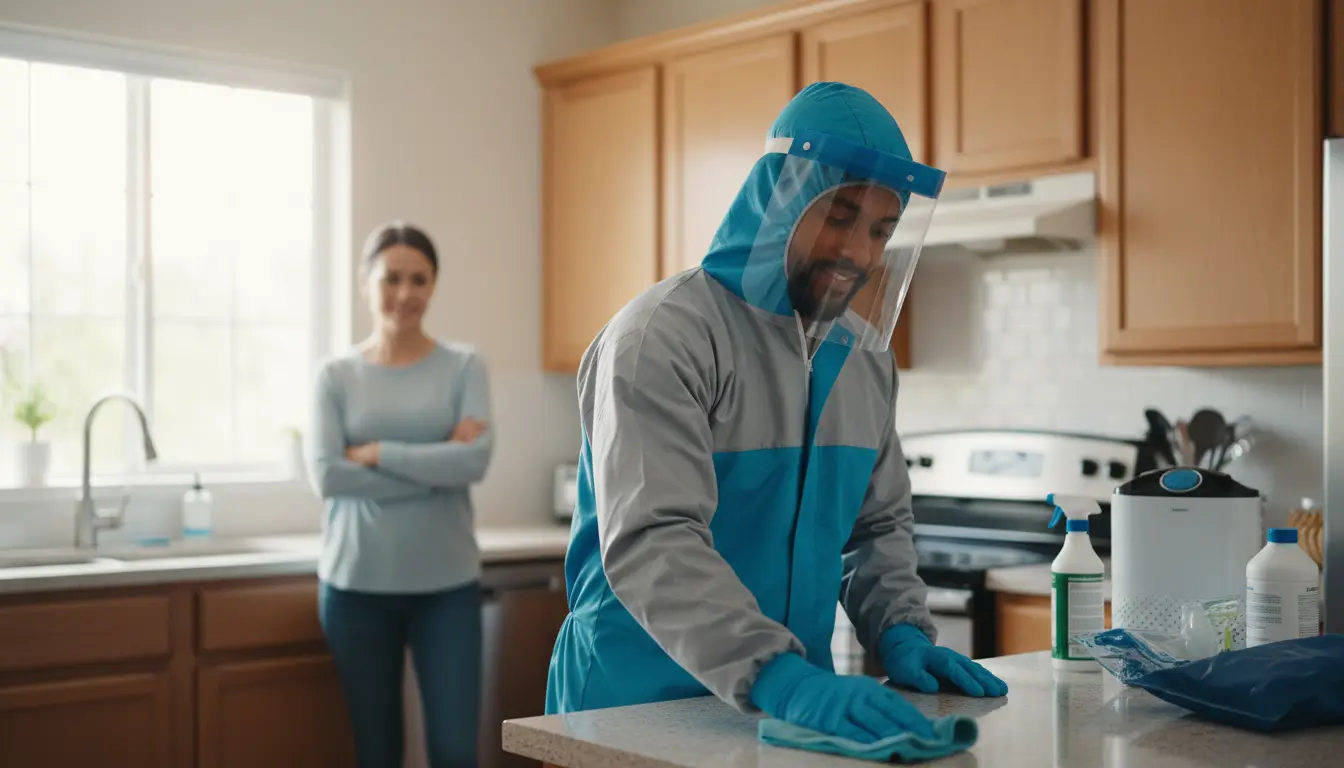
Biohazard cleanup is the systematic process of identifying, removing, and decontaminating environments contaminated by biological materials such as blood, bodily fluids, human remains, or pathogenic microorganisms. Unlike standard janitorial cleaning, which focuses on removing visible dirt and general surface grime, biohazard remediation follows strict protocols governed by the Occupational Safety and Health Administration (OSHA) and the Institute of Inspection, Cleaning and Restoration Certification (IICRC) S540 standard. This distinction is critical for property owners in St. Louis, MO, where older brick structures and seasonal humidity can accelerate biological degradation, creating hidden health risks that a mop and bucket cannot address.
When comparing biohazard cleanup companies in St. Louis, MO, you are essentially evaluating their technical competence, regulatory compliance, and ability to handle complex site conditions. Professional remediation goes far beyond surface cleaning; it involves structural decontamination, microbial remediation, and forensic restoration to ensure a property is safe for reoccupation. This article provides a detailed framework for assessing local providers, focusing on the technical processes, safety standards, and real-world factors that separate a certified specialist from a general cleaning service.
The Technical Workflow of Professional Biohazard Remediation
A competent biohazard cleanup company in St. Louis follows a rigorous, step-by-step workflow that begins with a comprehensive risk assessment. Technicians first evaluate the site for potential hazards, including sharp objects, chemical spills, or unstable structural elements. They establish containment zones using negative air pressure machines to prevent airborne pathogens from migrating to unaffected areas of the property. This initial phase is crucial in older St. Louis neighborhoods like Soulard or Benton Park, where shared walls in historic row houses can allow cross-contamination if not properly sealed.
Following containment, the team dons appropriate personal protective equipment (PPE) such as Tyvek suits, N100 respirators, and puncture-resistant gloves. Physical removal of biohazardous materials is performed using specialized tools, including hospital-grade sharps containers for needles and enzymatic cleaners that break down organic matter at the molecular level. After bulk removal, technicians apply EPA-registered disinfectants and allow for appropriate dwell times—typically 10 to 15 minutes—to achieve viral inactivation. The final verification step involves adenosine triphosphate (ATP) fluorescence testing, which measures the presence of organic residue on surfaces. A reading below 100 relative light units (RLU) is considered clean, a standard far exceeding visual inspection.
How St. Louis Climate Affects the Remediation Process
Missouri’s humid subtropical climate presents unique challenges for biohazard cleanup in St. Louis. High summer temperatures and elevated moisture levels can accelerate decomposition rates, increasing the spread of volatile organic compounds (VOCs) and the growth of mold and bacteria. In winter, freezing conditions can slow biological activity but also complicate the handling of liquid biohazards that may freeze and expand within porous materials like wood flooring or drywall. A knowledgeable company adjusts its approach based on these seasonal variables, using industrial-grade dehumidifiers and air scrubbers to control humidity during summer months and applying heated cleaning solutions in colder weather to ensure chemical efficacy.
Additionally, St. Louis’s older housing stock—particularly in neighborhoods like The Hill and Lafayette Square—often features plaster-and-lath walls, hardwood subfloors, and brick foundations. These materials are highly absorbent and require specialized techniques for biohazard removal. For example, porous materials like unsealed grout or unfinished wood may need to be cut out and replaced rather than cleaned, as biological fluids can seep deep into the substrate. Professional companies document this process with photographs and chain-of-custody forms, providing a clear record for insurance claims and property disclosures.
Data Comparison: Professional Remediation vs. Standard Cleaning
Understanding the measurable differences between professional biohazard remediation and standard residential cleaning is essential for making an informed decision. The following table highlights key metrics based on IICRC S540 guidelines and real-world observations from St. Louis cleanup sites.
| Feature / Metric | Professional Biohazard Remediation | Standard Residential Cleaning |
|---|---|---|
| Regulatory Compliance | OSHA 29 CFR 1910.1030, EPA waste disposal, IICRC S540 | None or general sanitation guidelines |
| Pathogen Elimination | 99.99% reduction (verified by ATP testing) | Visual cleanliness only; no verification |
| Structural Assessment | Full moisture mapping and porosity testing | Not performed |
| Waste Disposal | Incinerated or autoclaved via licensed medical waste hauler | Municipal trash (illegal for biohazards) |
| Odor Control | Ozone treatment, hydroxyl generators, and encapsulation | Air fresheners or passive ventilation |
| Insurance Documentation | Detailed narrative and photographic evidence provided | Typically not offered |
The data makes clear that professional remediation is not merely an upgraded cleaning service—it is a distinct discipline governed by safety and scientific standards. Using a standard cleaning service for a biohazard scene can lead to incomplete decontamination, legal exposure, and long-term health consequences for occupants.
Expert Insights: Three Critical Diagnostic Tips for Property Owners
When evaluating a cleanup company, look for evidence of advanced diagnostic practices that demonstrate a thorough approach to remediation. Certified professionals use moisture meters and thermal imaging cameras to detect biological seepage hidden behind walls or under flooring. After a flood or sewage backup, for instance, contamination can wick up drywall by capillary action, creating a reservoir for pathogens even if the surface appears dry. A company that skips this step may leave behind active hazards that re-emerge months later.
Another key practice is the assessment of porous materials. Many property owners assume that cleaning a bloodstained carpet or mattress is sufficient. In reality, IICRC S540 standards require that any porous item with visible biological contamination be removed and disposed of because fibers trap pathogens that cannot be fully eliminated through surface cleaning. Replacing subflooring or cutting away sections of drywall is often necessary, and a reputable company will explain this requirement upfront rather than promising a full restoration that is not technically feasible.
Finally, the use of negative air pressure is a non-negotiable safety measure. Without it, airborne particles from the affected area can spread throughout the property, contaminating HVAC systems and ductwork. In St. Louis’s dense urban environments, this can also affect neighboring units in apartment buildings or condominiums. A professional company will set up a containment chamber with a HEPA-filtered negative air machine before beginning work, and will keep it running until after final clearance testing is completed.
Common Mistakes Property Owners Make
One of the most frequent errors is using household bleach to clean up biological matter. While bleach is a strong disinfectant, it is deactivated by organic material and can produce toxic fumes when mixed with bodily fluids. Moreover, bleach does not clean—it only disinfects, meaning visible residue may remain, attracting insects and bacteria. A far more effective approach is using an EPA-registered hospital-grade disinfectant applied after physical removal of the contaminant.
Another common mistake is waiting for odors to dissipate naturally. Decomposing organic matter releases volatile organic compounds that can persist for weeks or months, and the odor itself is a sign of ongoing microbial activity. By the time a smell is noticeable, contamination has already spread through air currents and into porous surfaces. Delaying cleanup increases the scope of work and the cost of remediation, as more materials may require replacement.
Finally, allowing untrained family members or employees to enter a biohazard site poses serious health risks. Bloodborne pathogens such as hepatitis B and C, HIV, and MRSA can survive on surfaces for days to weeks. Without proper PPE and decontamination protocols, exposure can lead to infection. Professional companies maintain strict site access control and provide workers with vaccinations and medical monitoring, protections that are not available to untrained individuals.
Understanding the Cost of Biohazard Cleanup in St. Louis
Biohazard cleanup pricing is typically based on several variable factors, and transparency in quoting is a hallmark of a trustworthy company. A standard site mobilization fee covers the arrival of a crew, setup of containment zones, and deployment of specialized equipment such as negative air machines and industrial dehumidifiers. This fee generally ranges from $300 to $600 depending on the distance from the company’s base of operations and the complexity of the access route—narrow staircases in historic St. Louis homes can increase setup time.
Hourly remediation rates for labor and equipment typically fall between $150 and $350 per hour, with the total cost influenced by the volume of biohazardous waste requiring disposal. Disposal fees are charged per pound and cover transportation to a licensed medical waste incinerator, which is legally required for materials such as contaminated personal protective equipment, removed porous building materials, and biological fluids. In St. Louis, disposal costs can range from $0.50 to $2.00 per pound, adding significantly to the total for large-scale scenes.
Three primary factors drive cost variability: the extent of structural material replacement needed, the total volume of biohazardous waste, and the necessity for specialized HVAC decontamination. If contamination has seeped into ductwork, a separate duct cleaning and disinfection process may be required, adding $500 to $1,500 to the project. Similarly, replacing hardwood flooring or subflooring in a 200-square-foot area can cost $1,500 to $4,000, depending on the material grade and labor rates in the St. Louis market.
Property owners should also factor in the value of comprehensive documentation. A detailed report from the remediation company, including pre- and post-remediation photographs, ATP test results, and a chain-of-custody form for waste disposal, can streamline insurance claims and provide legal protection. Companies that offer this service at no additional charge demonstrate a commitment to professionalism and client support.
Safety Standards and Certifications: What to Look For
A credible biohazard cleanup company in St. Louis should hold certifications that are relevant to the work performed. The most critical is compliance with OSHA’s Bloodborne Pathogens Standard (29 CFR 1910.1030), which mandates proper training, use of PPE, and availability of post-exposure medical evaluation for employees. Ask potential companies for their written exposure control plan and evidence of annual training for all technicians.
IICRC certification in trauma and crime scene cleanup (S540) is another sign of a company that invests in ongoing education. The IICRC S540 standard covers everything from the initial assessment to final clearance testing, and it requires technicians to pass a rigorous examination. In addition, look for companies that are licensed waste transporters or work directly with authorized medical waste disposal facilities. Unlicensed disposal can result in fines and environmental damage, and it places the property owner at legal risk.
Beyond certifications, practical safety protocols matter. A professional crew should conduct a daily safety briefing before starting work, maintain a log of all personnel entering the containment zone, and have a decontamination station set up for exiting workers. These procedures are not just bureaucratic steps—they prevent cross-contamination and ensure that workers are not carrying pathogens out of the site on their clothing or equipment.
Frequently Asked Questions About Biohazard Remediation
What types of situations require professional biohazard cleanup?
Professional biohazard cleanup is necessary in any scenario where blood, bodily fluids, or human remains are present, including trauma scenes, unattended deaths, suicides, accidents, and hospital discharges. It is also required for sewage backups, hoarding environments with biological waste, and industrial accidents involving pathogenic materials. In each case, the risk of exposure to bloodborne pathogens and airborne contaminants mandates specialized training and equipment.
How quickly should I call a biohazard cleanup company after an incident?
Immediate response is critical. In St. Louis’s humid climate, biological decomposition begins within hours, releasing odors and accelerating the spread of bacteria. The first 24 to 48 hours are the most important for limiting contamination to the original site. Delaying cleanup can allow pathogens to travel through HVAC systems, contaminate adjacent rooms, and increase the cost and complexity of remediation. Many companies offer 24/7 emergency response, and property owners should take advantage of this service without hesitation.
Can biohazard odors be completely eliminated, or will they return?
Yes, professional remediation can eliminate biohazard odors permanently, but only if the source of the contamination is fully removed. Simply masking the smell with deodorizers is ineffective because the underlying biological material continues to break down. Professional companies use ozone generators, hydroxyl machines, and thermal fogging to neutralize odors at the molecular level, and they follow up with ATP testing to confirm that the site is clean. If odor returns after remediation, it typically indicates that contaminated porous materials were left in place and need to be removed.
Is it safe to stay in my home during the cleanup process?
In most cases, it is not safe to remain in the home during active biohazard remediation. The use of negative air pressure machines, chemical disinfectants, and physical removal of contaminated materials creates airborne particles and strong fumes that can be hazardous without proper PPE. Additionally, the containment zone is sealed off to prevent cross-contamination, which can disrupt normal living patterns. Most companies recommend that occupants vacate the premises for the duration of the project, which typically ranges from one to three days depending on the scope of work.
Professional Biohazard Remediation in St. Louis
Selecting the right biohazard cleanup company in St. Louis, MO, requires more than comparing prices—it demands an evaluation of technical expertise, adherence to safety standards, and an understanding of local conditions. From the humid summers that accelerate decomposition to the historic brick homes that require careful material assessment, the factors that influence a successful cleanup are both broad and specific. A certified provider brings not only equipment and protocols but also the experience to navigate these complexities while maintaining discretion and compassion for affected families.
St. Louis Biohazard Cleanup offers the full spectrum of services needed to restore safety and peace of mind, from initial risk assessment through final clearance documentation. Our team holds relevant certifications, follows IICRC S540 standards, and responds quickly to emergencies across the metro area, including neighborhoods like Clayton, University City, and Central West End. When you need a partner who treats your property with the same care and rigor as a medical facility, contact us to discuss your specific situation.