Waiting even a few hours to begin biohazard cleanup after a traumatic incident in your St. Louis property can multiply remediation costs by several thousand dollars and expose you to severe health liabilities. Many property owners assume that standard cleaning products or a quick mop-up will suffice, only to discover that porous subfloors, brick foundations, and the area’s humid summers have allowed biological contaminants to seep deep into structural materials. The result is often a complete loss of flooring, persistent odor migration through HVAC systems, and the need for full structural decontamination—costs that could have been contained with immediate professional intervention.
Biohazard incidents—whether from trauma, unattended death, hoarding, or industrial accidents—require a response measured in minutes, not days. In St. Louis, where older brick buildings and fluctuating humidity create ideal conditions for microbial growth, the window for safe, effective cleanup is especially narrow. The question isn’t just about speed; it’s about understanding the science of pathogen spread, the legal duty of care, and the financial implications of delay. This article provides the technical timeline every property owner, facility manager, and family member needs to know.
The Critical First Hour: Why Immediate Response Matters
OSHA’s Bloodborne Pathogens Standard (29 CFR 1910.1030) and the IICRC S540 standard for trauma and crime scene cleanup both emphasize that biohazardous materials should be contained and removed as soon as safely possible. The first sixty minutes after an incident are the most critical. During this period, bloodborne pathogens like hepatitis B, hepatitis C, and HIV remain viable on surfaces, but the risk of aerosolization and cross-contamination is still relatively contained. Immediate action by a trained professional using proper personal protective equipment (PPE) and negative air pressure can prevent pathogens from migrating to adjacent rooms or being absorbed into porous materials.
Delaying beyond the first hour allows biological fluids to dry, clot, or bond with surfaces. Dried blood, for example, can still transmit hepatitis C for weeks, but it becomes more difficult to remove safely. In St. Louis’s humid climate, moisture from blood or other bodily fluids also accelerates the growth of bacteria and mold, which can begin within 24 hours. The moment a biohazard is discovered, the clock is ticking—not just for health reasons, but for structural preservation. For instance, blood that seeps into unsealed concrete or between hardwood floorboards requires specialized enzyme treatments and sometimes full removal of affected materials.
Technical Process: Step-by-Step Professional Remediation Workflow
Initial Risk Assessment and Site Control
Upon arrival, the remediation team conducts a thorough risk assessment, identifying all sources of contamination, air quality hazards, and potential structural damage. The area is immediately isolated using plastic sheeting and negative air machines to create a controlled environment. This prevents airborne particulates from spreading to the rest of the building. The assessment also includes measurement of temperature, humidity, and moisture content using hygrometers and moisture meters, which are critical for determining the best approach for odor removal and microbial remediation.
PPE Protocol and Physical Removal
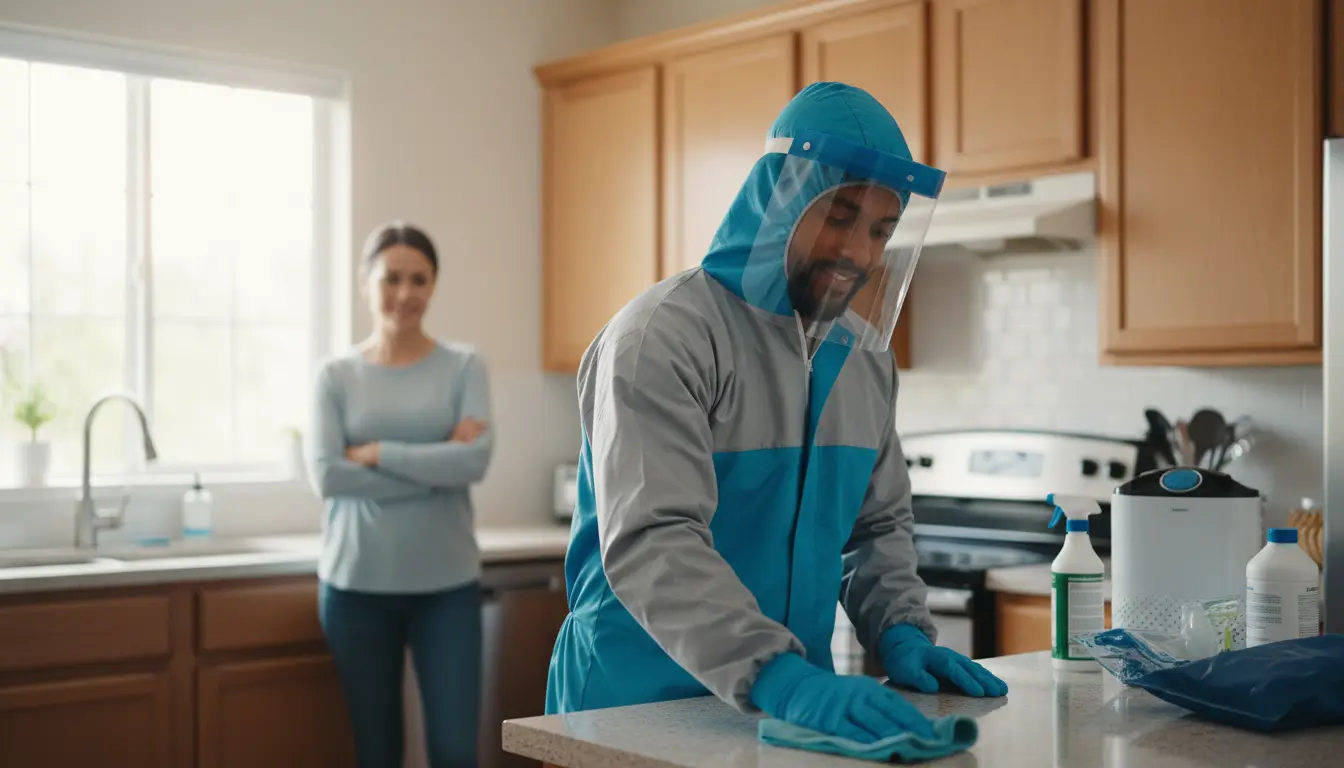
Technicians don full PPE, including Tyvek suits, N95 or P100 respirators, face shields, and waterproof boots. Physical removal of all biohazardous materials—including saturated carpet, padding, drywall, and insulation—is performed using specialized tools and disposal protocols. Every item is double-bagged in biohazard bags and transported to a licensed medical waste incinerator. In St. Louis, waste must be disposed of in accordance with Missouri Department of Natural Resources regulations, which require proper labeling and chain-of-custody documentation.
Chemical Sanitization and ATP Fluorescence Testing
After physical removal, all remaining surfaces are treated with EPA-registered hospital-grade disinfectants that are effective against a broad spectrum of pathogens, including norovirus, MRSA, and tuberculosis. The team then performs adenosine triphosphate (ATP) fluorescence testing—a tool commonly used in healthcare settings to verify that organic matter has been completely eliminated. ATP testing produces a numerical reading; a result below the threshold (typically 30 relative light units) indicates a sanitized surface. This step is particularly important in St. Louis homes with historic brick or plaster, where contaminants can hide in uneven surfaces.
Structural Encapsulation and Final Restoration
If porous materials such as wood subfloors or drywall cannot be fully decontaminated, they are removed and replaced. In some cases, a sealant or encapsulant is applied to lock in any remaining residue. The final step involves restoring the area to its pre-incident condition, including patching, painting, and odor neutralization using ozone machines or hydroxyl generators. This comprehensive workflow ensures that the property is not only visually clean but also safe for future occupancy.
Professional Remediation vs. Standard Janitorial Cleaning
| Feature/Metric | Professional Biohazard Remediation | Standard Residential Cleaning |
|---|---|---|
| Regulatory Compliance | OSHA 29 CFR 1910.1030, EPA, DOT, IICRC S540 | None |
| Pathogen Elimination | Hospital-grade disinfectants + ATP testing | Household bleach (ineffective on dried blood) |
| Structural Assessment | Moisture meters, thermal imaging, subfloor inspection | Visual inspection only |
| Waste Disposal | Licensed medical waste incineration | Regular trash (illegal in many cases) |
| Odor Control | Ozone/hydroxyl generators, enzyme treatments | Air fresheners (masks, not removes) |
| Liability Protection | Certified professionals, insurance coverage | Personal liability for improper cleanup |
Expert Insights: Three Advanced Diagnostic Tips
1. Detecting Hidden Biological Seepage
Professional remediation technicians use thermal imaging cameras and moisture meters to identify areas where fluids have wicked into walls or under flooring. In St. Louis’s older brick homes, biological fluids can travel along mortar joints for several feet, leaving no visible stain on the surface. Without these tools, cleanup crews often miss contaminated areas, leading to ongoing odor and health risks.
2. Why Porous Materials Require Replacement, Not Cleaning
Contrary to common belief, cleaning porous materials like drywall, carpet, and unsealed wood with disinfectants does not guarantee pathogen removal. The IICRC S540 standard recommends removal of any porous material that has been saturated with blood or other bodily fluids. This is because the capillary action of porous surfaces draws contaminants deep into the material, where disinfectants cannot reach. Attempting to clean instead of replace can leave behind infectious agents that may become airborne later.
3. Negative Air Pressure to Prevent Cross-Contamination
Setting up negative air pressure using HEPA-filtered air scrubbers is essential in multi-room or multi-level homes. Without it, air currents can carry microscopic bioaerosols from the affected area into hallways, HVAC ducts, and other rooms. In St. Louis’s dense urban neighborhoods like the Central West End and Soulard, where attached homes share walls, cross-contamination can affect neighboring properties. Proper negative pressure setup also protects the technicians and occupants during the cleaning process.
Common Mistakes Property Owners Make
Mistake 1: Using Household Bleach on Biological Matter
Bleach is corrosive and can damage surfaces, but more importantly, it loses efficacy on organic matter once the bleach solution is diluted or if the blood is dried. The Centers for Disease Control and Prevention (CDC) recommends a 10% bleach solution for fresh blood spills, but only if the surface is non-porous and the blood is still wet. Many property owners use bleach incorrectly, unknowingly leaving behind live pathogens.
Mistake 2: Waiting for Odor to Dissipate Naturally
The smell of decomposition is a sign of active microbial activity and volatile organic compounds (VOCs) that are harmful to breathe. In St. Louis’s humid summers, decomposition accelerates, and odors can become deeply embedded in wood and drywall. Bleaching or airing out the room does not stop the biological process. Waiting for the smell to fade only allows the contamination to spread further.
Mistake 3: Allowing Untrained Personnel into the Site
Friends, family, or even general contractors may enter the area before remediation, tracking contaminants to other parts of the house. This can create additional biohazard zones and increase the total cost of cleanup. In one St. Louis case, a property owner allowed a neighbor to mop up a small blood spill, only to find later that the mop and bucket had been used elsewhere, spreading hepatitis C to multiple rooms.
Pricing: Factors That Influence Cost
- Site mobilization fee: A standard fee of $250–$500 covers the cost of dispatching a certified team, including travel time within the St. Louis metro area and setup of containment equipment.
- Hourly remediation rates: Typically range from $150 to $300 per hour per technician, depending on the complexity of the site and the level of PPE required. Most jobs require at least two technicians.
- Material replacement costs: If extensive demolition is needed—such as removing carpet, padding, drywall, or subflooring—these costs can add $1,000 to $5,000 or more, depending on the square footage and the type of construction.
- Specialized disposal: Biohazardous waste must be transported in approved containers to a licensed facility. Disposal fees are often priced per pound and can range from $0.50 to $2.00 per pound, with an average incident generating 50–200 pounds of waste.
- HVAC decontamination: If biological contaminants have entered the ductwork, cleaning and sanitizing the HVAC system can cost $500–$1,500, but it is often necessary to prevent recirculation of pathogens.
Three main factors influence cost: the extent of structural material replacement required, the total volume of biohazardous waste, and the necessity for specialized HVAC decontamination. For a detailed breakdown of what St. Louis residents typically pay, see our complete guide to biohazard cleanup costs.
Safety & Standards: Certifications and Protocols
Professional biohazard remediation companies must adhere to strict safety standards to protect both workers and occupants. The Occupational Safety and Health Administration (OSHA) Bloodborne Pathogens Standard (29 CFR 1910.1030) requires that all employees who may be exposed to blood or other potentially infectious materials receive annual training, have access to PPE, and follow a written exposure control plan. Additionally, the IICRC S540 standard provides a framework for trauma and crime scene cleanup, including proper cleaning methods, verification testing, and documentation.
In St. Louis, authorized waste management services must be used to dispose of biohazardous waste. This means the waste is transported in red bags labeled with the universal biohazard symbol and incinerated at a licensed facility. Companies that do not follow these protocols can face fines and legal liability. For property owners, hiring a certified remediation company ensures that the cleanup is done correctly, protecting them from future health risks and potential lawsuits. To learn more about the hidden dangers of unattended biohazards, read our detailed article.
Frequently Asked Questions
How soon after an incident should I call for professional biohazard cleanup?
As soon as you are aware of the incident, call immediately. The first hour is critical to prevent pathogens from drying and bonding to surfaces. Even if the incident appears small, professional assessment is recommended because unseen contamination can exist beneath floorboards or behind walls. In St. Louis, where humidity accelerates decomposition, waiting even 12 hours can significantly increase the scope of work and cost.
Can I clean up a small blood spill myself?
If the spill is on a non-porous surface and is fresh (less than 1 hour), using a 10% bleach solution and wearing gloves may be safe for personal health. However, proper disposal of contaminated materials is still required. For any spill on porous surfaces, or if the blood is from an unknown source, professional remediation is strongly advised. Bloodborne pathogens can survive for days on surfaces, and improper cleaning can leave behind infectious material. The most common biohazards in St. Louis homes include blood, feces, and decomposing matter, all of which require professional handling.
What happens if I don’t clean up a biohazard right away?
Delaying cleanup allows pathogens to multiply, odors to set in, and structural materials to become saturated. In St. Louis’s humid climate, mold can begin growing within 24–48 hours. The longer you wait, the more extensive the damage becomes, often requiring full demolition of floors and walls. Additionally, the psychological impact on occupants and neighbors can worsen. Quick response not only protects health but also minimizes property damage and restoration costs.
How do I know if a biohazard cleanup company is certified?
Look for certifications from the IICRC (Institute of Inspection, Cleaning and Restoration Certification) specifically for trauma and crime scene cleanup (S540). Also confirm that the company follows OSHA’s Bloodborne Pathogens Standard and maintains liability insurance and workers’ compensation coverage. A reputable company will provide proof of certification and a detailed written protocol. Our team is fully certified and follows all regulatory requirements.
Professional Biohazard Remediation in St. Louis
When a biohazard incident occurs, the clock starts ticking immediately. The difference between a simple restoration and a costly, extended remediation often comes down to how quickly a certified professional team is deployed. With years of experience in St. Louis’s unique residential and commercial environments, we understand the local climate, building codes, and disposal regulations. Our team uses advanced techniques like ATP testing, negative air pressure, and thermal imaging to ensure every trace of contamination is removed.
Don’t let a stressful situation become a financial disaster. Choosing a professional, compassionate, and technically rigorous team ensures that your property is restored safely and efficiently. Contact St. Louis Biohazard Cleanup today for an immediate response. We are available 24/7 to serve the entire St. Louis metro area, including Clayton, University City, and all surrounding neighborhoods.