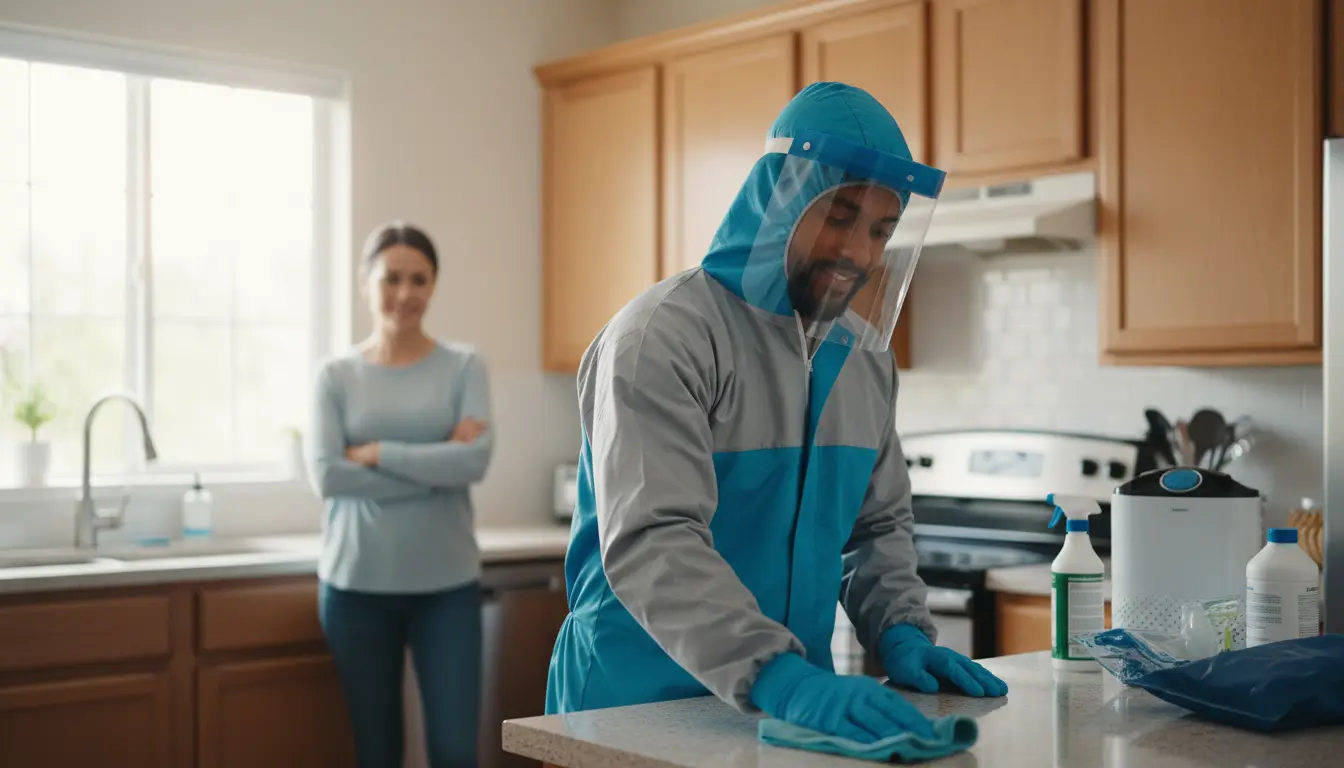
The problem is that most property owners in St. Louis make the same costly mistake: they assume any cleaning company with a mop and a bucket can handle a biohazard scene. That assumption can lead to legal liability, health code violations, and long-term structural damage that costs thousands more than the original remediation would have. Worse, it can expose you, your family, or your tenants to bloodborne pathogens and infectious diseases that linger in porous materials long after the visible stain is gone. The key is knowing how to find discreet and compassionate biohazard cleanup services near me — not just any service, but one that combines technical rigor with genuine human empathy.
St. Louis Biohazard Cleanup understands that behind every biohazard situation is a person or family in crisis. Whether you’re dealing with a suicide cleanup, a homicide scene, an unattended death, or a hoarding environment with severe biohazard contamination, the emotional weight is immense. The right remediation team arrives without judgment, explains every step, and works tirelessly to restore your property to a safe, habitable condition. They also follow strict protocols set by OSHA, the EPA, and the IICRC S540 standard for trauma and crime scene cleanup. In this guide, we’ll walk you through exactly what to look for, what questions to ask, and what technical processes are involved so you can make an informed decision quickly.
What Sets Professional Biohazard Remediation Apart in St. Louis
Standard janitorial crews are not trained to handle bloodborne pathogens, chemical spills, or decomposition fluids. In St. Louis, where older brick homes with porous subfloors and crawl spaces are common, the risk of hidden contamination is especially high. Professional biohazard remediation begins with a thorough risk assessment that goes far beyond what the naked eye can see. Technicians use adenosine triphosphate (ATP) testing to detect biological residue on surfaces that appear clean, and they employ industrial-grade negative air machines to prevent aerosolized pathogens from spreading to other parts of the building.
Moisture from the humid Midwest summers accelerates microbial growth, and temperature swings can cause rapid decomposition, releasing volatile organic compounds that penetrate drywall, insulation, and even ductwork. A qualified team will perform structural decontamination that includes removing affected materials, applying hospital-grade disinfectants with proven viral inactivation rates, and sealing the area with antimicrobial coatings. This is not a job for a general contractor or a restoration company that simply subcontracts the dirty work. You need a specialist who lives and breathes forensic restoration.
The Technical Process: Step-by-Step Remediation
Every biohazard cleanup project follows a systematic workflow designed to minimize risk and ensure thoroughness. The process typically starts with a site assessment where the team identifies the scope of contamination, the type of biohazard (blood, bodily fluids, chemical waste, or infectious material), and any structural vulnerabilities. Next, they establish containment zones using plastic sheeting and negative pressure to isolate the affected area from the rest of the property. This is critical in St. Louis row houses and multi-story buildings where cross-contamination could affect neighboring units.
Once contained, technicians don full personal protective equipment (PPE) appropriate for the hazard level — including respirators, Tyvek suits, and puncture-resistant gloves. Physical removal of visible biohazard waste is performed using specialized tools like scoop shovels, absorbent pads, and enzymatic cleaners that break down organic matter at the molecular level. After the bulk material is removed, the team applies an EPA-registered disinfectant with a 10-minute dwell time to kill pathogens including HIV, hepatitis B and C, and MRSA. They follow up with ATP fluorescence testing to verify that the surface is biologically clean. Finally, if the structure has been compromised, they perform odor elimination services using ozone generators or hydroxyl machines to neutralize residual odors that can trigger psychological distress for occupants.
Professional Remediation vs. Standard Janitorial Cleaning
| Feature/Metric | Professional Biohazard Remediation | Standard Residential Cleaning |
|---|---|---|
| Regulatory Compliance | OSHA Bloodborne Pathogens Standard, EPA disposal regulations, IICRC S540 | None specific to biohazards |
| Pathogen Elimination | ATP testing, hospital-grade disinfectants with proven kill claims | Household bleach or general cleaners |
| Structural Assessment | Evaluation of porous materials, subfloor, HVAC, and hidden seepage | Visual only |
| Waste Disposal | Authorized medical waste transport with tracking manifests | Regular trash (illegal for biohazard waste) |
| Emotional Support | Discreet, compassionate, trauma-informed approach | Not trained for sensitive situations |
Expert Insights: Three Diagnostic Tips for Property Owners
First, always insist on ATP testing before and after remediation. This test measures the amount of adenosine triphosphate — a molecule found in all living cells — on a surface. If the reading is above the threshold of 10 relative light units (RLU) on a non-porous surface, the area is not biologically clean. Many companies skip this step because it adds cost, but it’s the only way to prove that pathogens are truly gone. Second, understand that porous materials like drywall, carpet, and unsealed wood cannot be adequately decontaminated. In St. Louis’s humid climate, biological fluids wick into these materials, creating a breeding ground for mold and bacteria. The only safe solution is removal and replacement, not cleaning. Third, ask about negative pressure. Without it, air currents can carry microscopic pathogens into adjacent rooms, contaminating furniture, clothing, and even the HVAC system. A professional team will always set up a negative air machine to create a pressure gradient that keeps the hazard contained.
Two common mistakes property owners make are using household bleach on biological spills and waiting for odors to dissipate naturally. Bleach is not effective at killing certain pathogens like hepatitis B and it can actually damage surfaces, making them more porous. Waiting for odors to go away is futile because the odor is caused by volatile organic compounds produced by decomposing cells. These compounds can persist for months and may indicate that the biological material is still present. Allowing untrained family members or friends into the scene before professional cleanup is another critical error. Not only does it expose them to serious health risks, but it can also compromise the chain of custody for law enforcement investigations and void insurance claims.
Pricing for Biohazard Cleanup in St. Louis
Costs vary based on the complexity and severity of the situation, but here are realistic estimates:
- Site mobilization fee: $150 – $350 (includes travel, setup, and initial assessment)
- Hourly remediation rate: $125 – $250 per hour, depending on the number of technicians and level of hazard
- Specialized disposal of biohazardous waste: $50 – $200 per container, with transportation to a licensed incineration facility
- Structural material replacement: $500 – $5,000 or more, depending on the area of drywall, flooring, or insulation that must be removed and replaced
- Odor elimination services: $300 – $1,200 for ozone or hydroxyl treatment
Three factors that most influence cost are the extent of structural material replacement required, the total volume of biohazardous waste, and the necessity for specialized HVAC decontamination. If the contamination has entered the ductwork, the cost can rise significantly because the entire system must be cleaned and sealed. Always get a written estimate that itemizes these expenses.
Safety Standards and Certifications You Should Expect
Any reputable biohazard cleanup company operating in St. Louis must comply with OSHA’s Bloodborne Pathogens Standard (29 CFR 1910.1030), which mandates training, PPE, and a written exposure control plan. Additionally, the team should follow IICRC S540 standards for trauma and crime scene cleanup, which cover everything from the initial site assessment to the final documentation. Waste disposal must be managed through an authorized medical waste transport service that provides a chain-of-custody manifest. This ensures that the biohazard waste is incinerated or treated according to EPA and Missouri Department of Natural Resources regulations. Without these certifications, you risk liability for improper disposal and potential fines.
In practice, these standards protect not only the property owner but also the occupants and future residents. For example, if the cleanup team fails to remove all biological material and you later sell the property, the new owner may discover the contamination during a renovation, leading to lawsuits and devaluation. Professional remediation also prevents the spread of communicable diseases like hepatitis C, which can survive outside the body for weeks on surfaces. By choosing a certified provider, you are investing in peace of mind and long-term safety.
Frequently Asked Questions About Biohazard Cleanup
How quickly should I contact a biohazard cleanup service after a traumatic event?
Immediately. Time is critical because decomposition begins within minutes in St. Louis’s warm months, and bodily fluids can seep into flooring and subfloors within hours. The faster a professional team arrives, the less structural damage occurs and the lower the risk of odor migration. Emergency response cleanup is available 24/7, and we recommend calling even if you are unsure whether the situation is a biohazard — it’s better to have a professional assess it than to hope it’s minor.
Can I clean up a small blood spill myself with household bleach?
No. Household bleach is not a registered disinfectant for bloodborne pathogens and can be ineffective against certain viruses. Moreover, improper cleaning can aerosolize the blood, leading to inhalation of pathogens. Even a small spill requires proper PPE, an EPA-registered disinfectant with a sufficient dwell time, and proper disposal of contaminated materials. Attempting to clean it yourself exposes you to hepatitis B, HIV, and other infectious agents, and it may also violate local health codes.
What happens if the biohazard waste is not disposed of correctly?
Improper disposal of biohazard waste — such as placing it in regular trash or dumpsters — is illegal under Missouri law and can result in fines of up to $10,000 per violation. It also poses a public health risk to waste workers and the community. Professional teams use medical waste transport services that follow strict EPA and DOT regulations, providing a paper trail from the site to the incineration facility. This ensures that the waste is handled safely and legally.
Is there a risk of mold growth after a trauma cleanup?
Yes, especially in St. Louis’s humid climate. After a body has been decomposing, moisture levels in the affected room can be extremely high. If the area is not properly dried and sealed, mold can begin growing within 24 to 48 hours. Professional remediation includes drying the structure with industrial dehumidifiers and applying antimicrobial agents to prevent microbial growth. Some companies also offer mold infestation remediation as a follow-up service to ensure the property is fully restored.
Conclusion: Choosing the Right Partner for Biohazard Remediation in St. Louis
When you are facing the aftermath of a traumatic event, the last thing you need is to worry about whether the cleanup crew is cutting corners or lacks compassion. The technical processes we’ve described — from ATP testing to negative pressure containment — are not optional extras. They are the minimum standard for safe, responsible remediation. In St. Louis, where unique building materials and climate conditions add complexity, working with a local specialist who understands these nuances is essential.
St. Louis Biohazard Cleanup brings together certified technicians, advanced equipment, and a trauma-informed approach that respects your privacy and emotional state. We handle everything from blood spill removal to full structural decontamination, and we work with insurance companies to streamline the process. If you are searching for discreet and compassionate biohazard cleanup services near me, know that the right team is just a phone call away — ready to restore your property and your peace of mind.