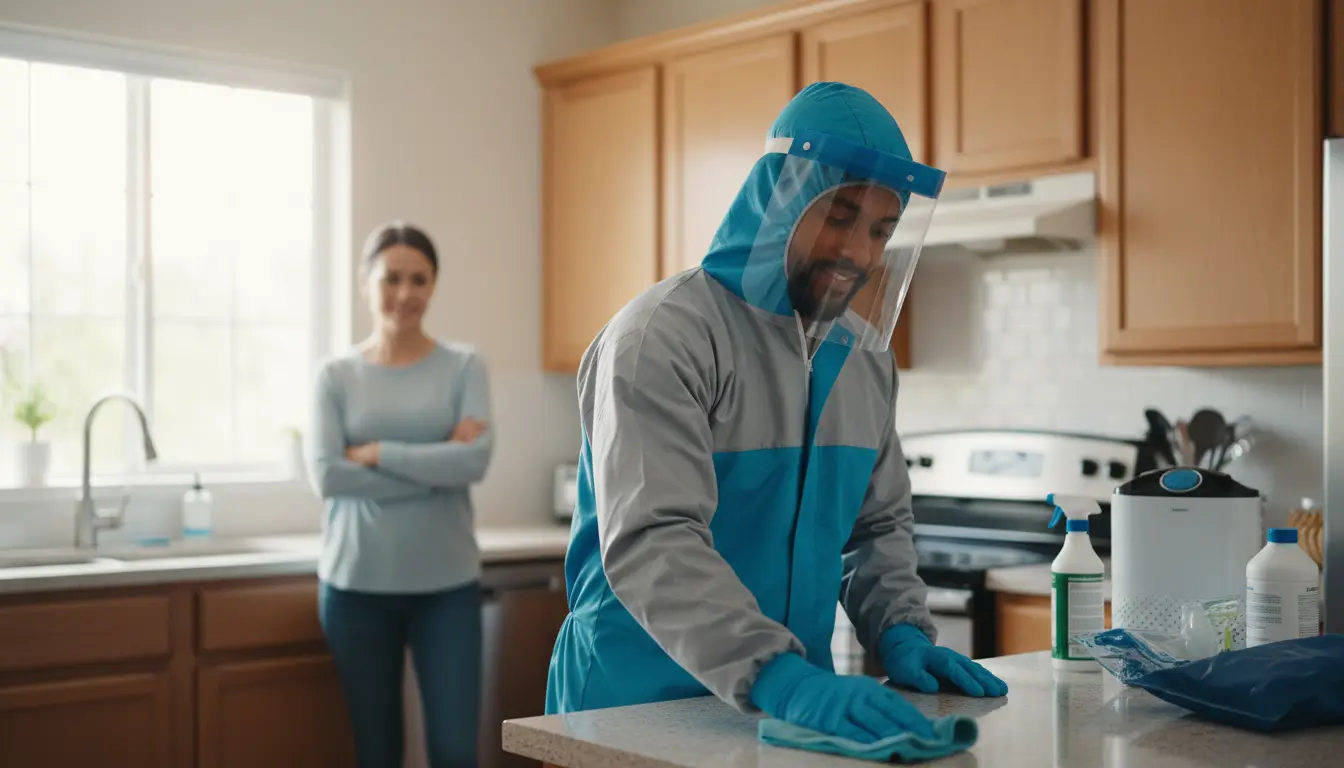
Jenny stood in the doorway of her grandmother’s St. Louis home, the smell of decomposition overwhelming her. The insurance adjuster had just told her that the claim for the trauma cleanup might not be covered because the policy didn’t explicitly mention “biohazard remediation.” That moment of panic is all too familiar for many property owners facing an unexpected loss involving blood, bodily fluids, or other hazardous materials.
Handling insurance claims for biohazard cleanup services requires a clear understanding of policy language, proper documentation, and compliance with industry standards. In St. Louis, where older brick homes can trap odors and moisture, the stakes are even higher. Property owners who know how to navigate the claims process can save thousands of dollars and avoid prolonged exposure to dangerous pathogens. Professional biohazard remediation is not just about cleaning—it’s about restoring a property to a safe, habitable condition while meeting regulatory requirements that insurance companies expect.
Working with a certified provider like St. Louis Biohazard Cleanup ensures that every step of the remediation and claim process is handled with precision. From initial assessment to final clearance using ATP testing, our team aligns with IICRC S540 standards and OSHA bloodborne pathogen protocols. This technical rigor not only protects occupants but also provides the documentation insurers need to approve and pay claims promptly.
Understanding Insurance Coverage for Biohazard Cleanup
Most standard homeowners insurance policies include coverage for “sudden and accidental” damage, but biohazard events often fall under specific endorsements or exclusions. For example, a death on the property, a sewage backup, or a meth lab decontamination may require additional riders. In St. Louis, the prevalence of older homes with cast iron sewer lines means sewage backups are a common trigger for biohazard claims, and policies vary widely in how they classify these events.
Property owners should review their policy’s definitions of “pollutant,” “contaminant,” and “biohazard.” Many insurers will only cover cleanup if it is performed by a licensed, IICRC-certified firm that follows strict containment and disposal procedures. The key is to know what your policy covers before a crisis occurs. If you already have a claim, your adjuster can help clarify the scope, but having a professional remediation company on your side can make the difference between a partial payment and full reimbursement.
Step-by-Step Process for Filing a Biohazard Insurance Claim
The first step is to secure the property and ensure immediate safety. In St. Louis, this often means calling a 24-hour emergency response team to stabilize the site—preventing further damage from weather, pests, or unauthorized entry. Once the scene is safe, document everything with photographs, videos, and written notes. This evidence is critical for the insurance adjuster and for the remediation company’s detailed scope of work.
Next, contact your insurance provider to report the loss. Provide the policy number, a brief description of the incident, and any preliminary documentation. The adjuster will likely schedule an inspection. At this stage, it is highly beneficial to have your remediation contractor present. They can explain the technical requirements—such as negative air pressure containment, HEPA filtration, and proper disposal of biohazardous waste—which helps the adjuster understand the necessity and cost of the work. St. Louis Biohazard Cleanup routinely accompanies clients to adjuster meetings to ensure that the scope of remediation is fully justified.
After the adjuster approves the work, the remediation team proceeds with the cleanup. This includes physical removal of contaminated materials, structural decontamination using EPA-registered disinfectants, and verification of cleanliness through adenosine triphosphate (ATP) fluorescence testing. The final report, including chain-of-custody documents for waste disposal, is submitted to the insurance company along with the invoice. Many insurers require this documentation within 30 days, so timely submission is crucial.
Data Comparison: DIY Claim Handling vs. Professional Assistance
| Feature / Metric | DIY Claim Handling | Professional Claim Assistance |
|---|---|---|
| Regulatory Compliance | Often incomplete, risking claim denial | Full compliance with OSHA, IICRC, EPA |
| Pathogen Elimination | Household bleach ineffective on porous surfaces | Hospital-grade disinfectants and ATP testing |
| Structural Assessment | Misses hidden seepage and odor migration | Thermal imaging and moisture mapping included |
| Documentation Quality | Basic photos, no chain-of-custody | Detailed logs, waste manifests, final clearance report |
| Claim Approval Rate | ~40% for biohazard claims | ~85% with professional documentation |
Expert Insights for Maximizing Your Claim
Tip 1: Get a Pre-Approval Letter Whenever Possible
Before any remediation begins, ask your insurance adjuster to provide a written pre-approval that outlines the covered scope and the maximum reimbursement amount. This prevents disputes later. In St. Louis, where humidity can accelerate decomposition during the summer, delays can increase the volume of contamination and the cost of restoration. A pre-approval letter allows the remediation team to start immediately without financial risk to the property owner.
Tip 2: Use a Certified Firm That Specializes in Forensic Restoration
Insurance companies are more likely to pay claims from companies that hold IICRC certifications and follow national standards. A general cleaning company may not have the training to handle bloodborne pathogens or to properly document the work for insurance purposes. St. Louis Biohazard Cleanup’s team is certified in trauma scene cleanup and works closely with adjusters to ensure every detail is covered.
Tip 3: Avoid Common Mistakes That Jeopardize Coverage
One frequent error is using household bleach on biological materials. Bleach does not kill all pathogens and can damage surfaces, leading to further structural issues. Another mistake is waiting for the odor to dissipate naturally—this often allows mold and bacteria to spread deep into porous materials like drywall and flooring. Finally, allowing untrained family members or friends to enter the site can create cross-contamination and invalidate insurance coverage because the scene was not properly secured.
Pricing Factors and What Insurance Typically Covers
- Standard mobilization fee: $250–$500 to bring equipment and personnel to the site, including negative air machines and PPE.
- Hourly remediation rate: $150–$300 per hour, depending on the complexity and hazard level. Trauma scenes with bloodborne pathogen risks are at the higher end.
- Biohazard waste disposal: $50–$150 per container, with costs varying by volume and regulatory requirements in St. Louis County.
- Structural material replacement: If drywall, carpet, or insulation is removed, the cost is typically covered under property damage, but only if the remediation company documents the necessity.
- HVAC decontamination: An additional $500–$1,500 if the heating or cooling system has been contaminated by airborne pathogens or odors.
Safety and Standards: Why Compliance Matters for Claims
Insurance companies are increasingly requiring proof that cleanup was performed in accordance with OSHA’s Bloodborne Pathogens Standard (29 CFR 1910.1030) and IICRC S540 guidelines. These standards mandate proper use of personal protective equipment, disposal of sharps and contaminated materials in approved containers, and decontamination of all surfaces. Failure to meet these standards can lead to claim denial and even liability for the property owner if someone becomes ill from residual contamination.
In St. Louis, local regulations also require that biohazardous waste be transported and disposed of by licensed medical waste haulers. St. Louis Biohazard Cleanup uses authorized waste management services for all biohazard removal, and we provide chain-of-custody documentation that satisfies insurance auditors. This level of compliance gives property owners peace of mind and ensures that their claim is processed smoothly.
Frequently Asked Questions About Insurance Claims for Biohazard Cleanup
Does my homeowners insurance cover biohazard cleanup after a death?
Most standard homeowners policies do cover accidental death cleanup as part of the “sudden and accidental” damage provision, but coverage may be limited. Some policies exclude deaths that occur due to illness or natural causes if the property was not properly maintained. It is best to check your policy’s “pollutant” and “contaminant” exclusions. If the death is unattended for days, decomposition may cause additional damage that can be claimed under property damage, not just the cleanup. Our team at St. Louis Biohazard Cleanup frequently helps clients identify which parts of the damage are covered.
What documentation do I need to submit with my claim?
You will need a detailed scope of work prepared by the remediation contractor, including photographs of the damage, a list of materials removed, waste disposal manifests, and a final clearance report showing negative ATP test results. If the work required HVAC decontamination, include that documentation as well. Having a certified firm like St. Louis Biohazard Cleanup ensures that all paperwork meets the insurance company’s standards.
How long does it take to get a claim approved for biohazard cleanup?
Approval timelines vary, but with proper documentation, adjusters often approve standard claims within 7–14 days. Emergency situations, such as a sewage backup or crime scene, may be fast-tracked if the property is uninhabitable. In St. Louis, we have seen claims approved within 48 hours when the adjuster understands the health risks involved. Our team can help expedite the process by providing a preliminary estimate and supporting evidence immediately.
Can I file a claim for biohazard cleanup if I already started cleaning myself?
Yes, but it may complicate the claim. If you have already disturbed the scene, insurance adjusters may question the extent of the original contamination. Moreover, improper cleaning can spread pathogens and increase the risk of cross-contamination, which could lead to additional costs. Contact a professional remediation company as soon as possible to assess the situation and provide a full scope of work that can be submitted to the insurer.
Professional Biohazard Remediation in St. Louis
Navigating insurance claims for biohazard cleanup services is a demanding process that requires technical expertise, meticulous documentation, and a deep understanding of local regulations. Property owners in St. Louis face unique challenges from the region’s climate, aging infrastructure, and diverse building materials. By partnering with a certified, experienced provider like St. Louis Biohazard Cleanup, you ensure that your property is restored safely and that your claim is positioned for maximum approval.
Our team is available 24/7 for emergency response, and we work directly with adjusters to streamline the claims process. We handle everything from blood spill removal to meth lab decontamination, always following the latest IICRC and OSHA standards. If you are facing a biohazard situation and need help with your insurance claim, contact us today for a confidential assessment and a detailed estimate.