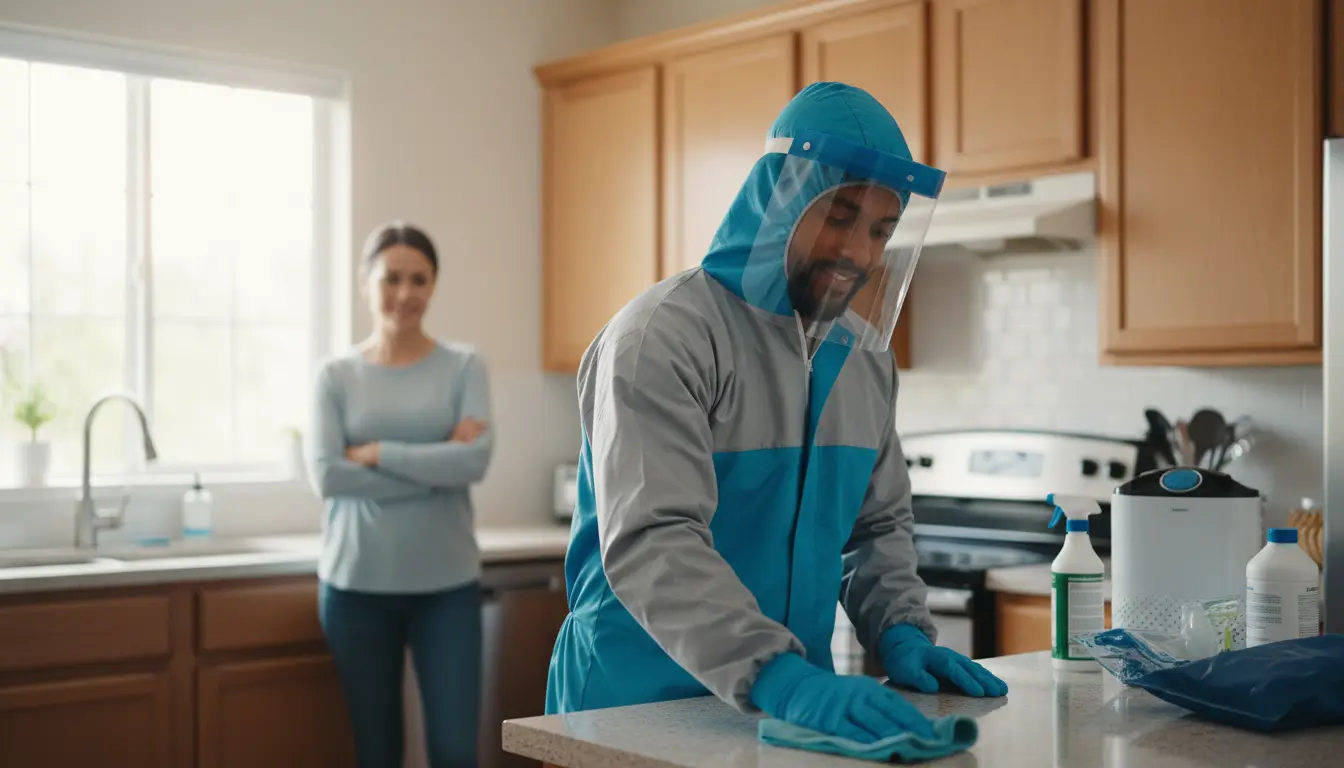
For property owners, landlords, and facility managers across the St. Louis metro area, understanding how to prepare a property for professional biohazard remediation is not merely a logistical checklist. It is the critical first step in ensuring that the team arriving on site can execute its full scope of work safely, thoroughly, and in compliance with every regulatory standard that governs the handling of bloodborne pathogens, decomposition fluids, and other Category A medical waste. When you get the prep work right, you protect your liability, you protect the structure, and you protect the future occupants of that space.
At St. Louis Biohazard Cleanup, our technicians see the consequences of improper preparation every week. Homes in Soulard, the Central West End, and Lafayette Square present their own architectural and environmental challenges, and the local climate—with its punishing summer humidity and dramatic temperature swings—compounds everything. If you are facing this situation, the following guide walks you through exactly what must happen before our crew arrives, why each step matters, and how to avoid the common mistakes that can turn a manageable site into a prolonged, expensive ordeal.
Secure the Scene and Restrict Access Immediately
Before any professional can step foot on the property, the first obligation falls squarely on the property owner or responsible party: the scene must be secured. This means locking all entry points and posting clear signage that prohibits entry by anyone not directly authorized by the remediation company. The reasoning here goes beyond simple privacy. When unauthorized individuals—curious neighbors, well-meaning family members, or even untrained maintenance staff—enter a site contaminated with biological hazards, they become vectors. They can track bloodborne pathogens onto carpets, upholstery, and even into their own vehicles. In the context of St. Louis biohazard cleanup, we have documented cases where well-intentioned relatives entered a site to “help clear things out” and inadvertently spread hepatitis C antigens across multiple rooms.
Restricting access also preserves the evidentiary and insurance record. If you are working with law enforcement or a claims adjuster, the remediation team needs to document the original state of the scene before any disturbance occurred. Once you have locked the property, note the time and date, and do not allow anyone inside until the lead remediation specialist arrives to perform the initial risk assessment. This protocol aligns directly with the OSHA Bloodborne Pathogens Standard 29 CFR 1910.1030, which requires that employers and property controllers minimize occupational exposure by limiting access to areas where potential exposure exists. As the person responsible for the property, you act as the first line of defense.
Remove Non-Biohazardous Items and Valuables
Once the scene is secure, the next step in how to prepare a property for professional biohazard remediation involves the careful removal of personal items that are not contaminated. This is a task that must be performed with extreme caution, and only if you can do so without crossing into any visibly contaminated zone. If there is any doubt about whether an item has been exposed to splatter, aerosolized fluids, or seepage, leave it in place. The remediation crew will make that determination during the structural decontamination assessment, and they have the training and personal protective equipment to handle it safely.
Items that can typically be removed include kitchen appliances, electronics, framed photographs, and unopened pantry goods—provided they are located in unaffected areas of the property. Place these items in clean boxes and move them to a secure garage or separate storage area. Do not transport them into a personal vehicle or living space until they have been inspected for any trace contamination. This precaution is especially relevant in older St. Louis neighborhoods like The Hill or Lafayette Square, where homes often have open floor plans and porous plaster walls that can silently transfer airborne particles during a trauma event. A single missed particle can compromise an entire wardrobe or set of upholstered furniture.
For any items you suspect may have sentimental or financial value but that reside in the contaminated zone, do not touch them. Instead, clearly mark their location with a sticky note or a piece of painter’s tape and inform the lead technician upon arrival. We frequently recover jewelry, important documents, and family heirlooms from impacted areas, and our team has protocols for carefully segregating and decontaminating those items so they can be returned to the family without cross-contamination risk.
Document Everything for Insurance and Compliance
Before the remediation begins, you need a clear photographic and written record of the property as it currently stands. This is not about being morbid; it is about protecting your financial interest. Insurance policies covering property restoration services in St. Louis typically require a pre-remediation inventory of damage. Walk through every room that is remotely connected to the incident and take wide-angle photos. Open closet doors, capture ceiling angles, and photograph flooring details. Pay special attention to areas where biological contamination is visible or where you detect strong odor migration. Decomposition gases, particularly in the humid St. Louis summers, can penetrate drywall and baseboards, leaving behind a residue that requires microbial remediation even in rooms that appear untouched.
In addition to photographs, create a simple written log. Note the date you discovered the incident, the date you called the emergency response number, and any communication you have had with law enforcement or the coroner. This log becomes part of the chain-of-custody documentation that your remediation contractor will incorporate into their final report. A complete documentation package speeds up the claims process and demonstrates compliance with the IICRC S540 Standard for Trauma and Crime Scene Cleanup, which emphasizes the importance of pre-remediation documentation as a quality control benchmark. For property owners in areas like Central West End, where older buildings often have complex ownership structures and historical easements, thorough documentation can also protect you against future liability claims from tenants or buyers.
Turn Off HVAC and Seal Ventilation Systems
One of the most dangerous things a property owner can do before professional remediation arrives is to leave the heating, ventilation, and air conditioning system running. Air movement is the primary mechanism by which cross-contamination prevention becomes compromised. When biological contaminants exist in a fluid state or as dried particulates, airflow from a forced-air system can lift those particles and distribute them into every room connected to the ductwork. In a multi-story home in Soulard or Tower Grove South, this can turn a contained incident in one bedroom into a whole-house contamination event within minutes.
Locate your HVAC breaker or thermostat and set the system to the “Off” position before you leave the site. If you have the ability to do so safely, close all interior doors to prevent passive airflow between rooms. The remediation crew will arrive with industrial-grade negative air machines equipped with HEPA filtration. These machines create a pressure differential that pulls airborne contaminants out of the workspace and exhausts them through a filtered duct to the exterior. For this system to work effectively, the home’s existing ventilation must be fully dormant. A running HVAC unit will fight against the negative pressure setup, rendering the containment zone incomplete and potentially pushing contaminants into wall cavities. This is a technical detail that separates professional remediation from a standard cleaning crew, and it is one of the reasons why unattended biohazards pose such severe structural risks.
Do Not Apply Any Cleaning Agents or Disinfectants
It is a natural instinct to want to do something. When you walk into a property and see visible biological material, the urge to grab a bottle of bleach and a mop can be overwhelming. Resist it entirely. Applying household cleaning agents to blood, bodily fluids, or decomposition matter before professional remediation is not only ineffective but counterproductive. Most consumer-grade disinfectants do not have the contact time or the chemical composition to inactivate hepatitis B, hepatitis C, or HIV. The EPA-registered chemical sanitization protocols used by certified remediators require specific dwell times, concentrations, and application methods that cannot be replicated with off-the-shelf products.
Furthermore, mixing bleach with biological material can create a chemical reaction that releases harmful fumes, including chlorine gas, which is a strong respiratory irritant. In several St. Louis remediation cases, property owners have attempted to “pre-clean” a site only to cause the biological matter to denature and form a gelatinous layer on the surface, which then prevents professional-grade disinfectants from penetrating later. The result is a surface that looks clean but still harbors viable pathogens. This is where adenosine triphosphate testing becomes essential. ATP testing uses a bioluminescence meter to measure the amount of organic residue remaining on a surface after cleaning. If a surface registers above a certain threshold, it is not clean, regardless of appearance. You cannot pass an ATP test with bleach alone.
Instead of cleaning, focus on preserving the scene. If you need to create a pathway for the crew to access the site, mark the safe route with tape or rope, but do not disturb the contaminated areas. The technicians will perform the initial risk assessment using specialized meters and visual inspection, and they will determine the correct chemical sequence for pathogen elimination. Your job is to stay out of their way and let the science work.
Common Mistake: Using Bleach on Porous Flooring
Bleach is often applied to hardwood floors in an attempt to remove blood staining. The result is a chemical burn that bleaches the wood grain while failing to eliminate pathogens that have soaked into the joints. In many St. Louis homes with original hardwood, this means the affected floorboards and the subfloor beneath them must be cut out and replaced anyway. Attempting to clean them only delays the inevitable floor restoration and adds unnecessary cost.
Professional Biohazard Remediation vs. Standard Janitorial Cleaning
| Feature / Metric | Professional Biohazard Remediation | Standard Residential Cleaning |
|---|---|---|
| Regulatory Compliance | Follows OSHA 29 CFR 1910.1030, EPA FIFRA, DOT 49 CFR for waste transport | No biohazard-specific regulatory framework |
| Pathogen Elimination | Verified via ATP bioluminescence testing; use of EPA-registered hospital-grade disinfectants with validated contact times | Visual inspection only; no verification of kill rate for bloodborne pathogens |
| Structural Assessment | Moisture mapping, thermal imaging, subfloor inspection for hidden seepage | Surface cleaning only; no detection of wicking or capillary migration |
| Waste Disposal | Category A regulated medical waste; incineration or autoclaving via licensed transporter | Standard trash disposal; illegal and hazardous |
| Air Quality Control | Negative air machines with HEPA filtration; pre- and post-remediation air sampling | No air handling; risk of cross-contamination through HVAC |
Expert Insights: Three Diagnostic Tips from the Field
The difference between a properly restored property and one that later suffers from recurring odor or biological growth often comes down to diagnostic detail. Here are three advanced observations that experienced remediators apply on nearly every St. Louis site.
Detecting Hidden Biological Seepage Beneath Flooring. Visible blood or fluid on the surface is only a fraction of the problem. Gravity and capillary action pull fluids downward through hardwood tongue-and-groove joints, into the subfloor, and sometimes into the ceiling of the room below. A skilled technician uses a moisture meter with a deep-penetrating probe to map moisture levels across the entire floor. Areas with elevated readings that do not correspond to any plumbing source are flagged for removal. In Lafayette Square properties where original pine floors sit directly on brick joists, we have seen biological fluid travel six feet from the visible spill site before pooling in a low spot. Skipping this step guarantees long-term odor and potential fungal growth.
Why Porous Materials Require Replacement, Not Cleaning. Carpet, drywall, unsealed grout, and cellulose insulation act as biological sponges. Once these materials absorb blood or organic fluids, the proteins and nutrients embedded in them cannot be fully removed by any cleaning process. Even after a surface disinfectant application, the internal matrix of the material remains contaminated. The only safe protocol is removal and replacement. Homeowners who insist on cleaning and keeping such materials inevitably report odor return within weeks, particularly during St. Louis’s humid spring and summer months when ambient moisture reactivates dormant biological residue.
The Importance of Negative Pressure for Cross-Contamination Prevention. When a remediation team sets up containment, they establish a negative air pressure zone around the work area. This means air is constantly being pulled into the zone and exhausted to the exterior, rather than flowing out into clean parts of the property. If the negative pressure is not correctly balanced—if a window is left open or a door gap is unsealed—contaminated air can escape into adjacent rooms. This is particularly challenging in multi-unit buildings like those in the Central West End, where shared HVAC returns can connect the contaminated unit to neighboring apartments. A certified contractor will seal all supply and return vents in the containment area with polyethylene sheeting and duct tape before the negative air machines are started.
Three Mistakes Property Owners Make
Mistake 1: Waiting for Odor to Dissipate Naturally. Biological decomposition odors are caused by volatile organic compounds released as tissues break down. These gases do not simply evaporate over time; they chemically react with and adhere to surfaces. Waiting days or weeks before calling for remediation allows these VOCs to bond deeply with paints, sealants, and porous materials, making structural decontamination far more difficult. The long-term health consequences for future occupants include chronic respiratory irritation and sensitization.
Mistake 2: Allowing Untrained Personnel into the Site. Friends, family, or maintenance workers who enter without full PPE are at risk of exposure to hepatitis, HIV, and bacterial pathogens. They also risk transferring contaminants to clean areas via their shoes and clothing. In one St. Louis County case, a well-meaning neighbor walked through a contaminated site, drove home, and unknowingly transferred trace fluids to his own vehicle upholstery. That vehicle later required professional decontamination.
Mistake 3: Assuming Insurance Covers All Remediation Costs. Many property owners delay calling professionals because they are unsure about coverage. Some homeowner policies exclude biohazard cleanup unless it is part of a covered peril like a fire. Others cover it but require that the work be performed by an IICRC-certified firm. Delaying the call to check on coverage creates a larger, more expensive contamination zone. A single call to St. Louis Biohazard Cleanup can clarify the process without obligation.
Understanding Biohazard Remediation Pricing in St. Louis
Pricing for professional biohazard remediation varies based on site-specific conditions, but transparency is a cornerstone of ethical service. At St. Louis Biohazard Cleanup, we provide detailed estimates before any work begins. The following represents common cost structures you may encounter.
- Site mobilization fee: A standard charge to dispatch the team, the equipment truck, and the initial containment supplies to your location. This covers travel time across the metro area, from Soulard to Central West End and beyond, and typically ranges from $250 to $500 depending on distance and response urgency.
- Hourly remediation rate: Most licensed firms charge an hourly rate for the hands-on work of removal, cleaning, disinfection, and disposal. Rates for certified technicians generally fall between $125 and $200 per hour per technician. A typical single-room trauma scene may require three to eight hours of work, while a hoarding situation or a large decomposition event can extend to multiple days.
- Specialized disposal fees: Category A medical waste must be transported by a registered hauler to a permitted treatment facility for incineration or autoclaving. Disposal costs are usually calculated by the weight or volume of the waste and can add several hundred dollars to the total. This is a non-negotiable expense; improper disposal carries significant fines and liability.
Three primary factors influence the final cost. First, the extent of structural material replacement required. If biological fluids have soaked through carpet into pad, subfloor, and baseboards, the removal and replacement of those materials becomes the largest line item. Second, the total volume of biohazardous waste. More waste means more containment bags, more PPE changes, and higher disposal fees. Third, the necessity for specialized HVAC decontamination. If the HVAC system has been compromised by airborne particles or odor, the ductwork may require fogging with a hospital-grade antimicrobial agent, which adds time and material cost.
Safety Standards and Certifications You Should Expect
When you hire a remediation contractor, you are trusting them with your health, your property value, and your legal standing. It is essential that the company you choose can demonstrate specific credentials. The IICRC S540 Standard for Trauma and Crime Scene Cleanup is the definitive industry guideline. It outlines procedures for pre-remediation assessment, worker safety, cleaning methodology, and post-remediation verification. Any company that cannot produce an IICRC certification on request should be eliminated from consideration.
The OSHA Bloodborne Pathogens Standard 29 CFR 1910.1030 requires that all employees with occupational exposure receive annual training, be offered the hepatitis B vaccination series, and use appropriate PPE. This standard is not optional; it is federal law. A compliant firm will have written exposure control plans and will provide workers with Tyvek suits, nitrile gloves, full-face respirators, and shoe covers. In addition, the company must use an authorized waste management service that adheres to the DOT regulations for transport of regulated medical waste. Failing to use a registered transporter can result in fines from the Missouri Department of Natural Resources and potential criminal liability for illegal dumping.
For property owners, insisting on these standards is not about being difficult; it is about ensuring that the work performed on your property does not create a secondary hazard. Forensic restoration is a distinct discipline from general contracting. The tools, the training, and the chemistry are different. When you contract with a certified firm, you are buying a guarantee that the site will be restored to a condition that is safe for habitation, validated by objective testing rather than subjective opinion.
Frequently Asked Questions About Biohazard Remediation
How quickly should I call for professional biohazard remediation after an incident?
Immediately. Time is the most critical variable in biohazard remediation. Blood and bodily fluids begin to dry within minutes, but the pathogens within them can remain viable for days or weeks depending on the surface and environmental conditions. Decomposition accelerates rapidly in St. Louis’s warm, humid climate, and the resulting odor and biological byproducts can permeate deeply into structural materials. Every hour that passes increases the scope of work and the cost. Our 24/7 emergency biohazard response in St. Louis is designed to mobilize a crew within two hours of the initial call, minimizing the spread of contamination and reducing overall restoration expense.
Can I stay in the house while the remediation is being performed?
No. The containment zone established during remediation requires that the work area be isolated from all living spaces. Negative air machines create strong pressure differentials, and the chemicals used during structural decontamination are applied in concentrations that require respiratory protection. Occupants, including pets, must vacate the property for the duration of the active remediation and until post-remediation air quality testing confirms that the environment is safe. The lead technician will provide an estimated timeline during the initial assessment, and most single-room remediations are completed within one to two days.
Is it possible to treat the property myself to save money?
It is not advisable, and in many cases it is illegal. Federal and state regulations governing the handling of potentially infectious materials prohibit unlicensed individuals from transporting, processing, or disposing of bloodborne pathogens waste. Furthermore, the risk of exposure is significant; hepatitis C, for example, can survive outside the body for up to three weeks on surfaces. Without proper PPE, training, and EPA-registered chemical sanitization agents, a DIY approach exposes you and your family to lifelong health risks. The cost savings are illusory when measured against the potential medical bills and the probability that the site will not pass an ATP test, requiring professional remediation anyway.
What happens after the remediation crew finishes the cleaning?
The final phase involves a rigorous verification process. The lead technician performs a visual inspection under ultraviolet light to identify any residual biological staining that may have been missed. ATP swab tests are taken from multiple surfaces, including walls, floors, and fixtures. If any surface registers above the industry threshold of 30 relative light units, the area is re-cleaned and re-tested. Once all surfaces pass, the containment sheeting is removed, the negative air machines are turned off, and a final walkthrough is conducted with the property owner or representative. At that point, the crew will also provide documentation of the entire process, including chain-of-custody records for waste disposal, for your insurance claim and permanent records.
Professional Biohazard Remediation in St. Louis
Confronting a property that has been contaminated by a traumatic event, decomposition, or a hazardous spill is one of the most challenging situations a property owner will ever face. The physical scene is overwhelming, the emotional weight is heavy, and the pressure to resolve everything quickly can lead to decisions that compromise safety and property value. But the path to complete restoration is clear when you follow the correct preparation steps and partner with a team that understands the science, the regulations, and the local conditions that make St. Louis unique.
At St. Louis Biohazard Cleanup, we do not treat properties like statistics. Every site in Soulard, the Central West End, Tower Grove South, or Lafayette Square is assessed for its specific architectural challenges, its unique contamination profile, and the human story behind the event. Our IICRC-certified technicians bring industrial-grade equipment, EPA-registered chemistry, and a respectful, discreet approach that prioritizes your privacy and your timeline. Whether you own a single-family home, manage a multi-unit rental property, or oversee a commercial facility, we are here to guide you through every stage of the process—from the first moment you secure the scene to the final ATP verification test. Contact our team today to discuss your situation and take the first step toward returning your property to a safe, habitable condition.