Most people assume that paying more for biohazard cleanup guarantees a safer, more thorough result. In St. Louis, that assumption often leads property owners to overpay for services that skip essential forensic-level steps while missing critical structural risks. The real cost of biohazard remediation isn’t determined by a flat rate—it’s shaped by local regulations, the age of the building, and the specific biological contaminants involved. This St. Louis biohazard cleanup pricing guide for 2026 will help you navigate the true costs and avoid overpaying for substandard work.
Whether you’re dealing with a trauma scene, unattended death, or hoarding situation, the difference between a complete remediation and a superficial cleaning can be thousands of dollars—and the health of everyone who enters the property. Professional biohazard remediation in St. Louis requires compliance with OSHA’s Bloodborne Pathogens Standard, IICRC S540 protocols, and Missouri Department of Natural Resources waste disposal regulations. A proper cleanup doesn’t just remove visible stains; it eliminates pathogens, prevents cross-contamination, and restores the structural integrity of the building.
St. Louis Biohazard Cleanup has spent years refining its approach to meet these exacting standards. Our technicians are certified in trauma scene cleanup, microbial remediation, and forensic restoration. We understand that every site is unique, and we provide transparent pricing that reflects the real work required—not a one-size-fits-all estimate.
The Technical Process Behind Professional Biohazard Remediation
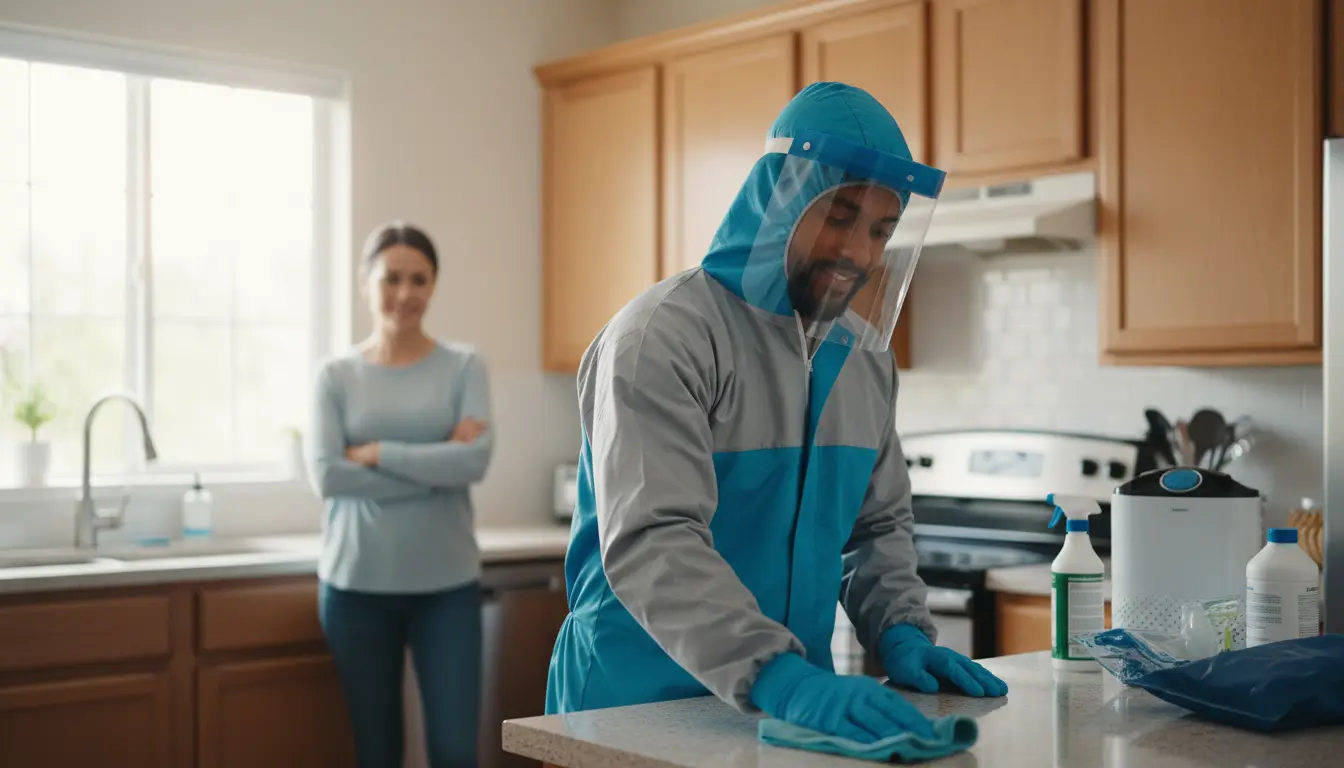
Professional biohazard remediation follows a strict sequence designed to contain and eliminate hazards while protecting everyone involved. The process begins with a thorough risk assessment of the site. Our team evaluates the type and extent of contamination, the materials affected (drywall, flooring, HVAC systems), and the structural integrity of the building. This assessment determines the level of personal protective equipment (PPE) required, which typically includes Tyvek suits, N95 or P100 respirators, face shields, and chemical-resistant gloves.
Next, we set up containment zones using industrial-grade negative air machines. These machines create negative pressure within the affected area, preventing airborne pathogens from migrating to clean parts of the property. This is especially critical in St. Louis’s older brick homes, where porous materials like plaster and unfinished wood can absorb biological fluids and odors. We also use HEPA-filtered air scrubbers to capture microscopic particles, including bloodborne pathogens and mold spores.
Once containment is established, our team removes all biohazardous materials. This includes contaminated carpet, padding, drywall, insulation, and subflooring. We use specialized enzyme treatments to break down organic matter at the molecular level, followed by hospital-grade disinfectants registered with the EPA for use against bloodborne pathogens like HIV, Hepatitis B, and Hepatitis C. After the initial cleaning, we perform adenosine triphosphate (ATP) fluorescence testing to verify that no biological residue remains. ATP testing measures the amount of organic material on surfaces, providing a scientific benchmark for cleanliness.
Finally, we apply structural encapsulation where necessary. For example, in basement or crawlspace areas affected by sewage backups or decomposition fluids, we seal the concrete with antimicrobial coatings to prevent future microbial growth. This step is particularly important in St. Louis’s humid summers, when moisture can accelerate the growth of mold and bacteria within the building envelope. For a deeper look at the entire workflow, refer to the comprehensive guide to biohazard cleanup in St. Louis.
Professional Remediation vs. Standard Janitorial Cleaning
Many property owners initially consider hiring a standard cleaning service to save money. The comparison below shows why that approach is both dangerous and ultimately more expensive. The table is based on the IICRC S540 Trauma and Crime Scene Cleanup Standard, which sets the industry benchmark for remediation.
| Feature/Metric | Professional Biohazard Remediation | Standard Residential Cleaning |
|---|---|---|
| Regulatory Compliance | 100% compliant with OSHA, EPA, and Missouri DNR | No specific biohazard training or compliance |
| Pathogen Elimination | ATP testing confirms >99.9% reduction | Visual inspection only; no microbial testing |
| Structural Assessment | Full evaluation of porous materials, HVAC, and subfloor | Surface cleaning only; hidden contamination ignored |
| Waste Disposal | Licensed transporter, incineration at approved facilities | Often disposed of in regular trash, violating regulations |
| Insurance Handling | Detailed documentation for claims | No documentation or chain of custody |
Expert Insights: What Most Property Owners Miss
Hidden Biological Seepage
When body fluids or decomposition liquids spill onto a surface, they often migrate beyond the visible stain. In St. Louis’s older homes with hardwood floors and plaster walls, the fluids can travel through gaps in the floorboards or behind baseboards, saturating the subfloor and framing. Professional remediation involves using moisture meters and thermal imaging to detect these hidden reservoirs. If left untreated, the organic material will continue to decompose, causing persistent odors and attracting pests.
Porous Materials Require Replacement, Not Cleaning
Many homeowners believe that a thorough scrubbing with bleach will clean contaminated drywall, carpet, or upholstery. In reality, porous materials cannot be fully decontaminated. The IICRC standard requires removal and disposal of any porous material that has been exposed to blood or other potentially infectious materials. Attempting to clean these items only drives pathogens deeper into the fibers, creating a long-term health hazard. For example, a carpet that has absorbed blood may appear clean after shampooing, but ATP testing will still show high levels of biological residue.
Negative Pressure Prevents Cross-Contamination
Without proper negative air pressure, airborne pathogens can spread throughout the entire building. In St. Louis’s multi-story brick homes, air currents can carry contaminants from a basement crime scene to upper floors within minutes. Professional remediation units use calibrated negative air machines that create a vacuum effect, ensuring that air only flows into the contaminated zone and is exhausted through HEPA filters. This is a critical step that standard cleaning crews never perform.
Common Mistakes That Increase Costs and Risks
One of the most frequent errors property owners make is using household bleach to clean biological matter. Bleach is not a registered disinfectant for bloodborne pathogens when used at typical household dilutions. It also damages surfaces and can release toxic fumes when mixed with other chemicals. The correct approach is to use EPA-registered hospital-grade disinfectants with a proven contact time of at least 10 minutes.
Another mistake is waiting for odors to dissipate on their own. Decomposition odors are caused by volatile organic compounds (VOCs) and bacteria. Without thorough remediation, the odor will not only persist but will intensify as the organic material continues to break down. In St. Louis’s humid climate, this can lead to secondary mold growth, which adds thousands of dollars to the restoration cost. Early intervention is essential—learn more about the hidden dangers of unattended biohazards in your home.
Finally, allowing untrained personnel—including family members or well-meaning volunteers—into the site before remediation is complete can expose them to serious health risks. Bloodborne pathogens can survive on surfaces for days or even weeks, and the risk of infection is real. Always secure the area and wait for professionals to perform the initial assessment and cleanup.
Pricing Structures for St. Louis Biohazard Cleanup
Understanding how pricing works helps you make an informed decision. Most reputable companies in St. Louis use a combination of the following factors to calculate the final cost:
- Site mobilization fee: A flat fee to cover travel, equipment setup, and initial containment. This typically ranges from $250 to $500 depending on the distance from the company’s base of operations.
- Hourly remediation rates: Professional technicians charge between $150 and $300 per hour. The total hours depend on the size of the contaminated area, the number of team members required, and the complexity of the job.
- Waste disposal costs: Biohazardous waste must be transported by a licensed medical waste hauler and incinerated at an approved facility. Disposal fees can add $200 to $1,000 or more, especially for large volumes of contaminated materials.
- Structural replacement materials: If drywall, flooring, or insulation must be removed and replaced, the cost of materials and labor is added to the estimate. For example, replacing a 10×10-foot section of drywall and subfloor can cost $1,500 to $3,000.
Three major factors influence the final price: the extent of structural material replacement required, the total volume of biohazardous waste, and the necessity for specialized HVAC decontamination. If the contamination has spread into the ductwork, additional cleaning and sealing of the HVAC system is required, which can add $1,000 to $2,500. For a detailed breakdown of what St. Louis residents actually pay, see the biohazard cleanup costs what St. Louis residents pay page.
Safety and Standards: Protecting People and Property
Compliance with industry standards is not optional—it’s a legal and ethical obligation. Our technicians are certified under IICRC S540 for trauma and crime scene cleanup, and we follow the OSHA Bloodborne Pathogens Standard (29 CFR 1910.1030) to the letter. This includes maintaining a written exposure control plan, providing hepatitis B vaccinations to our team, and using engineering controls to minimize exposure risks.
We also work with authorized waste management services that comply with Missouri Department of Natural Resources regulations. All biohazardous waste is double-bagged, labeled, and transported in sealed containers to a licensed medical waste incinerator. This chain of custody ensures that no pathogens enter the municipal waste stream, protecting sanitation workers and the community.
For property owners, these standards mean that the site is safe for occupancy once we complete the remediation. We provide a certificate of decontamination and a detailed report of the work performed, which can be used for insurance claims, real estate disclosures, and peace of mind. If you suspect a biohazard situation in your home or business, it’s critical to act quickly. Our 24/7 biohazard response in St. Louis and surrounding areas ensures that help is available whenever you need it.
Frequently Asked Questions About Biohazard Cleanup in St. Louis
How long does a typical biohazard cleanup take?
The duration depends on the size and severity of the contamination. A small trauma scene in a single room may take 4 to 8 hours, while a large hoarding situation or a site with extensive decomposition can require 2 to 5 days. Our team works efficiently to minimize disruption, but we never rush the critical steps of containment, cleaning, and verification. The timeline also includes time for structural drying and encapsulation if needed, especially in humid conditions.
Is biohazard cleanup covered by homeowner’s insurance?
Many homeowners insurance policies cover biohazard cleanup if the contamination is due to a covered event, such as a crime scene, unattended death, or sewage backup. However, coverage varies by policy. We provide detailed documentation and a scope of work that helps you file a claim. It’s always best to contact your insurance provider as soon as possible. We can also work directly with adjusters to expedite the process.
What happens if biohazard waste is not properly disposed of?
Improper disposal can lead to serious legal and health consequences. In Missouri, it is illegal to dispose of biohazardous waste in regular trash. Fines for violations can reach $10,000 or more per incident. Additionally, if waste is not properly incinerated, pathogens can survive and pose a risk to waste handlers, landfill workers, and the environment. Professional remediation companies like ours ensure all waste is disposed of in compliance with state and federal regulations.
Can I stay in my home during the cleanup?
In most cases, it is not recommended to remain in the home during active remediation. The containment zone is under negative pressure, and the area is treated with strong disinfectants. For your safety, we advise staying elsewhere until the work is complete and the air quality has been verified. If you have no alternative, we can set up a separate clean zone, but this may increase the cost and complexity of the job. We always prioritize your health and safety.
Professional Biohazard Remediation in St. Louis
Navigating the aftermath of a traumatic event is never easy, but the right cleanup partner can make all the difference. St. Louis Biohazard Cleanup combines technical expertise, compassion, and a commitment to the highest standards of safety and thoroughness. Our pricing is transparent, and we never cut corners that could compromise your health or property value. Whether you’re dealing with a crime scene, unattended death, hoarding, or industrial accident, we have the training, equipment, and local knowledge to restore your property safely and completely.
We serve the entire St. Louis metro area, including neighborhoods like Clayton, University City, and the Central West End. Our team is available 24/7 for emergencies, and we work closely with law enforcement, funeral homes, and insurance companies to ensure a seamless process. Don’t let uncertainty about costs delay the cleanup you need. Contact us today for a detailed, no-obligation estimate based on the specific conditions of your site.