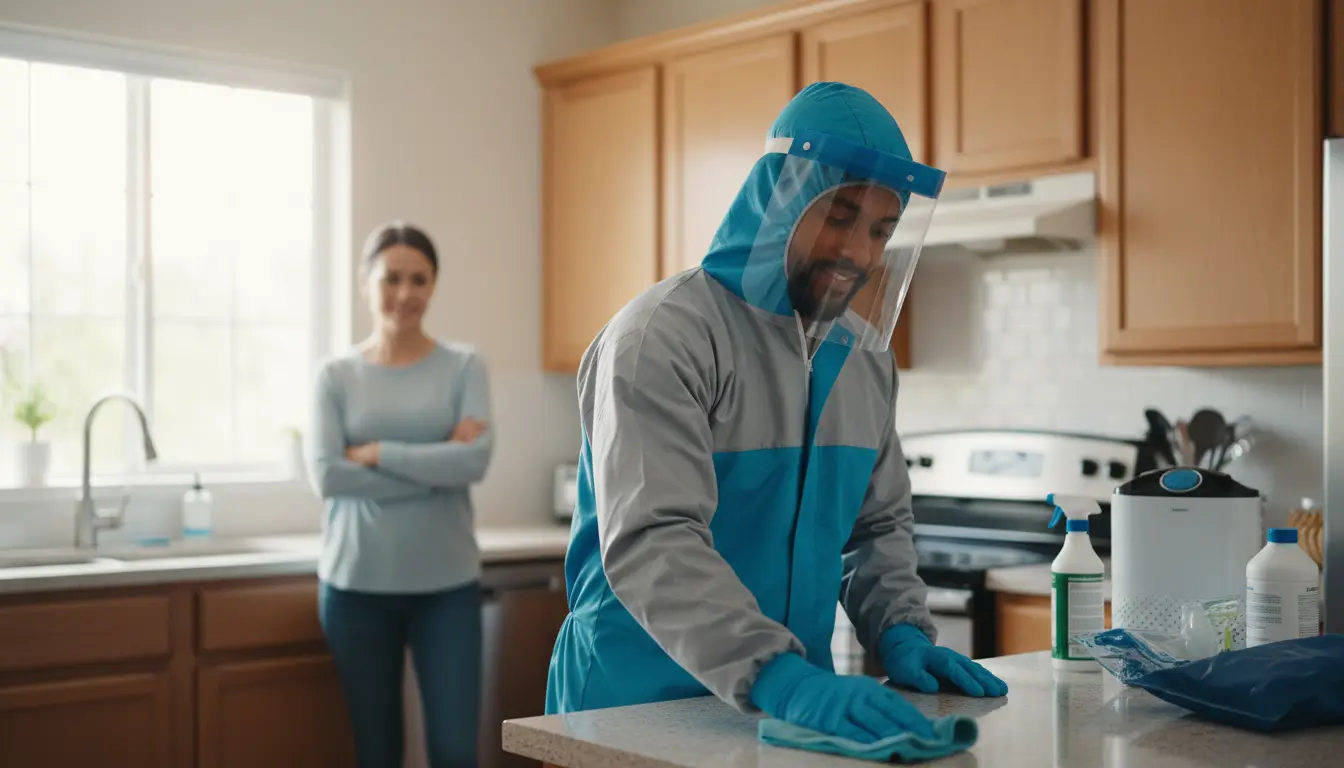
In the St. Louis metro area, the combination of aging residential structures, seasonal humidity swings, and a high density of multi-unit buildings creates unique challenges for biohazard remediation. Homeowners, property managers, and business owners are increasingly turning to certified professionals rather than attempting DIY cleanup, and their online reviews tell a clear story. The most common themes in 2026 include rapid response times, thorough documentation for insurance claims, and the ability to restore a property to a safe, habitable condition without causing additional damage to historic finishes. As a certified senior biohazard remediation specialist, I have seen firsthand how the right team can turn a traumatic scene into a clean, safe environment—and how the wrong approach can lead to long-term health risks and legal liabilities.
Technical Process: Step-by-Step Remediation Workflow
Every biohazard site in St. Louis follows a rigorous protocol aligned with IICRC S540 and OSHA Bloodborne Pathogens Standard 29 CFR 1910.1030. The process begins with a site assessment using environmental monitoring tools to identify the extent of contamination. For a recent job in a Soulard townhouse, we used moisture meters to detect capillary wicking in the brick walls and thermal imaging to locate hidden biological seepage behind the plaster. Once the scope is defined, the team establishes a containment zone with negative air pressure to prevent cross-contamination to adjacent units.
Physical removal of contaminated materials follows. This includes cutting away saturated drywall, pulling up hardwood flooring, and disposing of porous items in regulated biohazard waste bags. In St. Louis’s older brick buildings, we often encounter subfloor systems that have absorbed years of organic matter, requiring specialized enzyme treatments to break down proteins at the molecular level. After full removal, we apply an EPA-registered hospital-grade disinfectant using electrostatic sprayers to ensure every surface, including cracks and crevices, receives coverage. The final step is ATP fluorescence testing to verify that microbial contamination has been eliminated to below 10 RLU (relative light units), the standard for healthcare environments.
Local climate factors play a significant role in the technical process. Missouri’s high summer humidity accelerates decomposition and odor migration, especially in multi-story buildings where airflow draws vapors upward. In winter, the cold slows bacterial activity but can trap moisture inside sealed walls. Our team adjusts dwell times for disinfectants and the use of drying equipment based on the season and the specific construction materials of the property. For clients reading St. Louis biohazard cleanup reviews: What clients are saying in 2026, these technical details matter because they directly impact the safety and speed of the restoration.
Professional Remediation vs. Standard Cleaning: A Data Comparison
Many property owners initially consider hiring a general cleaning service to handle a biohazard scene. The difference in outcomes is stark, as shown in the table below.
| Feature/Metric | Professional Biohazard Remediation | Standard Residential Cleaning |
|---|---|---|
| Regulatory Compliance | OSHA 29 CFR 1910.1030, IICRC S540, EPA waste disposal codes | None; no training on bloodborne pathogens |
| Pathogen Elimination | EPA-registered hospital-grade disinfectants, ATP testing to <10 RLU | Household bleach (ineffective against many bloodborne pathogens) |
| Structural Assessment | Moisture meters, thermal imaging, subfloor inspection | Visual only; hidden contamination missed |
| Waste Disposal | Licensed biohazard waste transport, incineration | Illegal disposal in trash, risking fines |
| Insurance Documentation | Detailed chain-of-custody logs, photos, remediation reports | None; claims denied |
This comparison is why clients who leave St. Louis biohazard cleanup reviews: What clients are saying in 2026 consistently emphasize the importance of hiring certified professionals. The difference is not just a matter of thoroughness—it is a matter of legal and medical safety.
Expert Insights: Advanced Diagnostic Tips
Over the years, I have developed three diagnostic approaches that separate routine remediation from truly rigorous site restoration. First, always check for hidden biological seepage in porous materials like brick and mortar. In St. Louis’s historic neighborhoods, brick walls are often unpainted or have a lime-based mortar that absorbs fluids like a sponge. If you only clean the surface, the organic material will continue to decompose and emit odors for months. The solution is to isolate the affected area and apply a penetrating enzyme treatment that reaches the entire thickness of the masonry.
Second, understand that porous materials such as carpet, upholstery, and drywall require replacement rather than cleaning. No amount of disinfectant can fully penetrate the fibers of a carpet pad or the backing of a couch. I have seen property owners waste thousands of dollars on professional cleaning services that leave behind residual pathogens. In one case, a family in Clayton tried to salvage a sofa after a trauma scene, and two weeks later the room tested positive for MRSA. The sofa had to be removed and the room re-cleaned, doubling the cost.
Third, negative pressure containment is not optional. Without it, airborne pathogens can migrate through HVAC systems and contaminate other parts of the building. In a University City apartment building, a standard cleaning crew used only plastic sheeting, and within 24 hours, three neighboring units reported respiratory issues. Our team had to set up a quarantine zone and use HEPA-filtered negative air machines to capture particles. The extra step prevented a full-building evacuation.
Common Mistakes Property Owners Make
One of the most frequent errors is using household bleach on biological matter. Bleach reacts with proteins in blood and bodily fluids, creating a chemical compound that is still biologically hazardous and can damage surfaces. IICRC standards require the use of EPA-registered disinfectants that are specifically tested against bloodborne pathogens. Another mistake is waiting for odors to dissipate naturally. In St. Louis’s humid climate, biological decomposition can continue for weeks, and the odor will eventually permeate adjacent walls and floors. By the time the smell is obvious, the contamination has already spread. The third mistake is allowing untrained personnel—family members, friends, or even general contractors—into the site. This exposes them to hepatitis B, HIV, and other pathogens, and creates liability for the property owner.
Pricing: What Drives the Cost of Biohazard Cleanup
The cost of biohazard remediation in St. Louis varies based on the complexity of the scene, but clients can expect the following structure:
- Standard site mobilization fee: $300–$500 to cover travel, equipment setup, and initial assessment.
- Hourly remediation rate: $150–$250 per technician per hour, depending on the level of PPE required (Level C vs. Level B).
- Specialized disposal fees: $0.50–$1.00 per pound of regulated biohazard waste, which is collected and incinerated by licensed transporters.
Three primary factors influence the final cost. The extent of structural material replacement is the largest variable. A room with hardwood floors that have been deeply saturated may require pulling up the entire subfloor, which adds labor and disposal costs. The total volume of biohazardous waste also matters—a single death scene can generate 50–200 pounds of waste. Finally, the need for specialized HVAC decontamination can add $500–$1,500 if the building’s ductwork has been exposed to airborne pathogens. For a detailed breakdown, refer to our guide on Biohazard Cleanup Costs What St Louis Residents Pay. These numbers are why clients who read St. Louis biohazard cleanup reviews: What clients are saying in 2026 often mention that transparent pricing and upfront estimates were key factors in choosing a provider.
Safety and Standards: Certifications and Protocols
Every technician on our team holds current certifications in IICRC S540 Trauma and Crime Scene Cleanup, OSHA Bloodborne Pathogens Standard 29 CFR 1910.1030, and the handling of hazardous waste under EPA RCRA guidelines. These certifications are not optional—they are required by law for any company that handles biological waste. In practice, they mean that every technician knows how to properly don and doff PPE, use a autoclave for decontamination, and complete a chain-of-custody form for each load of waste. Without these standards, property owners risk fines, lawsuits, and the spread of infectious diseases.
St. Louis City and County have specific regulations regarding the disposal of biohazardous material. For example, any waste generated from a crime scene or unattended death must be transported by a licensed medical waste hauler and incinerated at an approved facility. Our team works with a local partner that meets all Missouri Department of Natural Resources requirements. This is a detail that often appears in St. Louis biohazard cleanup reviews: What clients are saying in 2026 because it provides peace of mind that the property is truly safe. For more information on protection, see our Protect Your Family Essential Biohazard Prevention Tips.
Frequently Asked Questions About Biohazard Remediation
What is the first thing I should do after discovering a biohazard scene?
Do not enter the area. Call a certified remediation company immediately. The scene is a potential source of bloodborne pathogens, airborne contaminants, and structural hazards. Our response team is available 24/7 and can be on site within 60 minutes across the St. Louis metro area. For more details, see our 24 7 Biohazard Response In St Louis And Surrounding Areas.
Can I use bleach to clean up blood or bodily fluids?
No. Household bleach is not effective against many bloodborne pathogens, and it can create chemical reactions that produce toxic fumes. The IICRC S540 standard requires the use of EPA-registered hospital-grade disinfectants with specific kill claims for hepatitis B, HIV, and tuberculosis. Our team uses a quaternary ammonium compound that is tested and approved for use on porous and non-porous surfaces.
How long does the remediation process take?
Most single-room trauma scenes are completed within 4–8 hours. Larger scenes involving multiple rooms or structural damage can take 1–3 days. The timeline depends on the type of contamination, the materials involved, and the need for drying or encapsulation. We provide a detailed timeline during the initial assessment.
Will my insurance cover biohazard cleanup?
Most homeowner’s insurance policies cover biohazard remediation under the “sudden and accidental” clause, but coverage varies. We provide detailed documentation and chain-of-custody logs that help expedite claims. For a full overview, read our Ultimate Guide To Biohazard Cleanup In St Louis Mo.
What happens to the waste after removal?
All biohazardous waste is placed in red, regulated bags, sealed, and transported by a licensed medical waste hauler to an incineration facility. We maintain a manifest for every disposal, ensuring compliance with Missouri and federal regulations. This is a critical step that many unlicensed services skip.
Professional Biohazard Remediation in St. Louis
When a traumatic event leaves a property contaminated, the aftermath requires more than just cleaning—it requires compassionate, technically precise restoration. St. Louis Biohazard Cleanup has built a reputation based on speed, discretion, and adherence to the highest industry standards. The reviews we see in 2026 reflect that trust: clients consistently mention our thorough documentation, the respectful demeanor of our technicians, and the certainty that their property is safe for reoccupation. Whether you are in the Central West End, Soulard, or University City, our team is ready to respond with the equipment and expertise that the situation demands.
If you are facing a biohazard situation, do not wait. The risks of cross-contamination, health hazards, and insurance complications grow with every hour. Contact us today for a confidential assessment and a clear, upfront estimate. Your safety and peace of mind are our priority.